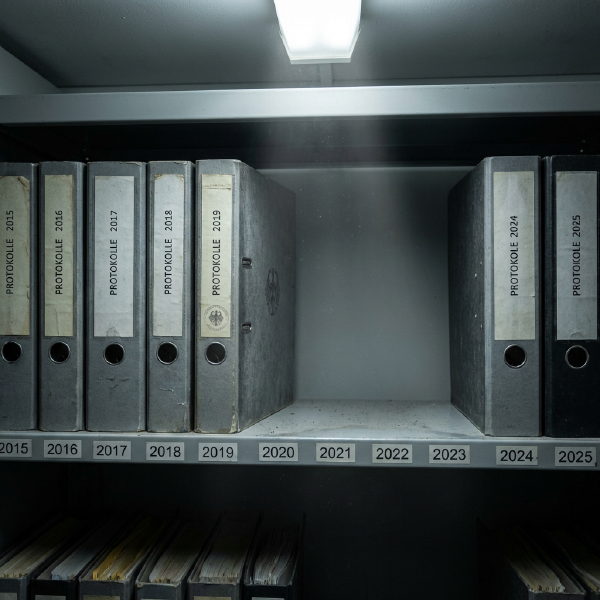
A pattern consists of repetitions. This one is documented.
The Timeline # November 2020 — ZDF heute journal # Uğur Şahin in an interview on the BioNTech vaccine: the mRNA candidate was safe, 50 million doses would be delivered before the end of 2020. The decisive trial data were imminent. 1
The body odour changes. Not dramatically, not suddenly — but noticeably. Fermented, sweet, yeasty, sometimes like overripe fruit. Those who know this get a shrug from their doctor: hormone imbalance perhaps, or stress, or not drinking enough water. The biochemistry offers a more precise answer.
On May 4, 2026, the WHO confirms: three people have died following a virus outbreak aboard the MV Hondius. The ship — a polar expedition vessel operated by Dutch company Oceanwide Expeditions — was en route from Ushuaia, Argentina, to Cape Verde. Laboratory confirmed: Andes hantavirus.
On 24 April 2026, in the early afternoon, Germany’s Paul-Ehrlich-Institut (PEI) — the federal agency for vaccines and biomedical medicines — posts from its official X account @PEI_Germany a card marking the end of European Immunisation Week. On the card: a cartoon family — mother, child, teenager, adult, elderly woman, male nurse in headscarf. Above it, in friendly green, with an exclamation mark:
It is spring 2026, and the pattern is repeating itself. A new SARS-CoV-2 variant informally named “Cicada” (BA.3.2) is now detected in at least 31 U.S. states[1]. China and Hong Kong are simultaneously reporting their sharpest case rise “in at least a year”, driven by NB.1.8.1[2]. The WHO notes that “limited surveillance data” are increasingly hampering vaccination strategies worldwide[3].
The COVID-19 vaccination campaign was the largest immunization effort in the history of the Federal Republic of Germany. Within months, millions of people were vaccinated — initially voluntarily, then under increasing pressure. The Cologne Corona Protocols document how this pressure was enforced down to the municipal level. And they reveal a remarkable gap: the question of side effects.
For over two years, a single number dictated life in Germany: the incidence. Lockdowns, school closures, contact restrictions, and curfews all depended on it. Whoever controlled the incidence controlled the measures. The Cologne Corona Protocols now reveal how this number was assessed internally — and how little it said about the actual threat level.
The fear of a collapsing healthcare system, of overcrowded intensive care units and triage decisions, shaped the public debate during the coronavirus pandemic. The Cologne Corona Protocols now reveal how this narrative was assessed internally — and that reality often told a different story.
In March 2020, schools and daycare centers across Germany were closed, and sports and recreational facilities for children were shut down. An entire generation suffered massive impairments in their development. The official justification: protection from the pandemic. But the now-published Cologne Corona Protocols reveal that those responsible knew better.
The City of Cologne’s COVID crisis team met from March 4, 2020 to January 20, 2023 in 203 sessions. Over 12,000 pages of protocols document how Germany’s fourth-largest city implemented pandemic policy. These documents are now public — obtained by Cologne citizen René Röderstein through a freedom of information request that took two years.
In December 2020, Germany’s Paul Ehrlich Institute (PEI) launched the SafeVac 2.0 smartphone app. More than 700,000 people used it to report adverse reactions following COVID-19 vaccination. It was the largest vaccine safety study Germany had ever conducted.
Update April 3, 2026: Article expanded with Japanese PMDA approval documents: missing studies, S-protein detected in ovaries, post-marketing data from Japan.
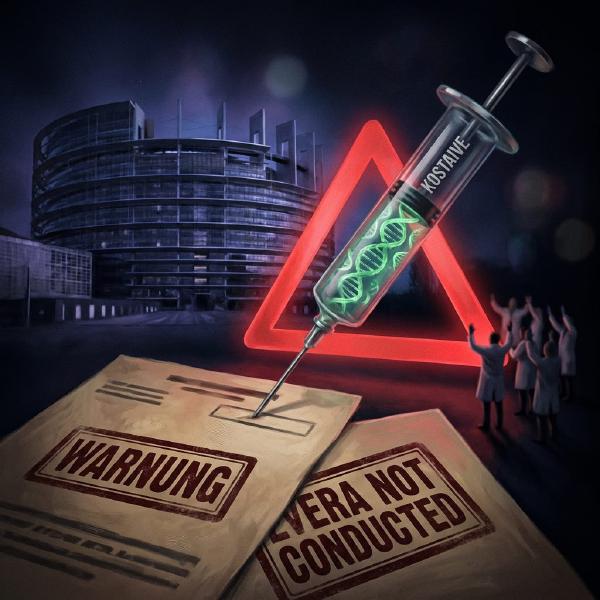
There is one critical difference between a conventional mRNA vaccine and what the EU approved in February 2025.