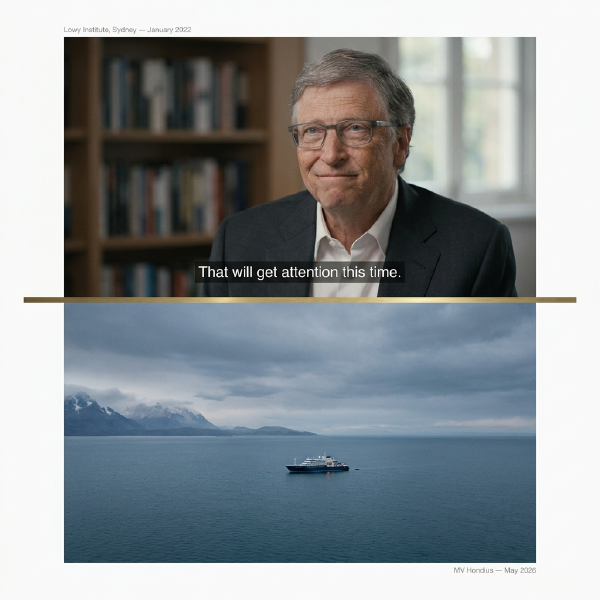
In 2022, Bill Gates sits in the ABC studio of The View — promoting his book “How to Prevent the Next Pandemic”, published 3 May 2022 by Knopf Doubleday — and delivers a line that comes out with an unmistakable smirk pulling at the corner of his mouth:
On May 4, 2026, the WHO confirms: three people have died following a virus outbreak aboard the MV Hondius. The ship — a polar expedition vessel operated by Dutch company Oceanwide Expeditions — was en route from Ushuaia, Argentina, to Cape Verde. Laboratory confirmed: Andes hantavirus.
Part 1 laid out the legal state of play: Three Sentences, Two Courts, No Final Judgment. What that piece could not do: describe the structure behind the investigation — the person, the awards, the money flows. These are not in the operative part of the Berlin ruling, but they explain why the investigation had such outsized impact.
On April 9, 2026, Melania Trump stepped up to the microphone in the Grand Foyer of the White House. Six minutes. The stated purpose: to deny rumors of a personal connection to Jeffrey Epstein.
On March 19, 2026, Der Spiegel published a cover story about Collien Fernandes and digital violence. On the same day, Federal Justice Minister Stefanie Hubig (SPD) announced a new law. That evening, Fernandes and Hubig sat together on Caren Miosga’s ARD show.
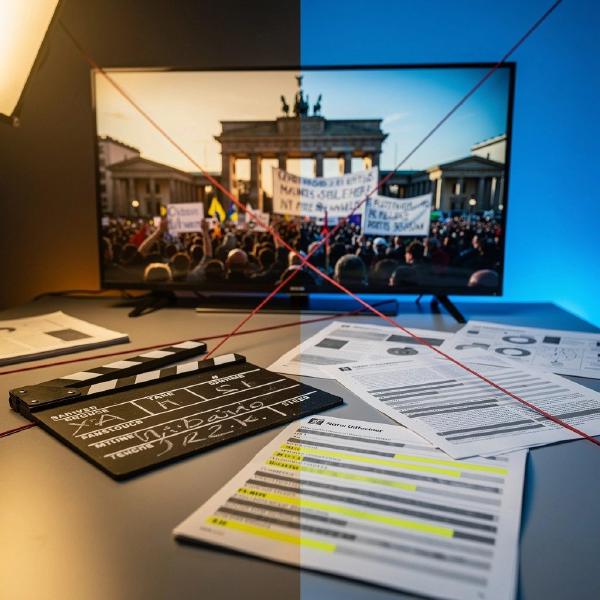
September 2024: A film is shot. March 2026: A case becomes public. The film came first. # The film # On Monday, 23 March 2026, ZDF aired the film “Eine bessere Welt” (“A Better World”) at 8:15 p.m. Immediately afterwards, at 10:15 p.m., the documentary “Hate on the Net: A Better World” [1][2].