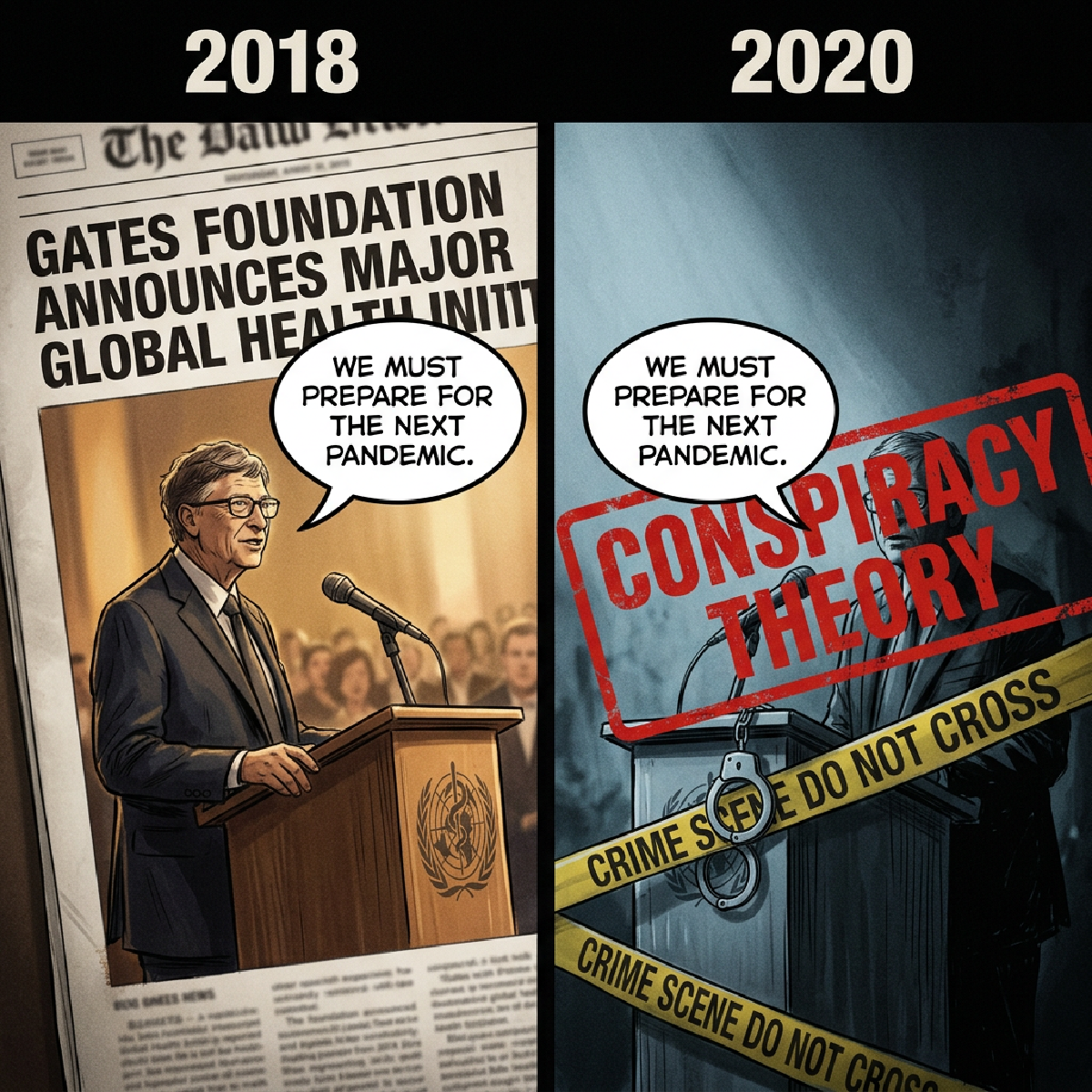
April 2018. Bill Gates warns in a widely noted speech about a global flu pandemic that could kill 33 million people within months. The press prints it. No irony, no distancing. It is consensus.
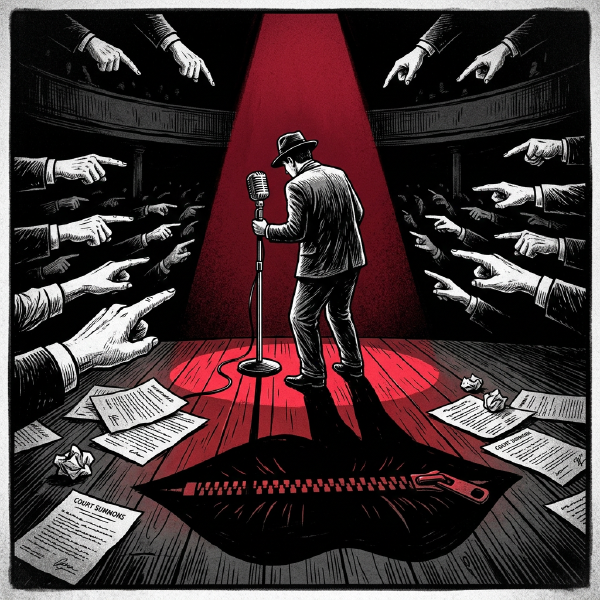
Two years later, COVID arrives. And anyone who discusses similar scenarios, questions institutions, or criticizes measures — receives criminal orders. Professional bans. 90 criminal investigations.
The same press that headlined Gates’ pandemic scenario in 2018 as a serious warning calls the same discourse “conspiracy theory” in 2020.
This is not a fringe phenomenon. It is a pattern.
What Was Permitted in 2018#
Gates described a scenario in 2018 at the Munich Security Conference — of all places, in Munich: a highly infectious pathogen, possibly modified in a laboratory, could spread worldwide before anyone reacts. 33 million dead in six months. He called for preparedness, international coordination, vaccine infrastructure.
Mainstream media reported it. Nobody was prosecuted for it.
What Became a Crime in 2020#
When COVID arrived, doctors, scientists, and journalists discussed the same questions Gates had publicly raised in 2018: Where does the pathogen come from? Are the measures proportionate? What interests lie behind the vaccination recommendations?
Result: professional proceedings. Platform bans. Criminal orders. In Germany, doctors were persecuted by the Medical Association, judges who overturned measures were publicly vilified, citizens were hit with sedition charges over Facebook comments.
The same questions — two years apart, two completely different responses from the system.
The Conspiracy Theory Paradox#
“Conspiracy theory” was long a meaningful term for the unprovable, irrational, paranoid. During the pandemic, it was weaponized — against anyone who questioned institutions, doubted data, or discussed alternative hypotheses.
The problem: science works through hypotheses, doubt, refutation. Whoever declares institutions categorically sacrosanct is not practicing science. They are practicing dogma.
And dogmas don’t need arguments. They need criminal orders.
What the RKI Files Showed#
The RKI Files published in 2024 documented internal communications of the Robert Koch Institute during the pandemic. The result: political pressure on experts, discrepancies between published and internal assessments, decisions that were not based solely on scientific grounds.
This was no surprise to those who said it at the time. It was confirmation.
Who was held accountable for this? Nobody.
Who was prosecuted at the time for saying these things? Many.
The Question That Remains#
If Bill Gates was allowed to publicly describe a pandemic scenario in 2018 that structurally corresponds to what people were prosecuted for in 2020 — what exactly was the criterion?
Not the content. The timing. The person. The political context.
This is not the logic of science. It is the logic of power.
And the logic of power doesn’t need truth. It needs consensus — and the willingness to defend that consensus by any means necessary, even when it contradicted itself two years prior.
Conclusion#
The image from April 2018 is proof of nothing except this: the difference between an acceptable statement and a “conspiracy theory” during the pandemic was not about the content of the statement. It was about who made it, when, and for what purpose.
That should give pause to anyone who considers institutions reliable arbiters between truth and lies.
Part three of a triptych on truth, the public sphere, and dealing with uncomfortable voices.
Part 1: “Is Netanyahu Dead?” — How a Disinformation Campaign Flooded the Internet
Part 2: When the Messenger Gets Shot: On Dealing with Uncomfortable Voices
Part 4: Shut Down Isar 2, Plan Mini-Reactors
Sources#
- Gates Notes — Pandemic Preparedness — Bill Gates’ contributions on pandemic preparedness (incl. April 2018)
- Multipolar Magazin — RKI Files — full publication of RKI internal protocols, 2024
- Robert Koch Institute — COVID-19 publications — institutional primary source
- Munich Security Conference archive: securityconference.org — historical programmes