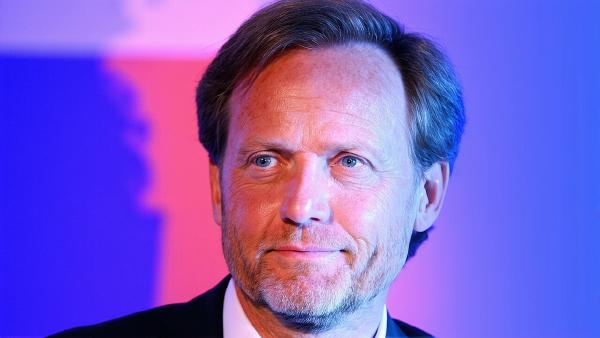
Climate change is one of the most debated topics of our time — and yet the debate is often conducted within a surprisingly narrow frame. A geologist who has been researching climate questions since the late 1970s raises, in a short video, questions that rarely find space in public discourse: what does Earth’s geological history actually tell us about CO2? And what happens when tectonic dynamics are removed from the conversation?
What Geology Shows#
Current atmospheric CO2 levels sit at roughly 420–440 ppm (parts per million) — the highest in hundreds of thousands of years based on ice core records. But in geological deep time, the picture is quite different.
During the Cretaceous period (roughly 66–145 million years ago), CO2 concentrations exceeded 1,000 ppm. During the Jurassic, similarly. During the Triassic, levels reached approximately 2,000 ppm. The Earth during these epochs was warmer, wetter, and more biodiverse — tropical forests extended into polar latitudes, and life flourished in ways that are difficult to compare with modern conditions.
This is not speculation. It is standard geological record, supported by isotope and sediment analysis that has been known to the scientific community for decades.
The Question of Correlation#
The geologist draws attention to an observation well-known within palaeoclimatology but rarely mentioned publicly: CO2 and temperature do not correlate in a simple 1:1 ratio throughout Earth’s history.
There are geological periods with high CO2 and relatively low temperatures — and vice versa. The relationships are more complex than a linear equation. This does not mean CO2 has no effect on climate. It means Earth’s history includes factors that modulate or override that relationship in ways that are not fully captured by simple models.
The Ocean as a CO2 Source#
A basic physical principle: warm water holds less dissolved gas than cold water. As oceans warm, they release CO2 into the atmosphere. This mechanism — Henry’s Law — is uncontested physics.
The geologist argues that more than 90% of atmospheric CO2 increase can be attributed to this mechanism: oceans warm, releasing CO2, rather than the reverse. Whether CO2 acts as driver or consequence of warming is in fact one of the central methodological debates in palaeoclimatology. Antarctic ice core data shows that temperature increases frequently preceded CO2 rises by hundreds to thousands of years — a finding discussed in the academic literature.
Tectonic Cycles#
The core of his argument: oceans warm from below — driven by tectonic processes originating in the Earth’s mantle. This heat input transfers through fault zones into the oceans, raises their temperature, releases more CO2, and fuels volcanic activity that itself emits CO2.
Such large-scale tectonic cycles — he references a periodicity of roughly 12,500 years — are known in geology. Milankovitch cycles (orbital parameters), thermohaline ocean circulation, and geodynamic processes together form a framework that explains climatic variation on timescales of millennia and millions of years, independent of human activity.
That glaciers melt not only from above (air temperature) but also from below (geothermal heat and ocean temperature) is a measurable finding. Submarine volcanic activity contributes to glacier melt in specific regions — most notably in West Antarctica, where researchers have identified an active volcanic zone beneath the ice sheet, documented in Nature Geoscience in 2017.
What This Means — and What It Does Not#
It would be wrong to conclude from these geological arguments that human influences are irrelevant. The CO2 increase of the past 200 years — unprecedented in its speed within the 800,000 years of ice core records — is real and measurable. The burning of fossil fuels demonstrably contributes to atmospheric CO2 concentrations.
What the geological perspective demands, however, is complexity. A climate system shaped over billions of years by tectonic processes, solar activity, ocean circulation, and orbital parameters cannot be fully explained through a single variable: human CO2 emissions. Naming that complexity is not climate denial. It is science.
The questions this geologist raises are legitimate. They deserve serious answers — not dismissal.
Source#
Geological reference values (Cretaceous, Jurassic, Triassic CO2 concentrations) are based on standard palaeoclimatology literature. The Antarctic subglacial volcanic zone referenced was documented in Nature Geoscience in 2017 (Bingham et al.).