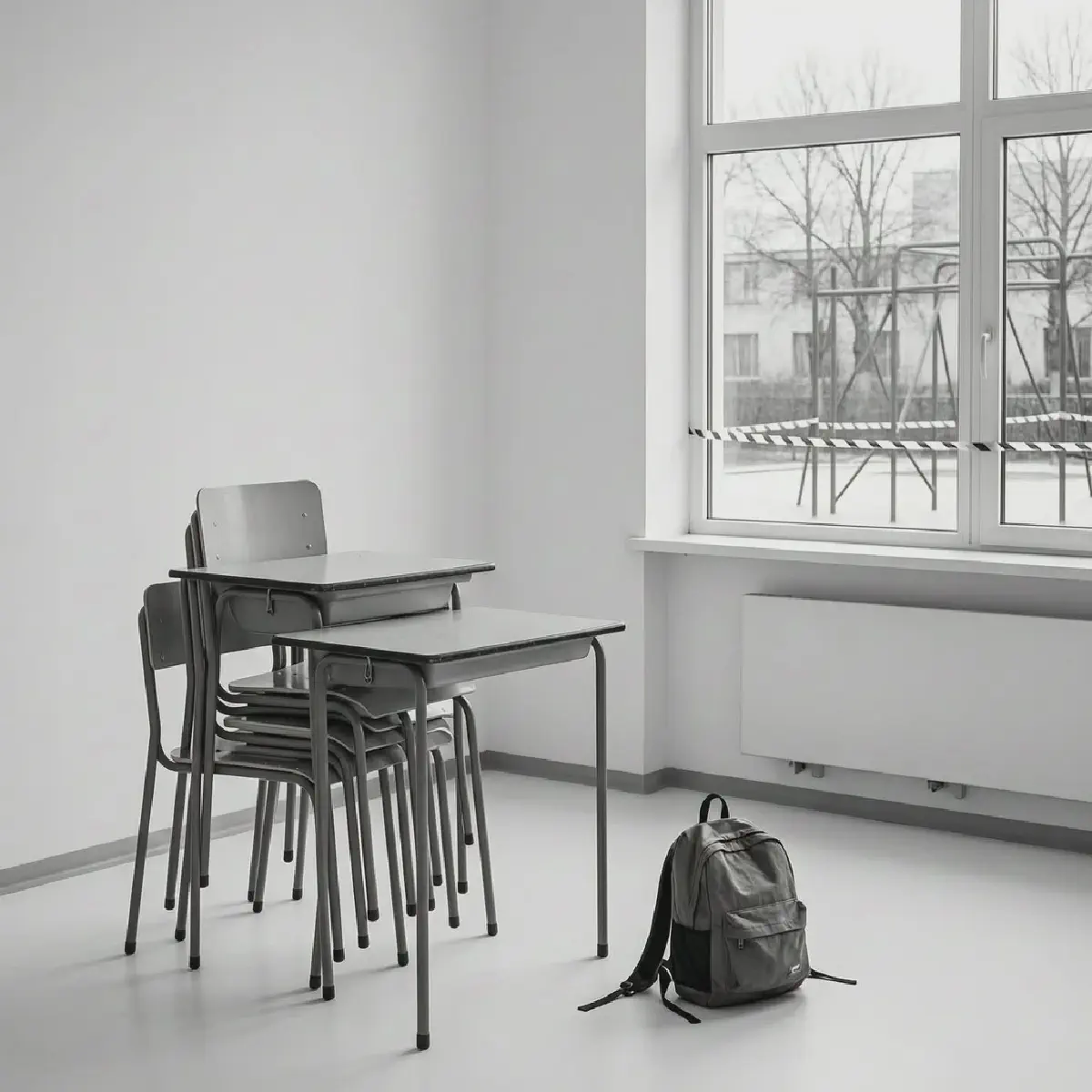
In March 2020, schools and daycare centers across Germany were closed, and sports and recreational facilities for children were shut down. An entire generation suffered massive impairments in their development. The official justification: protection from the pandemic. But the now-published Cologne Corona Protocols reveal that those responsible knew better.
Internally, it was clear that children and adolescents were not the primary risk group and schools were not hotspots. Nevertheless, measures were taken that proved disastrous.
Children are not the primary risk group #
As early as an initial meeting of the Cologne crisis team, around March 10, 2020, it was recorded:
“Children are not the primary at-risk group.”
This assessment was consistent with data the RKI itself had by late February 2020. Yet, schools were closed. The protocols document internal doubts about the necessity of these measures. On February 19, 2021, the crisis team explicitly stated:
“Schools and daycares were never so-called ‘hotspots’.”
Rising Domestic Violence and Child Protective Custody Cases #
The impact of the measures on children and families was also recognized early on. On March 13, 2020, even before nationwide school closures, the crisis team warned:
“Closure of youth welfare facilities potentially results in an increase of domestic violence/taking children into care.”
This prediction proved dramatically accurate. The protocols are riddled with entries on emergency child protective custody:
- As early as winter 2020/21, it was noted: “There are a relatively high number of children being taken into care.”
- In June 2021: “There were conspicuously many emergency custodies over the weekend.”
- By December 2021, the situation escalated: “The emergency custody system is overwhelmed. Municipal facilities can no longer accept children and adolescents.”
What was internally identified as a potential consequence became a reality. Society protected the elderly by sacrificing the young.
Social Segregation: A Deliberate Consequence #
The protocols also show that those responsible were aware of the social and psychological consequences of the measures. A quote from one session emphasizes:
“Social segregation affects people. We are creating other problems.”
Despite this insight, the policy of exclusion and isolation continued. While discussions about the proportionality of the measures took place internally, they were not communicated externally — and had no consequences for ongoing policy.
A Lost Generation? #
The Cologne protocols reveal a bleak picture: they knew that the measures against children were disproportionate and harmful. They saw consequences such as domestic violence and overwhelmed youth welfare offices. Yet, the fear of deviating from the “lockstep” with other cities and directives from above outweighed the well-being of the youngest generation.
A look into these documents is painful but necessary. It is the lesson of a policy that knowingly accepted collateral damage.
This is Part 2 of “The Cologne Protocols” series. Upcoming parts: The hospitals that were never overwhelmed. The incidence machine. And the vaccination pressure at the municipal level.
Sources:
- City of Cologne COVID Crisis Team: Protocols of 203 sessions (FOI request by René Röderstein, released March 27, 2026)
- FragDenStaat: FOI Request #304562
- BSW Group, Cologne City Council: Press release on protocol release, March 30, 2026
- Bastian Barucker: Corona Protocols of the City of Cologne — Part 1, barucker.press, April 2026
- Multipolar Magazine: The RKI Protocols and the Risk Upgrade
- RKI: Internal COVID-19 Crisis Team Protocols
- Bastian Barucker: Internal GKV Email: “Hero Overload Alarmism”
- Podcast: Cologne Corona Protocols, Bastian Barucker
- Internal keyword analysis of the protocols (local:
blog/koelner-corona-protokolle/keyword-hits.md)