Süddeutsche Zeitung Magazin, 03 May 2026. Christian Drosten, Director of Virology at the Charité, speaking with forester and author Peter Wohlleben:
“I do believe that professional quality assurance is very important — in publishing, journalism, film and podcasts.”
What He Is Asking For#
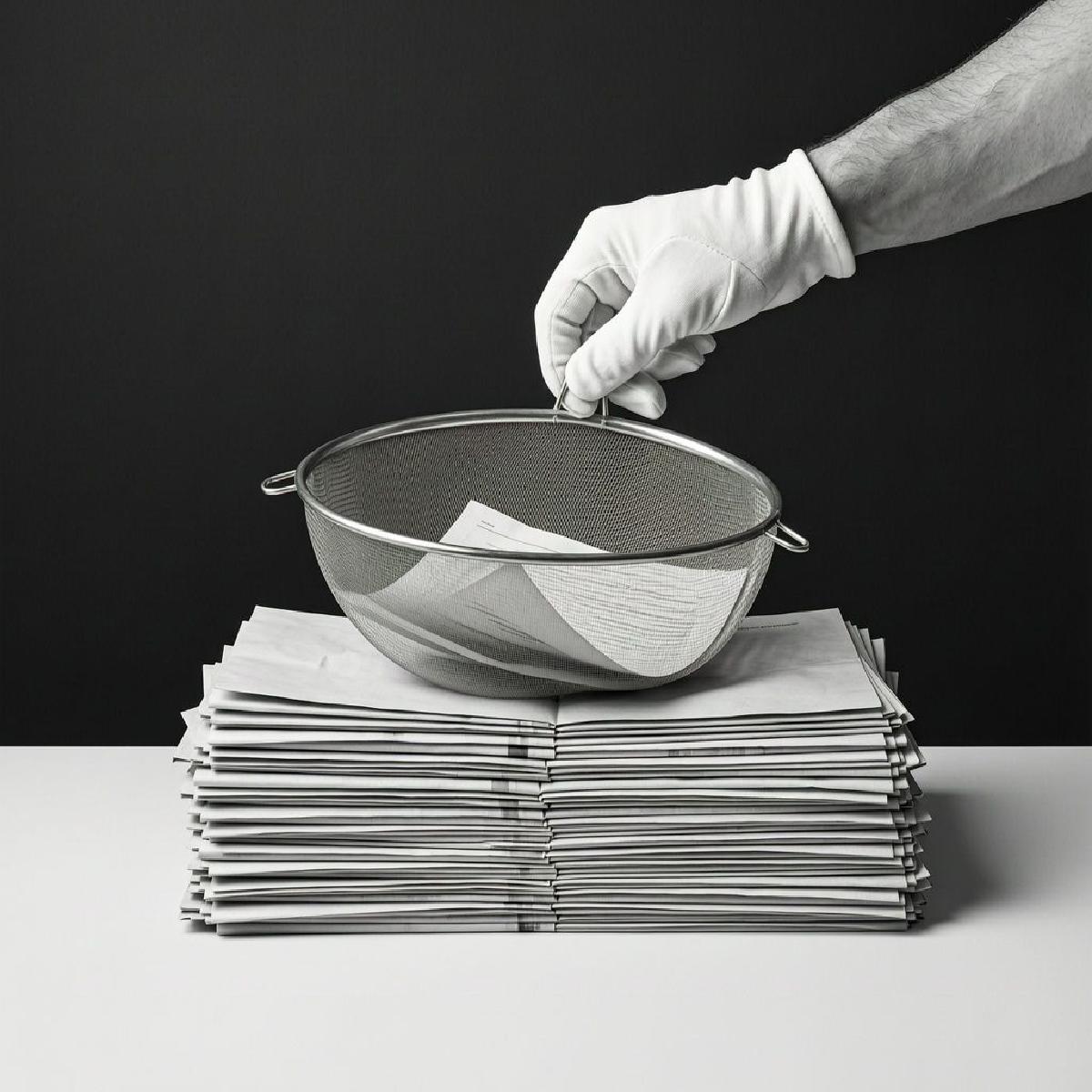
A “desired filtering effect” — not “suppression through pressure,” but filtering nonetheless. He sees “no other way than to intervene in this manner.” Implementation should come from within the profession itself. Financially supported: sources deemed quality-assured.
YouTube, he says, has quality assurance “completely suspended.”
What He Says at the Same Time#
On criticism of his COVID policy:
“It is in principle not relevant.”
“A small part of the press tried to attack me as a person.”
Drosten is not neutral on what good journalism is. He has a specific experience of it — and a specific opinion about which reporting counts and which does not.
The Open Question#
Who sits on the professional body?
He does not say. “Professional quality assurance” requires a profession that agrees on criteria. Whoever sets those criteria decides what counts as quality — and what does not.
What the Profession Has Produced#
During the pandemic, German media published Drosten’s statements predominantly as dpa wire copy: taken verbatim, without independent context or counter-research. That is the standard practice of German quality journalism.
Criticism of Drosten’s statements came from formats operating outside the professional body: YouTube channels, podcasts, newsletters. Formats that compared sources, cited protocols, named contradictions.
Those are precisely the formats whose quality assurance, according to Drosten, is “completely suspended.”
The Finding#
Drosten calls for a filter. The standard is to be set by a professional body. He simultaneously declares criticism of his own work “not relevant.”
This produces a circle: whoever controls the filter decides what passes through it. Whoever classifies critics as “not relevant” already has a picture of what the filter should block.
Who quality-assures the quality assurance — that the interview does not answer.
Sources: Süddeutsche Zeitung Magazin (03.05.2026); Berliner Zeitung (05.05.2026); Apollo News (04.05.2026).