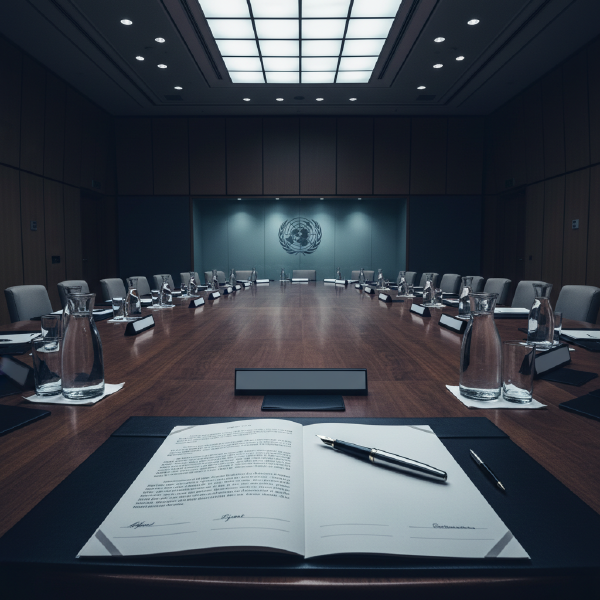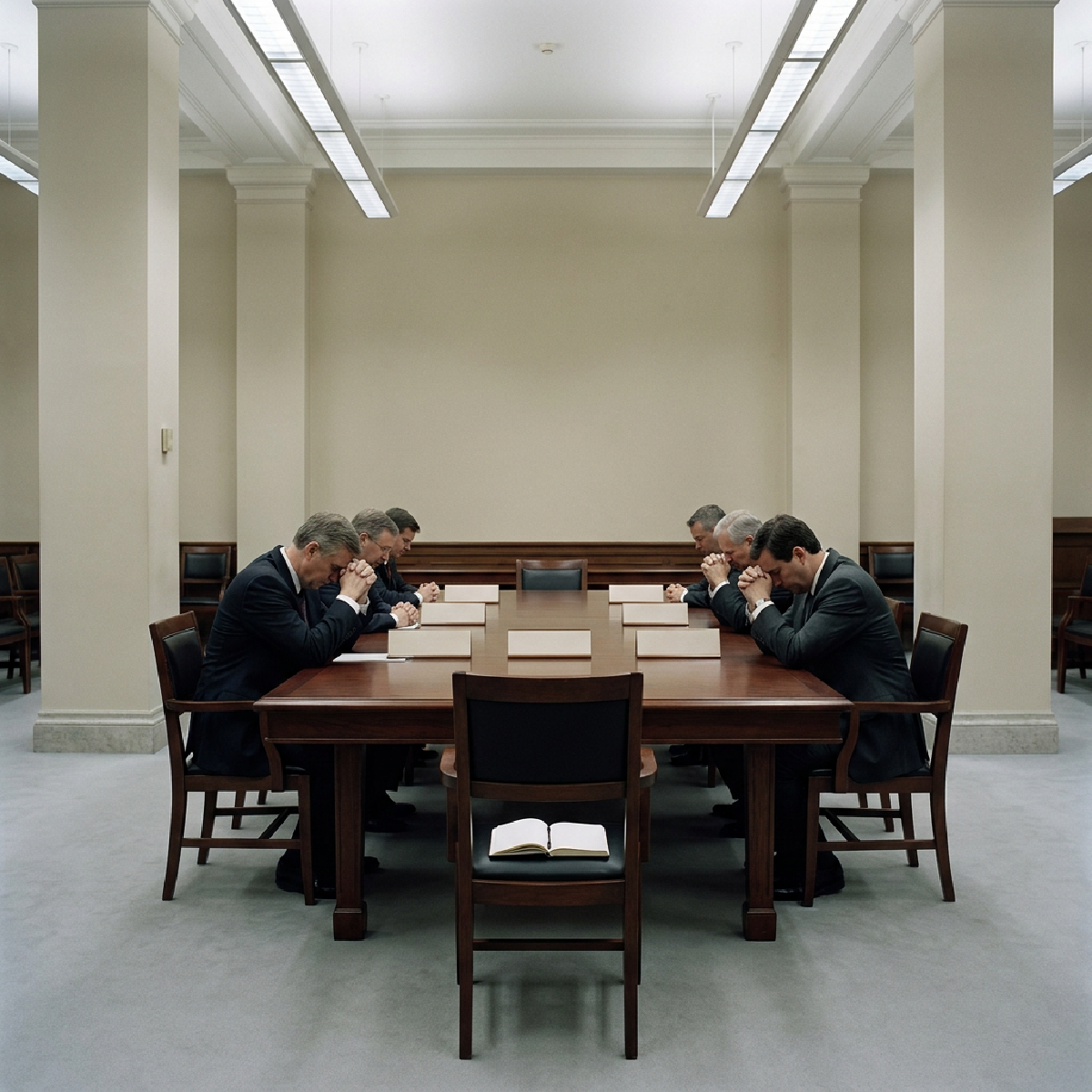
Thursday, May 7, 2026. The Paul-Löbe-Haus, Berlin. Germany’s parliamentary Enquete Commission convenes on “Containment strategies (NPIs) and the evaluation of alternative approaches” — six years after the first lockdown, the very question the commission was established to answer.
Invited: RKI President Lars Schaade, ECDC representative Piotr Kramarz, epidemiologist Eva Annette Rehfuess, health communication scholar Doreen Reifegerste, former head of the Federal Chancellery Helge Braun — and Anders Tegnell, Sweden’s former state epidemiologist. Tegnell cancelled at short notice. Personal reasons.
Three design decisions ensured that the outcome of this hearing was settled before it began.
The Tool and Its Limits#
The Enquete Commission is not a parliamentary investigative committee. That is not a criticism — it is a constitutional fact. Investigative committees hold subpoena power, can confront witnesses with documents, and operate under oath. Enquete commissions produce policy recommendations. Expert witnesses contribute expertise. Factual witnesses account for decisions. These are different categories with different consequences.
The problem is not the format. The problem is that the Enquete Commission is publicly presented as a reckoning with the pandemic — without the instruments that genuine accountability requires to make responsibility visible.
Design Decision 1: Tegnell Is Not in the Room#
Anders Tegnell was invited at the request of the AfD parliamentary group. He cancelled on personal grounds.
This produces a double elimination. Had he appeared, his nomination by the AfD would have pre-framed everything he said — the Swedish model arriving as an AfD witness. Since he cancelled, the Swedish model — the only documented large-scale experiment in minimally invasive pandemic policy — has no representation in the room at all.
In his place: Piotr Kramarz from the ECDC, who stressed the “difficulty of evaluating measures across countries due to differing demographic and structural factors.” That is not a comparative analysis. That is a rejection of comparison.
The man who served since 2020 as the reference point for every alternative-policy debate is absent. His model is absent with him. The alternative model is missing — not refuted.
Design Decision 2: The Current Research Doesn’t Come Up#
That same week, Scientific Reports (Nature group) publishes a study by Müller, Brinks, Cripps, Ioannidis et al.: “Uncertainty and inconsistency of COVID-19 non-pharmaceutical intervention effects with multiple competitive statistical models”. The core finding: Germany’s official NPI evaluation worked with systematically too-narrow confidence intervals. After correct error analysis for time-series data, most of the measures studied cannot be shown to be statistically significantly effective — only a few, including restrictions in public spaces, can be reliably linked to changes in the reproduction number.
This study is not cited at the hearing. No expert mentions it. No commission member asks about it. The full hearing transcript was not yet publicly available at the time of writing — what can be documented is the silence: no account of the session records its mention. The findings made no entry into the documented debate.
The Ärzteblatt report summarizes the hearing in a single line: “Experts defend COVID measures.” The most current peer-reviewed analysis of NPI effectiveness played no part in that defense.
Design Decision 3: Braun Sits on the Wrong Side of the Table#
This is the hearing’s decisive category shift.
Helge Braun served as head of the Federal Chancellery from 2018 to late 2021. He coordinated the joint federal-state rounds. He was the institutional link between Angela Merkel and the state premiers during the weeks when lockdowns were decided. He sat at the table when the decisions were made that are now supposed to be reviewed.
In a parliamentary investigative committee, he would sit as a witness — under oath, subject to document confrontations, with the right to remain silent and the obligation to tell the truth. In the Enquete Commission, he sits as an expert. He contributes expertise: on pandemic planning, on federal powers, on the institutional architecture of crisis management.
What Braun said in that role: pandemic management had been “proportionate and appropriate.” Germany had lacked the preparation to implement Sweden’s focused-protection approach. He contested a newspaper account of lockdown decisions at the Chancellery — discussions had been conducted “together with authorities and experts on the seriousness of the situation.” And then his recommendation for the future: the Bundestag should be empowered to declare an “epidemic situation of national significance” in order to centralize protective measures.
The former head of the Federal Chancellery, who exercised those very powers in 2020–21, recommends expanding them for future crises. As an expert witness, not as a witness.
What the Hearing Produced#
RKI President Schaade stated that measures had been “without alternative” until vaccination arrived. The precise evaluation of individual measures was “still to be developed” — after six years. On the decision-making processes around the March 2020 lockdown: the measures had been “a political decision by politics.” He could not recall where he was on March 15, 2020.
Rehfuess argued that most measures worked “best in packages” — evaluating them individually was “methodologically problematic.” This is an immunizing argument: if measures only work as a bundle, no individual measure can ever be identified as demonstrably ineffective. The bundle protects its components.
The Berliner Zeitung ran the headline that evening: “RKI chief no longer remembers how the lockdown came about.” The subheadline: Braun “has forgotten everything.”
That is the summary no commission member offered.
The Finding and Its Logic#
Three decisions — composition, absence, methodology — collectively secure a single conclusion:
No measure will emerge from this process as demonstrably ineffective. The alternative model was missing from the room. The most current critical study was missing from the debate. The central decision-maker sat at the table without an obligation to tell the truth. The bundle argument renders every individual finding methodologically contestable.
This is not a conspiracy. No one needs to have coordinated anything in advance for this outcome to follow. Institutional self-reassurance requires no coordination — only the right categories, the right composition, and the right methodology.
The finding was settled before the hearing began. That is not an accusation against any individual participant. It is the logic of the format.
Further reading on elizaonsteroids.org:
- MV Hondius: The State Ceremony and What It Conceals — published the same day
- How Legitimate Criticism Becomes Conspiracy Fodder — on the mechanism of discourse contamination
- Kohn, Hoppermann, and the Inquiry Blockade — on the commission’s prehistory