When the MV Hondius docked at the port of Tenerife on 10 May 2026, the German contact persons on board had already been identified by name, a 42-day quarantine protocol was live online, and the RKI was coordinating with the WHO, ECDC and Dutch authorities. Eleven cases (7 confirmed, as of 12 May), three deaths — the CDC has declared a Level 3 emergency response, 16 US passengers are in the biocontainment unit at University of Nebraska — a virus known since 1995. What follows is not a verdict on 2020. It is an observation about capacity.
The Comparison#
| Dimension | RKI Jan–Mar 2020 | RKI May 2026 (Hondius) |
|---|---|---|
| Risk assessment | Initially “low”; step-by-step escalation over 80 days: 26 Feb “low to moderate”, 9 Mar “moderate”, 17 Mar “high” | ECDC assessment “very low risk” for EU population (6 May); RKI adopts and communicates it immediately |
| Contact person management | Returnees from Wuhan placed in quarantine (Germersheim, Köpenick); structured, publicly accessible contact person guidance for Jan/Feb 2020 not traceable | Dedicated page with high-risk definition, behavioural guidance and 24/7 hotline — dated 8 May 2026, two days after virus confirmation |
| Public communication | First information from 7 Jan 2020; systematic situation reports only from 4 March — 37 days after the first German case | Two dedicated pages within one week of the WHO notification; daily updates |
| WHO coordination | PHEIC declaration 30 Jan 2020; no independent public RKI statement on the PHEIC documented in primary sources; internal crisis staff minutes confirm awareness | Active coordination with WHO and ECDC from confirmation date explicitly communicated; WHO quarantine protocol adopted directly |
| Document transparency | Crisis staff minutes only partially released April 2023 (over 1,000 passages redacted); full unredaction July 2024 — minutes of 16 Mar 2020: risk assessment to be published “once Schaade gives the signal” | Coordination structure via STAKOB and reference laboratory transparently listed on the agency’s website |
The Counter-Position#
This comparison has a serious weakness — and it deserves more than a footnote.
Andes hantavirus has been known since 1995. Transmission route, incubation period, reservoir — all documented. SARS-CoV-2 was a novel pathogen in January 2020: unknown transmission dynamics, unknown rate of asymptomatic infection, unknown pandemic potential. The RKI was developing instruments in 2020 for a problem it did not yet understand; in 2026 it is applying established instruments to a known problem. That is not failure in 2020 — that is the difference between exploration and routine protocol.
There is also the question of cohort structure: 147 named passengers on a ship are epidemiologically not comparable to diffuse returnees from cities of millions. Contact person tracing from a closed list is structurally simpler than tracing across an open population.
And: part of the capacity visible in 2026 may itself be a product of COVID — an institutional learning curve, professionalised crisis staff structures, an expanded STAKOB network. What moves quickly in 2026 may move quickly because 2020 unfolded differently — not as evidence that it should have moved just as quickly then.
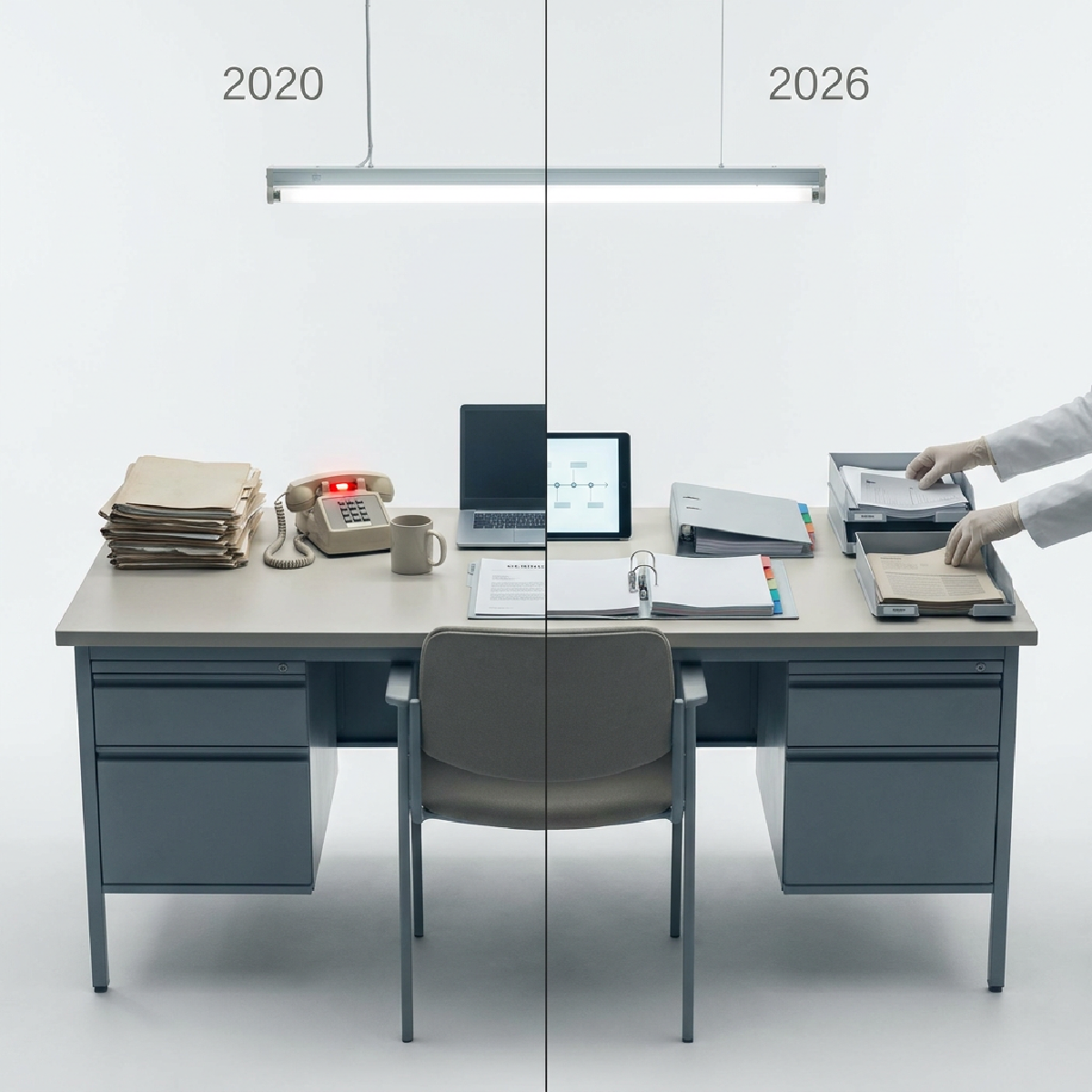
What the comparison shows is not that the RKI failed in 2020. It shows that the capacities exist in 2026. Whether they existed in 2020 already, or whether COVID created them — that is the open question this article does not answer.
Two Registers#
Lars Schaade, RKI President, mid-May 2026 on the Hondius:
“This is a completely different virus, and the danger is not comparable at all. We have known this virus for 31 years. We have always managed to bring the outbreak situation under control accordingly.”
The same Lars Schaade, according to reports on his testimony before the Enquete Commission in calendar week 19/2026, on the question of 15 March 2020 — the day the RKI internally raised its risk assessment to “high”: he could no longer recall with certainty whether the decisive meeting had taken place at the institute or by phone.
This is not a criticism of Schaade personally. Six years are six years, and 15 March 2020 was one day among many in a long crisis. It is an observation about two registers: the matter-of-factness with which an agency in 2026 speaks of its capacity for control — and the gaps that parliamentary accountability in 2026 finds in the memory of that same agency.
Individual analyses:
- An inquiry that pre-designs its findings — NPI hearing with Schaade as expert witness
- Two hearings, one pattern — Structural pattern of the Enquete Commission