The autopsy report of Karl Koch is held by the German Federal Prosecutor’s Office. It has been there since 1989. In December 2023, when Frank Plasberg’s documentary team applied for access with legal representation, the application was rejected. Reason: posthumous personal rights.
The files of the Federal Office for the Protection of the Constitution (BfV) on the KGB hack group were released after the 30-year classified period expired. The BKA interrogation transcripts were released. The autopsy report was not.
That is the starting point, 37 years after Koch’s death.
Who He Was#
Karl Werner Lothar Koch, born July 22, 1965, in Hannover. Mother died 1976, father died 1984 — both of cancer, the father additionally an alcoholic. Koch inherited 240,000 deutschmarks, bought an apartment and computers. He called himself »hagbard«, after Hagbard Celine from Robert Anton Wilson’s Illuminatus! trilogy. He believed, at times genuinely, in the Illuminati as a real power structure. He was addicted to cocaine. In 1985 he founded a computer meeting group at the Café Filmore in Hannover, which became the CCC regional group »Leitstelle 511«.
Those are the verified coordinates. The 1998 film »23« built a character from them. The character and the verified coordinates overlap but do not coincide.
What He Did#
The group around Koch consisted of five people. The actual intruder into US military networks was Markus Hess, a physics student in Hannover. The technical method: a security vulnerability in the Emacs mail program movemail, which ran with administrator privileges. Access via X.25 Datex-P networks. Search terms: »nuclear«, »SDI«.
Peter Carl, a casino croupier, was the intermediary to the Soviet Embassy in East Berlin. He handed over compressed data to the KGB. The total value documented in court files: between 54,000 and 90,000 deutschmarks, depending on the period and source.
The end of the story was documented by Clifford Stoll. Stoll, an astrophysicist at Lawrence Berkeley National Laboratory, noticed a billing discrepancy of 75 cents for computer time in August 1986. He began logging every access and built a honeypot: a fictional file called »SDInet«, filled with invented documents with military-sounding names. The intruder took the bait. West Germany’s Bundespost traced the connection to Hannover. Stoll published his case in 1989 as »The Cuckoo’s Egg« — still the most precise primary source for the American side of the story.
He Cooperated#
On July 5, 1988, Karl Koch reported himself to the Federal Office for the Protection of the Constitution (BfV), advised by the Chaos Computer Club. Months of interrogations followed. On July 20, Hans Heinrich Hübner also turned himself in.
From summer 1988 until the nationwide coordinated arrest operation on March 2, 1989, police and the Federal Intelligence Service (BND) surveilled the group. Koch was already cooperating at this point — the interrogations were behind him, the trial was imminent.
The Trial#
In January and February 1990, seven months after Koch’s death, the political offences senate of the Celle Court of Appeal tried the case. Charge: espionage. Not hacking — computer crime was inadequately codified in the German criminal code at the time.
Verdicts, all suspended: Peter Carl two years, Markus Hess one year and eight months, Dirk-Otto Brezinski one year and two months, Hans-Heinrich Hübner acquitted (crown witness role).
The court’s assessment: no provable damage to West Germany or the United States. Clifford Stoll testified as a witness about what the highly-classified SDInet files actually contained: »a collection of arbitrarily copied documents with invented military names.« Honeypot material. Software manufacturers filed no damage claims.
The Death#
On May 23, 1989, Koch left his workplace at midday for his lunch break. He did not return. His employer reported him missing.
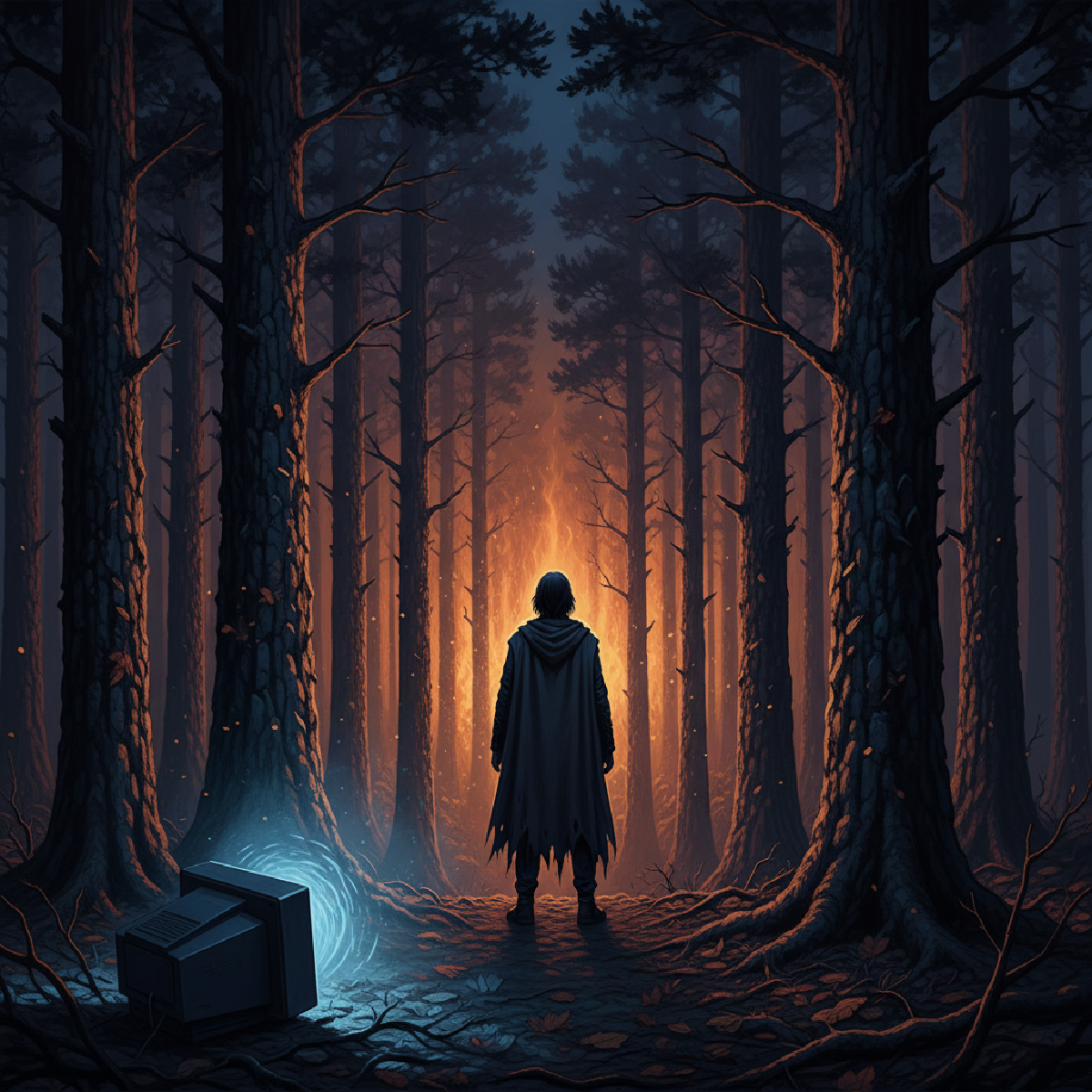
On June 1, 1989, a vehicle that had been parked for several days was noticed in a forest near Ohof, in the Gifhorn district. Near the car: charred remains. Identification via dental records. Beside the site: an empty gasoline canister.
Two documented details that no official explanation has addressed:
The shoes were missing. No farewell letter was found.
The fire remained contained. The farmer Borsum, who reported the site, documented the prevailing drought conditions with the observation that a single match would have been enough to set the entire forest ablaze. The forest did not burn.
The prosecutorial classification: suicide by self-immolation. Justified by years of drug addiction, documented paranoid delusions, and the psychological pressure of the ongoing investigation. No criminal proceedings for homicide were initiated.
What Is Missing#
The suicide thesis has substance. Koch was addicted to cocaine, had lost both parents as a teenager, suffered from documented persecution fears, and was under investigative pressure. Self-immolation by gasoline is documented in forensic literature as a suicide method in severe psychiatric crises, rare as it is.
The suicide thesis also has gaps. Missing shoes and a controlled fire during extreme drought conditions are forensically not trivial to reconcile with an acute act of desperation. These gaps were never publicly addressed — neither in 1989 nor in 2023.
Steffen Wernéry, co-founder of the Chaos Computer Club, said in Plasberg’s 2023 documentary:
»The intelligence service benefited most from Koch’s death.«
That is not an accusation. It is an observation — and a question that arises from the documentary record: a man who cooperated, who spent months informing the intelligence services about the group, died shortly before the trial. His associates, who had not cooperated, received suspended sentences. There was no provable damage. Koch was the only one who could not testify.
The autopsy report — which contains the forensic details of the cause of death: degree of burns, body position, the shoes — is held by the Federal Prosecutor’s Office. Plasberg’s team sought access in 2023 with legal representation. Denied. Reason: posthumous personal rights.
Other files on Karl Koch were released when their classified period expired. The autopsy report was not covered by that mechanism. On what legal basis, who ordered this classification, and whether Koch’s half-sister as his closest surviving relative was ever consulted — none of that is documented.
37 years after the death of a man who cooperated with the state, this is no longer a question of speculation. It is a problem of access to records.
Sources: Wikipedia DE/EN »Karl Koch (Hacker)«, »KGB-Hack«; Clifford Stoll, »The Cuckoo’s Egg« (Doubleday, 1989); heise/c’t Detlef Borchers (2019); Sky Original documentary »23 — Der mysteriöse Tod eines Hackers« (Frank Plasberg, December 2023); Heinz Nixdorf MuseumsForum Blog (2019); ad-hoc-news December 2023.