What Actually Happened on April 22, 2026 # On Wednesday, April 22, 2026, an unusually dense sequence of security- and surveillance-policy events moved in parallel through Germany and Brussels:
Methodological note. This text is based on primary Bundestag documents (20/6621, 20/6702, WD 4-3000-008/23), the Last Generation 2022 transparency report (cited in the Bundestag WD opinion), the IRS Form 990 data of the Climate Emergency Fund via ProPublica and Instrumentl, and the websites of the organisations named. The text separates two layers that are systematically conflated in public discourse: (1) the scientific-political question of the climate crisis, and (2) the structural question of who, with what money, organised what kind of activism. The first layer is not negotiated here. The second is the subject.
Methodological note. This text is based on primary Bundestag documents (Drucksachen), the foundation register, the AAS website, and publicly available material on the founder’s Stasi-IM past. Where amounts are only secondary-sourced, this is marked. The foundation does work against right-wing extremism that addresses an unquestionable societal need. The point here is not to deny it its legitimacy — it is to show what the foundation systematically does not show when presenting itself as a “civil society” actor.
Methodological note. This text is based on primary Bundestag documents (Drucksachen), the foundations’ own websites, Correctiv’s governance page, and the program of the German Federal Office for the Protection of the Constitution (BfV) 2023 Science Conference. Where amounts or positions are only secondary-sourced, this is marked. The point is not to deny Correctiv its legitimacy — it is to show what Correctiv systematically does not show when presenting itself as an “independent” investigative platform.
Methodological note. This text describes a temporal correlation and places it within a pattern already documented multiple times on this blog: investigative publication + temporally aligned political or civil-society follow-up (see Fernandes-Ulmen campaign parallel to the deepfake law, Network behind the deepfake law, HateAid-Campact funding pipeline). Strict proof of deliberate orchestration in any single case is hard to obtain; the pattern that any single case fits into is not. Sources are fully linked at the end.
Part 1 laid out the legal state of play: Three Sentences, Two Courts, No Final Judgment. What that piece could not do: describe the structure behind the investigation — the person, the awards, the money flows. These are not in the operative part of the Berlin ruling, but they explain why the investigation had such outsized impact.
Two months after the Berlin II Regional Court’s ruling against Correctiv, two versions of the same story are circulating. In one, a “painstakingly constructed edifice of lies” is collapsing, prizes must be returned, the democracy rallies were propaganda. In the other, Correctiv has won “a victory for press freedom” and the investigation stands.
Since the beginning of her second term as President of the European Commission, public criticism and internal complaints about Ursula von der Leyen’s leadership style have been mounting. These accusations do not come from the margins — they come from former and current senior EU officials.
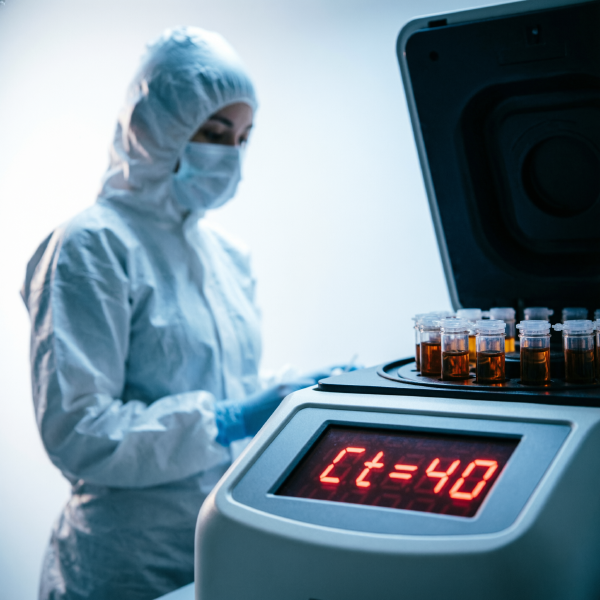
The Enquete Commission is running, the German Federal Court of Justice is overturning vaccine injury rulings, the Telegraph is reporting on vaccine injuries – but one question nobody asks: How many of the “Corona-positives” were actually infectious?
It is spring 2026, and the pattern is repeating itself. A new SARS-CoV-2 variant informally named “Cicada” (BA.3.2) is now detected in at least 31 U.S. states[1]. China and Hong Kong are simultaneously reporting their sharpest case rise “in at least a year”, driven by NB.1.8.1[2]. The WHO notes that “limited surveillance data” are increasingly hampering vaccination strategies worldwide[3].
Switzerland is getting serious about transparency — at least on paper. Following a ruling by the Federal Administrative Court, the Federal Office of Public Health (BAG) on 17 April 2026 published the procurement contracts for Covid-19 vaccines [1]. Among them: Moderna, Novavax, Pfizer, Janssen, AstraZeneca, CureVac. Unredacted, as the court demanded.
The vaccination rate among over-60s for the flu shot is, according to the RKI, at its lowest level in 17 years [1]. The COVID-19 vaccination rate in this age group has fallen by more than a third compared to the previous season [2]. At the same time, data from Denmark show that different BioNTech batches showed different adverse-event rates — a study that the PEI dismissed as “not meaningful” without presenting its own data [3].