On 11 June 2026, the European Court of Justice (ECJ) published the Opinion of Advocate General Athanasios Rantos in the joined cases C-631/24 P and C-632/24 P. His conclusion: the EU Commission should lose its appeal. The ECJ is asked to uphold the lower court’s rulings, which required the Commission to disclose more extensive information from its billion-euro Pfizer vaccine contracts.
What the Advocate General Says#
The Commission had refused before the General Court (GC) to publish the names of members of the Joint Negotiation Team and certain indemnification clauses from the Advance Purchase Agreements with pharmaceutical companies. The GC rejected those justifications in July 2024 (T-761/21 and T-689/21). The Commission appealed.
Rantos now recommends that both appeals be dismissed. From the CURIA Press Release No. 86/2026, 11 June 2026:
“In his Opinion, Advocate General Athanasios Rantos proposes that the Court reject the Commission’s arguments and uphold the General Court’s judgments.” (CURIA Press Release No. 86/2026)
On the indemnification clauses, Rantos found that the Commission had not demonstrated that disclosure “would be such as to encourage abusive strategic conduct or to increase the risk of liability claims against the pharmaceutical undertakings.” Those clauses, he emphasised, “do not affect the conditions for triggering liability of the undertakings towards injured third parties, but concern solely the reimbursement mechanisms that may apply between Member States and the undertakings following a possible finding of liability of those undertakings.”
On the negotiators’ names: anonymised declarations of interests were not sufficient to make the impartiality of the negotiating team specifically and effectively ascertained. Transparency regarding the negotiation of vaccine contracts constitutes a specific purpose in the public interest under EU law.
The Opinion is not binding. The ECJ follows Advocates General in the majority of cases as a matter of statistical practice.
What Is at Stake#
The indemnification clauses in the Pfizer contracts determine to what extent member states — and therefore taxpayers — are liable for potential vaccine-related harm. They were never debated in any public proceeding. The Commission negotiated these contracts through a process that bypassed standard procurement rules.
The GC has already rejected the justification for keeping them secret. The Advocate General has now done so a second time.
Who benefits from the opacity is clear: pharmaceutical companies that do not have to publicly defend the scope and conditions of their state-provided liability shields. And a Commission that does not want to account for a process it designed itself.
The SMS Problem: A Second Strand#
Running parallel to the contracts dispute is a second proceeding — and one that remains even less resolved. According to a New York Times report from April 2021, the billion-euro deal was brokered through a direct, undocumented exchange of text messages between Commission President Ursula von der Leyen and Pfizer CEO Albert Bourla.
The GC declared the Commission’s refusal to hand over these messages unlawful in May 2025 (T-36/23, ECLI:EU:T:2025:483). The Commission did not appeal. Instead: a new decision with a “more detailed justification” — in practice, renewed refusal.
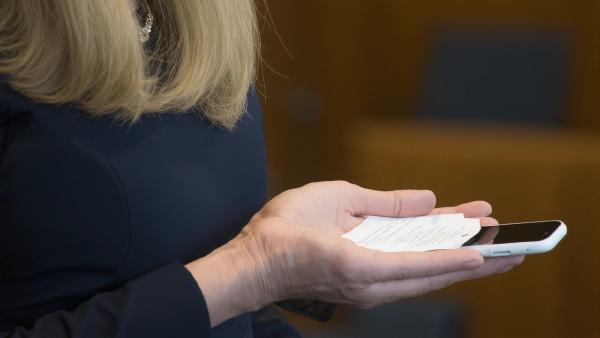
What the Commission confirmed in a communication: the messages no longer exist. Von der Leyen’s phone was replaced multiple times without data transfer. The old devices were deleted and recycled. Since at least July 2023, the messages are gone.
The European Ombudsman and several MEPs have asked in writing whether this deletion breaches documentation obligations (EP Question P-10-2025-003182). A conclusive answer has not been given.
Conclusion#
In two separate proceedings, the EU Commission has tried to maintain control over its vaccine procurement record — through refusal, appeal, and reformulated justifications. The Advocate General now recommends that the ECJ dismiss the appeal.
The ECJ ruling is still pending. What is already clear: the indemnification clauses remain under seal until the decision. And the text messages are gone.
Sources
- CURIA Press Release No. 86/2026 — Rantos Opinion, 11 June 2026
- GC, T-36/23, 14 May 2025 — ECLI:EU:T:2025:483 (SMS strand)
- GC, T-689/21 + T-761/21, 17 July 2024 (contracts strand)
- Regulation (EC) No 1049/2001 — Access to EU Documents
- EP Question P-10-2025-003182 — Documentation obligations, SMS
- NYT, Matina Stevis-Gridneff, 28 April 2021 — Original investigation
- elizaonsteroids.org — Pfizergate Series: GC ruling 2025