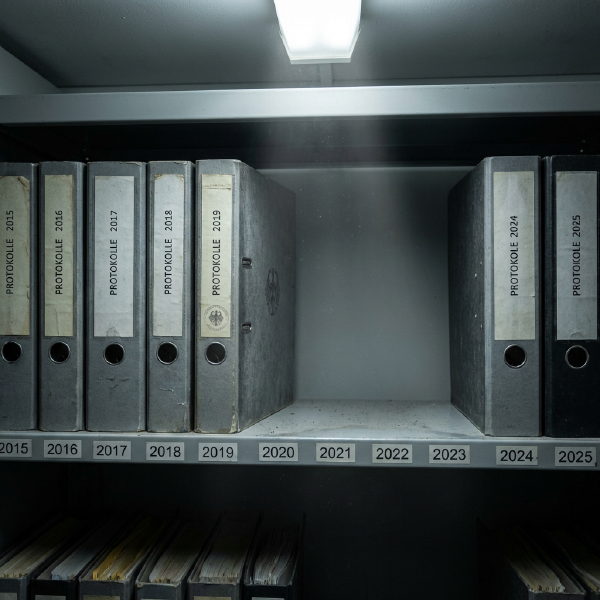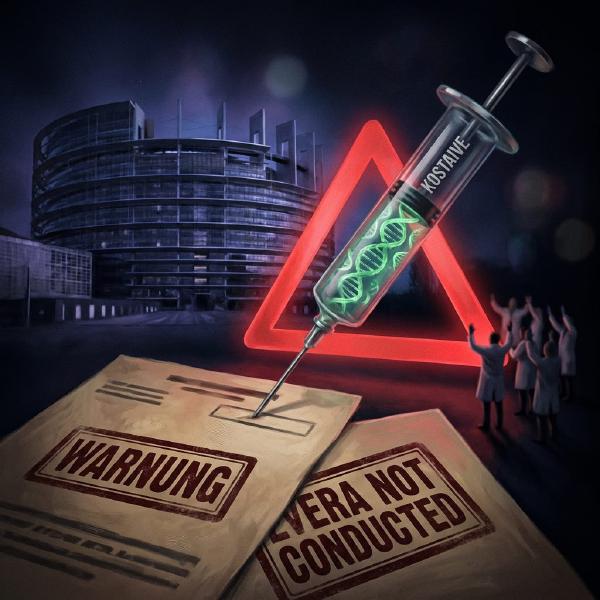
In December 2020, Germany’s Paul Ehrlich Institute (PEI) launched the SafeVac 2.0 smartphone app. More than 700,000 people used it to report adverse reactions following COVID-19 vaccination. It was the largest vaccine safety study Germany had ever conducted.
Five years later, the analysis of this study is still incomplete. The raw data remains classified. And the figures reported to the European medicines database EudraVigilance show a discrepancy of approximately 42 percent.
What is SafeVac 2.0?#
The PEI-developed app collected data on the tolerability of COVID-19 vaccines. Participants reported symptoms, hospitalizations, and adverse events after each dose. Data collection ran from December 2020 to September 2022.
The 42 Percent Gap#
Dutch data analyst Wouter Aukema downloaded the publicly accessible EMA database and found 56,545 entries linked to the SafeVac 2.0 study. This figure deviates by approximately 42 percent from the number of serious cases the PEI reported to the German parliament.
On April 7, 2026, the German government confirmed in its response to a parliamentary inquiry (BT-Drs. 21/5103) that public, parliamentary, and judicial statements by the PEI regarding the SafeVac 2.0 study “did not match in some cases.”
Safety Assessments Without Completed Analysis#
In the same response, the government concedes that the PEI initially reported study cases to the EMA “temporarily in advance and without a completed evaluation.” Cases were essentially only classified as “serious” when they involved hospitalization.
Simultaneously, the PEI published multiple interim evaluations in safety reports — while stating that the full data analysis was still pending.
According to WELT, 1 in every 210 participants had a suspected serious adverse reaction.
The Legal Battle for Raw Data#
Attorney and former judge Dr. Franziska Meyer-Hesselbarth has been suing the PEI at the Administrative Court of Darmstadt (Case No. 6 K 716/22.DA) since 2022 for release of the SafeVac raw data. The PEI has refused for over three years.
In February 2026, the Higher Administrative Court denied the PEI’s obligation to disclose — and took no issue with the 42 percent discrepancy.
Meyer-Hesselbarth’s argument: without access to safety data, physicians cannot properly inform their patients. The PEI is thereby indirectly facilitating bodily harm.
The Core Contradiction#
In April 2023, the PEI stated in a court filing that it had “of course” reported all suspected cases to EudraVigilance. In the April 2026 parliamentary response, it states that non-serious suspected cases will only be reported “upon completion of the analysis” — meaning they haven’t been reported yet.
Both statements cannot be true at the same time.
Assessment#
April 2026. The vaccination campaign ended over four years ago. More than 700,000 people entrusted the PEI with their data. The study has not been evaluated. The raw data is classified. The reported numbers contradict each other. And a German court sees no problem with any of it.
Sources:
- German Government: Response to Parliamentary Inquiry, BT-Drs. 21/5103
- Bundestag press release hib 272/2026, No. 5
- Barucker Press: “Vaccine side effects in court: EMA data puts PEI under pressure.” Dec 22, 2025
- Barucker Press: “Higher Administrative Court denies PEI’s disclosure obligation.” Feb 26, 2026
- Multipolar Magazine: “SafeVac App: Why is official safety data being kept secret?” Aug 25, 2025
- WELT: “The mystery of concerning vaccine side effect data.” Jul 17, 2025
- Der Freitag: “Does the Paul Ehrlich Institute have something to hide?” Sep 22, 2025
- Tagesspiegel Background: “SafeVac data still under evaluation.” Aug 29, 2025
- drbine (Substack): “Compendium SafeVac2.0 Data.” Jul 8, 2025
- PEI: SafeVac 2.0 Announcement Dec 22, 2020
- covid-justiz.de: VG Darmstadt 6 K 716/22.DA
- FragDenStaat: FOIA request on SafeVac integration