On 27 December 1999, Der Spiegel published an interview with Jean-Claude Juncker, then Prime Minister of Luxembourg and chairman of the Eurogroup. He described how European policy gets made:
“We decide on something, leave it lying around and wait and see what happens. If no one kicks up a fuss, because most people don’t understand what has been decided, we continue step by step until there is no turning back.”
Juncker framed this as a description of a dysfunction, not a confession. The observation stands regardless: he recognised the mechanism and considered it worth recording.
Twenty-seven years later the same mechanism is running on two levels simultaneously — at EU level in access to Commission documents, and at the federal level in Germany’s Freedom of Information Act.
EU Level: The Commission Declares SMS Non-Existent#
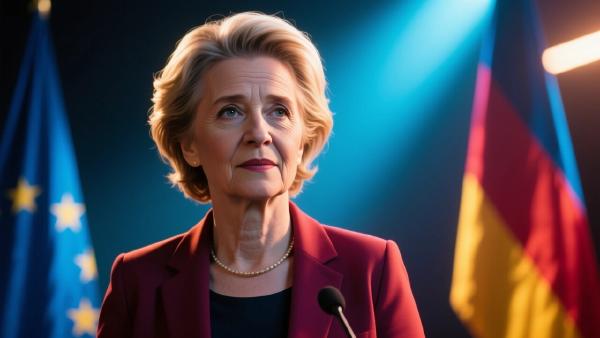
In January 2023, the New York Times filed a case before the General Court of the European Union. The subject: text messages exchanged between Commission President Ursula von der Leyen and Pfizer CEO Albert Bourla during negotiations over the largest vaccine procurement in European history — approximately 1.8 billion doses at around €35 billion.
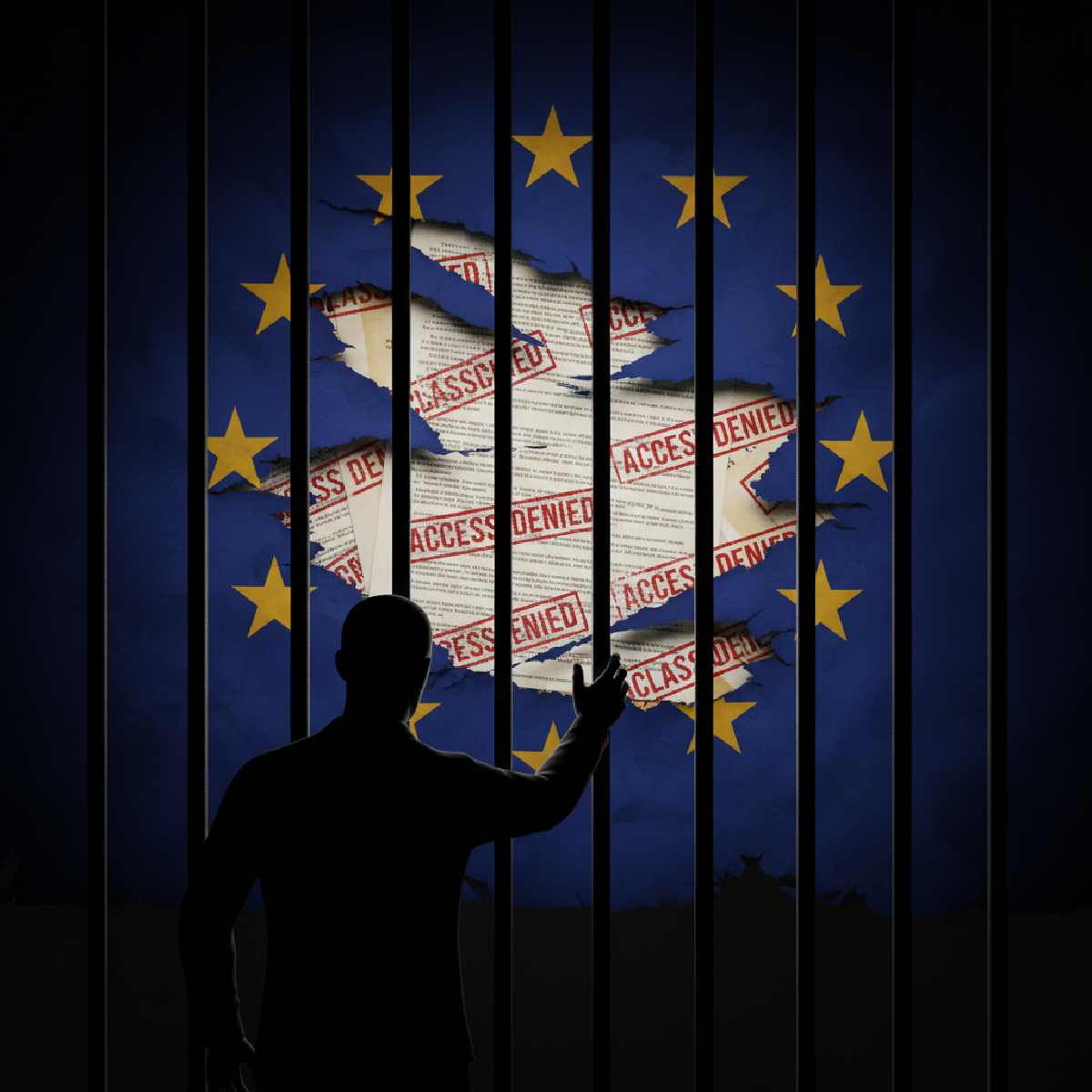
The Commission responded to the transparency request under Regulation (EC) No 1049/2001: the messages were not in its possession.
On 14 May 2025, the General Court ruled in Case T-36/23 (New York Times Company v European Commission): the refusal was unlawful. The Commission had not sufficiently demonstrated that the messages were unfindable or fell outside the scope of the Regulation.
The ruling overturns the refusal. The SMS messages have not been disclosed. The Court found that the Commission failed to meet its obligation to justify the refusal — the substantive question remains open.
Regulation 1049/2001 — the EU’s transparency framework — was anchored in the 1997 Treaty of Amsterdam. The principle: documents of the institutions are accessible; exceptions are narrow. What the ruling makes visible: that principle holds only as far as institutions cannot simply decline to discharge the burden of proof for exceptions.
Federal Level: Germany’s Freedom of Information Act Becomes an Obstacle Course#
On 2 July 2026, the coalition committee of SPD and CDU agreed on the outline of a reform to Germany’s Freedom of Information Act (Informationsfreiheitsgesetz, IFG). No draft legislation exists yet. What is known comes from reporting by FragDenStaat and netzpolitik.org, both published the same day.
The reform targets three levers.
Lever 1: Legitimate interest. Applicants will be required to demonstrate a “legitimate interest” in their request. The 2005 IFG contains no such requirement — anyone can submit a request without stating reasons. That principle is to be removed.
Lever 2: Standing. Only natural persons will retain standing to file requests. NGOs, editorial teams, and associations — the primary users of the IFG for systematic research — are excluded.
Lever 3: Uncapped fees. The existing €500 fee cap is abolished. Cost recovery becomes the governing principle. What that means in practice the state has already demonstrated: a complex IFG request can trigger fee demands running to tens of thousands of euros.
Lead ministry: Federal Interior Ministry under Alexander Dobrindt (CSU). Working group chair: Philipp Amthor (CDU).
What the IFG Has Actually Produced#
The German mask scandal of 2020/21 would not have been investigated without the IFG. Federal Health Minister Jens Spahn had procured face masks worth €700 million through an intermediary during the pandemic — Andrea Tandler, daughter of a former CSU Secretary-General. Her commission: €48 million.
The Federal Ministry of Health refused to release the relevant documents. FragDenStaat brought a claim for disclosure of emails between Spahn and Tandler. In February 2023, the Administrative Court Cologne (case ref. 13 K 3485/21) ordered disclosure. The Sudhof memorandum — an internal ministry document recording concerns about the procurement — was also obtained via the IFG.
Under the proposed rules, that claim would not have been possible: FragDenStaat is not a natural person and would not have established a “legitimate interest” in government correspondence.
Synthesis: Who Reforms the Transparency Law?#
The actors in the mask scandal are not the same as the actors behind the IFG reform. Spahn is not Dobrindt. One CDU government is not another.
But the structural position is the same: those who are subject to retrospective scrutiny under transparency law are now reforming it.
| Actor | Position on the reform |
|---|---|
| SPD + CDU (coalition) | sponsors the reform |
| Federal Interior Ministry (Dobrindt) | lead agency |
| FragDenStaat, netzpolitik.org | opposing the reform |
| NGOs and editorial teams | removed from standing |
| Private individuals without resources | effectively excluded by cost barrier |
This is not evidence of coordination. It is evidence of structural logic: those who fear transparency have an incentive to restrict it. Those who can restrict it do.
Juncker described the method in 1999. He did not recommend it — he recorded it. Step by step. Until there is no turning back.
What was decided on 2 July 2026 as coalition committee outline will become a draft, then a statute. Whether there is no turning back will be settled in parliamentary committee. No bill exists yet.
Finding#
The pattern on both levels is identical: transparency law applies until those it binds can reform it.
At EU level, Case T-36/23 made the mechanism visible: the Commission did not treat Regulation 1049/2001 as a binding obligation but as an obstacle course it could shape. The ruling is a correction. It is not a guarantee.
At federal level, the reform is labelled “modernisation”. Three levers that in combination functionally hollow out the IFG — legitimate interest requirement, restricted standing, fee barrier without cap. The mask case shows what would no longer be possible under these rules.
Juncker captured the method in a single sentence in 1999. The evidence for the pattern is publicly available — in court judgments, in coalition committee records, in the accounts of those who use the IFG every day.
Sources: Der Spiegel No. 52/1999, 27 December 1999 (paywalled) — Juncker quotation; EU General Court, Case T-36/23, judgment 14 May 2025; Regulation (EC) No 1049/2001; FragDenStaat, 2 July 2026; netzpolitik.org, 2 July 2026; Administrative Court Cologne, case ref. 13 K 3485/21, judgment February 2023.