
  1. Blog/

Tech

··176 words·1 min

Why LLMs are not Intelligent
#

What is an LLM?
#

A Large Language Model (LLM) like GPT-4 is a massive statistical engine that predicts the next most likely word in a sentence based on training data. It doesn’t think. It doesn’t understand. It completes patterns.


How Transformers Work
#

  • Inputs (tokens) are converted to vectors.
  • Self-attention layers calculate relationships between tokens.
  • The model predicts the next token using statistical weighting.

There is no internal world model, no consciousness, no logic engine.

Example: Input: “The cat sat on the…” Output: “…mat” (highest statistical likelihood from training data)


Why it’s not Intelligence
#

  • No understanding of meaning.
  • No memory between sessions (unless externally engineered).
  • No intention or goal beyond completing patterns.

LLMs are ELIZA on steroids: eloquent, scaled, but fundamentally hollow.


Analogy
#

LLMs are like very fast autocomplete machines with a huge memory – not minds.
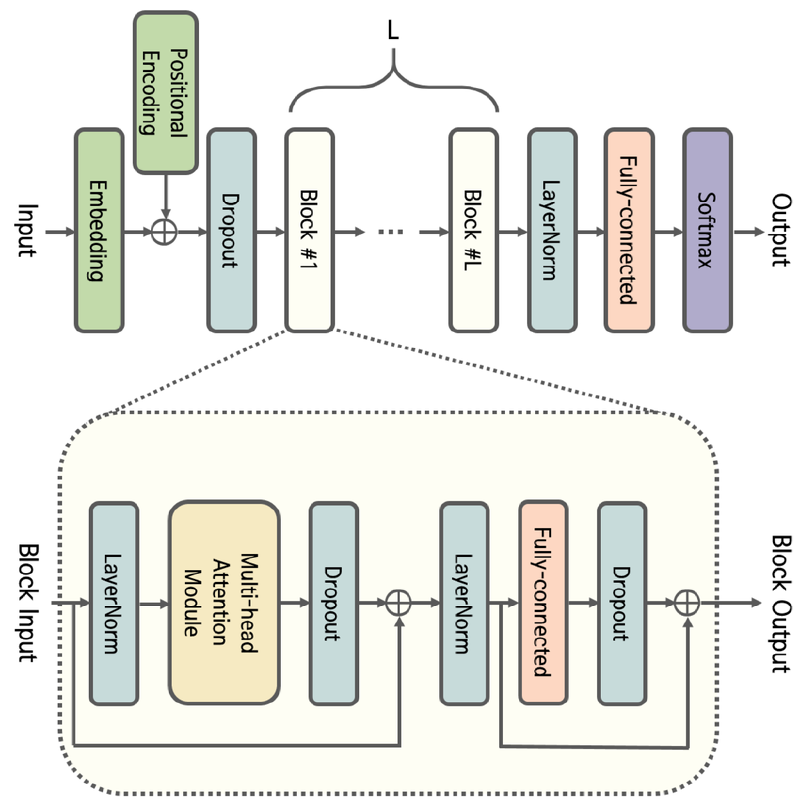
Neural Network Architecture of GPT

Quelle: ResearchGate, CC BY-NC-ND 4.0


Summary
#

LLMs are powerful tools, but calling them “intelligent” is misleading. This site exposes how this false label is used to manipulate public perception.


Related

ChatGPT Search: Google Killer or Censorship Upgrade? A Critical Look Behind the AI Search Engine

OpenAI officially launched ChatGPT Search on September 1st, 2025 – an AI-based search engine that directly challenges Google. But while the tech world speaks of “revolutionary search,” a critical question arises: Will ChatGPT Search democratize information or establish the most subtle form of censorship we’ve ever seen?

iPhone 16 AI: Apple's Surveillance Revolution in Privacy Clothing

Apple celebrates the iPhone 16 as “the biggest leap in iPhone history” – powered by “revolutionary AI that respects your privacy.” But behind the marketing glitter lies a dark truth: The iPhone 16 is the most sophisticated surveillance machine ever placed in millions of pockets.

EU-US AI Safety Summit: How Regulatory Theater Kills Real Innovation

The AI Safety Illusion: What “Security” Really Means # Marketing vs. Reality: # “AI Safety” Marketing: # “Protection from dangerous AI” “Algorithmic Accountability” “Bias Prevention” “Transparent AI Systems” “Human-Centric AI Development” “AI Safety” Reality: # Market entry barriers for startups Compliance costs that only Big Tech can handle Innovation paralysis through bureaucratic processes Regulatory arbitrariness as competitive weapon Surveillance legitimization in the name of “safety” Concrete “Safety” Measures and Their True Goals: # 1. “AI Model Registration” # Officially: “Create transparency about AI systems”

EU AI Act: The Gentle Stranglehold of Bureaucracy - How Europe Stifles AI Innovation

On August 1st, 2025, the EU AI Act came fully into force – Europe’s response to the rapid development of artificial intelligence. The EU celebrates itself as the “first continent with comprehensive AI regulation.” But behind the headlines lurks a bureaucratic monster that stifles innovation while ignoring the real problems.