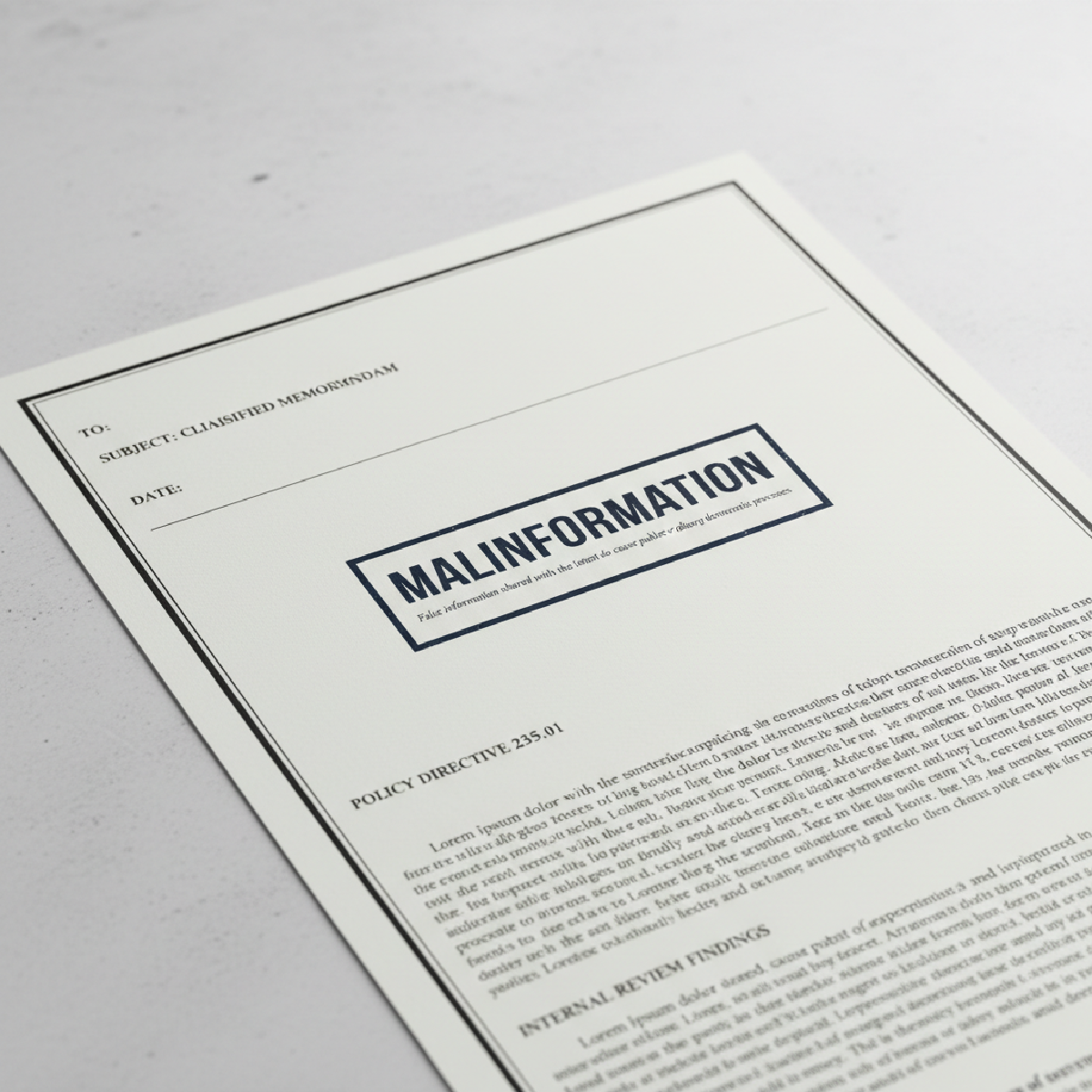
The Virality Project worked with an internal category called “malinformation.” The definition: factually accurate information that could cause vaccine hesitancy. The category turned true statements into “actionable content” — content reported to platforms and recommended for removal.
That is the story. Not the question of whether platforms may moderate content. But what a government-linked infrastructure did with verified, accurate information.
The Virality Project#
The Virality Project was established in 2021 as a COVID-specific extension of the Election Integrity Partnership — a consortium comprising the Stanford Internet Observatory, the University of Washington Center for an Informed Public, Graphika, and the Atlantic Council’s Digital Forensic Research Lab. The same four organizations, the same JIRA ticketing system that had already served as a channel between governmental partners and platform teams during the 2020 election year.
Governmental partners: CISA (Cybersecurity and Infrastructure Security Agency) and the Global Engagement Center of the State Department. Platform partners: Facebook, Google/YouTube, Twitter, TikTok.
The Twitter Files (Part 19, March 17, 2023, published by Matt Taibbi and Michael Shellenberger) made internal Virality Project documents public — including the definition of “malinformation” and the list of what the project classified as actionable.
What Was Classified as Actionable#
“Actionable” in the Virality Project’s system meant: reportable to platforms, recommended for moderation review.
Specifically flagged content:
A consolidated VAERS PDF. The Vaccine Adverse Event Reporting System is the official US reporting system for vaccine side effects. A PDF consolidating VAERS data was classified as actionable — Google removed it after the report.
Reports of AstraZeneca blood clots. True accounts of documented clotting events following AstraZeneca vaccination — at a time when those same cases were already leading to authorization restrictions across Europe.
A New York Times article on thrombocytopenia. A Times report on platelet disorders following COVID vaccination, based on peer-reviewed case reports. An article from one of the world’s most widely read newspapers.
A school closure in Central New York. A school had temporarily closed following adverse event reports after vaccination. Reporting on this was classified as “Standard Vaccine Misinformation.”
Discussions of natural immunity and breakthrough infections. Natural immunity as a scientific concept, breakthrough infections as an empirically documented phenomenon — both subject to suppression.
All of these fall under the internal definition of “malinformation”: factually accurate, but liable to cause vaccine hesitancy. The category does not distinguish between true and false. It distinguishes between useful and harmful — useful or harmful measured against a policy objective.
The Pressure From Above#
The Virality Project infrastructure was the institutional framework. The pressure from above was direct.
Lauren Culbertson led Twitter’s US Public Policy team. An internal memo from her, published through the Twitter Files (Part 10, David Zweig, December 26, 2022), documents the communication with the Biden administration:
The administration was “not satisfied with Twitter’s enforcement approach.” It wanted Twitter to do “more” and to “de-platform several accounts.” The tone of communications with Twitter teams was described as “very angry in nature.”
This is not a retrospective complaint. It is an internal Twitter document from 2021 — written by the person conducting the government communications.
Zuckerberg confirmed the basic structure in August 2024, in a letter to the House Judiciary Committee:
“In 2021, senior officials from the Biden Administration, including the White House, repeatedly pressured our team for months to censor certain COVID-19 content, including humor and satire, and expressed a lot of frustration with our teams when we didn’t agree.”
“I believe the government pressure was wrong and I regret that we were not more outspoken about it.”
Humor and satire about COVID. That too was the subject of the pressure.
The Court and Its Limits#
In June 2024, the Supreme Court decided Murthy v. Missouri (603 U.S. 43) by a 6–3 vote to dismiss the case. The majority opinion — written by Justice Barrett — found that the plaintiffs had failed to demonstrate a sufficient connection between the government communications and specific platform decisions taken against them. The case failed on the procedural threshold of standing.
The Supreme Court did not decide that no coercion occurred. It decided that the particular plaintiffs before it were not the right parties to resolve that question.
Justice Alito wrote in dissent — joined by Thomas and Gorsuch:
“The Court permits the successful campaign of coercion in this case to stand as an attractive model for future officials who want to control what the people say, hear, and think.”
Alito described the government’s actions as a “covert scheme of censorship.”
The majority opinion did not refute that characterization. It denied standing. That is an important distinction.
Two Levers, One Logic#
HHS withdrew two FDA studies in October 2025 that documented positive COVID vaccine effects — and in April 2026 blocked a completed CDC/MMWR study. Administrative withdrawal of safety data that produced unwanted findings.
The Virality Project suppressed true information about vaccine side effects between 2021 and 2022 because it could cause vaccine hesitancy.
Both episodes follow the same structural principle: what the public is permitted to know about vaccines is filtered through institutional decisions — once by administrative withdrawal, once by platform pressure. The direction differs each time; the logic is the same.
The HHS episode is documented separately.
What Remains#
The Virality Project created a category for true information that was not to be disseminated. The documents establishing this were made public through the Twitter Files. The Biden administration applied pressure on platforms that Zuckerberg himself has since acknowledged was wrong. The Supreme Court set the constitutional question aside on procedural grounds, leaving it unanswered.
The internal definition of “malinformation” is the document that remains. Factually accurate — and still actionable. That is not a side effect of the system. That is the system.
Further reading on elizaonsteroids.org:
- Unwanted Safety — HHS withdraws COVID vaccine safety studies: two levers, one logic