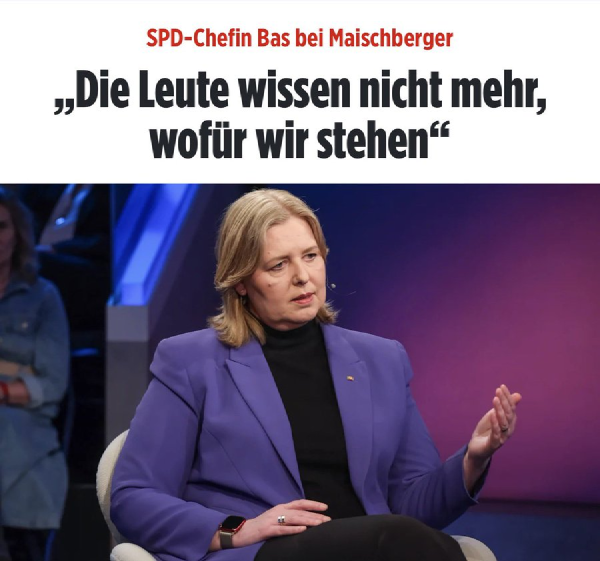
On 4 May 2026, at 08:00, three parties in the German Bundestag post on X almost simultaneously. The text differs by exactly one word.
Greens in the Bundestag (@GrueneB…):
“X has descended into chaos in recent years. Political debates thrive on exchange that reaches and informs people. X, however, increasingly promotes disinformation. That is why we will no longer use this account.”
SPD Parliamentary Group (@spdbt):
“X has descended into chaos in recent years. Political debates thrive on exchange that reaches and informs people. X, however, increasingly promotes disinformation. That is why we will no longer play this account.” #WirVerlassenX
Die Linke (@dieLinke):
“X has descended into chaos in recent years. Political debates thrive on exchange that reaches and informs people. X, however, increasingly promotes disinformation. That is why we will no longer play this account.”
Three parties. One template. One word swapped. One timestamp.
What Is Documented#
The wording across all three posts is identical except for a single verb — the Greens write “use”, SPD and Die Linke write “play” [German: bespielen]. Everything else: word for word the same. This does not happen by coincidence, or through three independent press officers who independently arrived at the same formulation on the same morning.
The one divergent word is the template’s fingerprint: it shows that a shared text base existed, adapted minimally by at least one party. That one existed is proven by the comparison. According to consistent reporting by multiple outlets, the action was prepared over weeks across the three party headquarters.
The Statement Tested Against Itself#
The three parties accuse X of:
- Chaos
- Promoting disinformation instead of exchange
The evidence they simultaneously provide:
- Near-identical text from three sources, coordinated to the same hour
- A shared hashtag as collective messaging
The argument against the platform is made using exactly the instrument the platform is accused of: uniform, synchronized message delivery.
The Rosenbusch Comment#
Henning Rosenbusch (@rosenbusch_) comments 46 minutes after publication:
“Warning: anyone who uses the term ‘one-party state’ or similar is highly suspicious and is questioning Our Democracy.”
The irony works only because the coordinated near-identical posts had already proven the observation before the warning was issued.
What This Is#
Not a conspiracy. Parties coordinate communication — that is their job. What is unusual here: the coordination is tight enough that not even a variation in a subordinate clause survives. No typo. No different word order. No slightly different emoji.
This is not a press release with a similar tone. It is a template printed three times with one word changed.
The initiation is documented: according to Table.Media, the action was initiated by Pegah Edalatian, Political Executive Director of the Greens. Who formulated the exact wording — and whether other parties were offered a template — is not publicly known.
This is not the first time. netzpolitik.org describes May 4 as a “new wave” — local and regional chapters of these parties had already left X in earlier, smaller-scale departures.
The Exception#
The action does not apply without qualification. Ricarda Lang (approximately 190,000 followers) and Cem Özdemir (approximately 375,000 followers), both Greens, have announced they will remain personally active on X. Their stated reason: not to cede the platform to other forces.
The party officially leaves X. Its highest-reach members stay.
Ordinary members and local chapters are recommended to withdraw — not required to. Party and parliamentary group accounts will not be deleted, only silenced.
The Banaszak Contradiction, Explained Live#
Franziska Brantner, Greens co-chair, in an interview on the day of the action:
The journalist’s question is precise: Felix Banaszak has repeatedly emphasised that debates must go where people are outside the party’s own political bubble — and X had been exactly that kind of place. Why leave?
Brantner’s answer, condensed:
“X is not a neutral platform where you meet people you wouldn’t otherwise encounter — it is a platform whose algorithms explicitly polarise.” “Felix Banaszak and I do that every day — in the real, analogue world.” “Maybe [Bluesky] will grow. Maybe equally interesting debates will happen there. Who knows?”
Three statements that together complete the picture.
First: The “go where the people are” argument is withdrawn. X is reframed not as a place of genuine encounter but as an algorithm amplifier. That may be a reasonable position — but it directly contradicts Banaszak’s own publicly repeated argument.
Second: The replacement for digital reach is the analogue. That is honest. It also implies that the parliamentary group’s X accounts may never have served the function their own co-chair’s argument attributed to them.
Third: Bluesky — “Who knows?” — is a hope, not a strategy. The move to a smaller platform is a deliberate trade-off. Reach is not the goal. The signal is.
Brantner adds that Elon Musk has said he wants the AfD to win in Germany. Bots on X are a known quantity. And: “The fact-checkers have been gone for a long time.”
That last point is worth noting. X replaced its earlier fact-checkers — contractually engaged organisations, often NGO-affiliated — with Community Notes: a crowdsourced system. Whether that is better or worse is a legitimate debate. Used as an argument for withdrawal, it frames the end of institutional gatekeeping as equivalent to the end of truth verification altogether.
Good Cop / Bad Cop#
CDU, CSU and FDP did not participate.
CSU Secretary General Martin Huber: “Leaving social networks to the radicals is not an option.”
That is the second half of the performance. SPD, Greens and Die Linke leave — with a template, coordinated, signal-rich. CDU, CSU and FDP stay — and explain why that is the responsible choice.
Result: the platform remains covered by all parties. One side sends the signal “we won’t play along with this.” The other sends the signal “we’re holding the line against the radicals.” Both messages serve their respective voter bases. Both keep X alive as a political stage.
Who wins: X. After this day, the platform is more politically relevant in Germany than it was before — it is now the arena where CDU/CSU battle SPD/Greens/Die Linke. And that is a story everyone reports on.
Epilogue: Bluesky, 9 March 2026#
56 days before SPD, Greens and Die Linke migrate to Bluesky, Jay Graber — founder, public face, and explicit counter-model to Elon Musk — steps down as CEO. New role: Chief Innovation Officer. New interim CEO: Toni Schneider, former head of Automattic (WordPress.com).
Brantner said: “Who knows?”
Source: Bluesky Official Blog, 09.03.2026.
Sources: X/@GrueneBundestag (04.05.2026, 08:00), X/@spdbt (04.05.2026, 08:00), X/@dieLinke (04.05.2026, 08:00); X/@rosenbusch_ (04.05.2026); Rhein-Neckar-Zeitung (04.05.2026); Handelsblatt (04.05.2026); Table.Media/Berlin (04.05.2026); netzpolitik.org (04.05.2026); T-Online (04.05.2026); Evangelische Zeitung (04.05.2026); Franziska Brantner, TV interview (04.05.2026); Bluesky Official Blog (09.03.2026), CNBC (09.03.2026), TechCrunch (09.03.2026).