Pia Aksoy lost her hearing. After an AstraZeneca vaccination in March 2021, experts diagnosed a likely irreversible unilateral hearing loss. The occupational insurance recognized the vaccine injury. But the courts? Two instances dismissed her lawsuit. She had to go all the way to Germany’s Federal Court of Justice (BGH).
You got vaccinated. Or you had COVID. Maybe both. Since then, something’s off — fatigue, brain fog, heart palpitations, pain that wasn’t there before. Your doctor finds nothing. Google doesn’t help. The media tells you it’s in your head.
73 instances of plagiarism in her dissertation, declared 2G exclusion ethically acceptable, pocketed the Federal Cross of Merit — and now she advises the WHO on genome editing.
Alena Buyx has had a remarkable career. In a functioning democracy, that career would have ended long ago. In Germany, you get the Federal Cross of Merit for it.
The spike protein destroys stem cells, subverts immune defense, and accumulates — new research reveals the full extent.
There is a phrase that doctors tell millions of post-COVID and post-vaccination patients: “It will get better on its own.” That phrase is wrong. Current data shows: The spike protein — whether from the virus or the vaccine — does not cause a disease that heals by itself. It causes a progressive, self-reinforcing systemic disorder.
Your browser cannot play this video. Download video.
Originalvideo: Marc Friedrich auf YouTube
Who Is Speaking Here? # Prof. Dr. Sucharit Bhakdi — immunologist, former head of the Institute for Medical Microbiology in Mainz, one of Germany’s most cited physicians. Since 2020, a critic of Covid vaccination policy.
In a recent interview, Bavaria’s Minister-President Markus Söder offered his view on the Corona era. Two minutes that pack a punch — not for what he says, but for what he leaves out.
Nikola Brindley had been a dental nurse for over a decade. She knew vaccines. When she was asked to take AstraZeneca’s COVID jab in July 2021, she agreed without hesitation. Within hours, she was in A&E. Multiple organ systems began to fail. “I collapsed on the doorway and pretty much lost the ability to walk,” she recalls. Today, she uses a wheelchair.
It is spring 2026, and the pattern is repeating itself. A new SARS-CoV-2 variant informally named “Cicada” (BA.3.2) is now detected in at least 31 U.S. states[1]. China and Hong Kong are simultaneously reporting their sharpest case rise “in at least a year”, driven by NB.1.8.1[2]. The WHO notes that “limited surveillance data” are increasingly hampering vaccination strategies worldwide[3].
On 8 December 2020 the German National Academy of Sciences Leopoldina published its 7th Ad-hoc Statement on the coronavirus pandemic, titled “Using the Holidays and the Turn of the Year for a Hard Lockdown.” It demanded, in concrete terms: suspension of compulsory schooling from 14 December 2020, closure of all shops not serving basic supply needs from 24 December, reduction of social contacts to “a very narrowly limited circle,” home office as the rule, suspension of group activities in sport and culture.
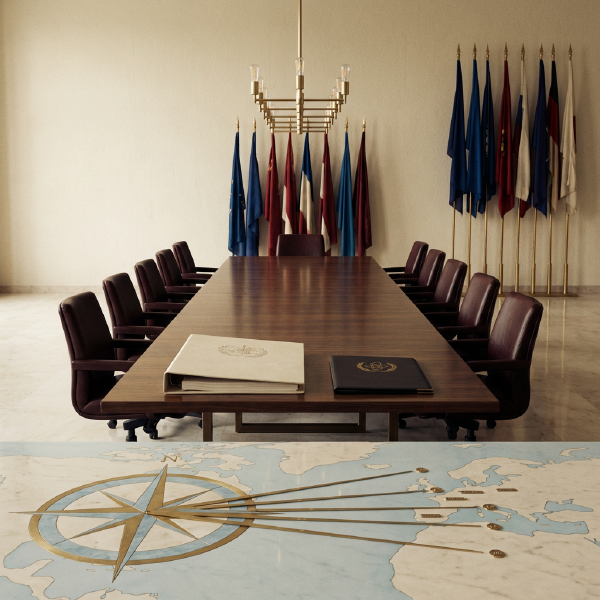
From 22 to 23 June 2001 — three months before 9/11, five months before the anthrax letters — thirteen former senior US officials sat at an oval table in a briefing room at Andrews Air Force Base near Washington and played thirteen days of a smallpox outbreak in thirteen hours. The exercise was called Dark Winter.
On 14 January 2005, in a conference room in Washington, ten former or sitting heads of government from North America and Europe — together with a former WHO Director-General and an array of foreign-policy advisers — gathered around a table and played out a coordinated smallpox attack on six major cities simultaneously: Istanbul, Rotterdam, Warsaw, Frankfurt, New York City, Los Angeles. Within four and a half hours of exercise time the reported case count climbed from 51 to 3,320. The exercise was called Atlantic Storm.
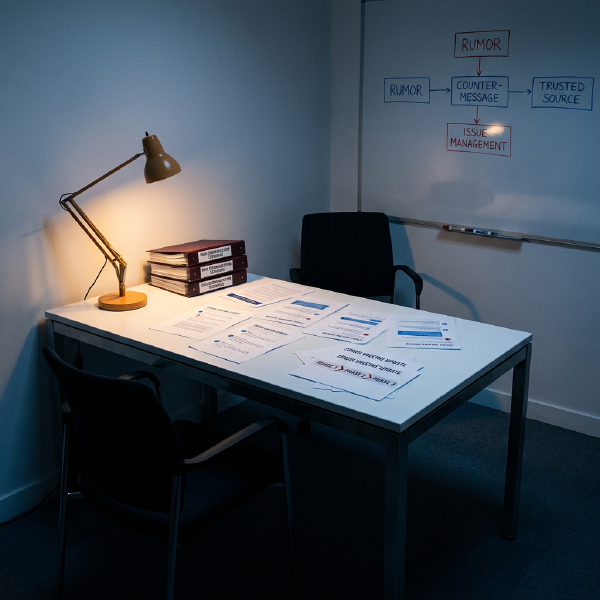
In October 2017 — two years and three months before the first documented COVID case in Wuhan — the Johns Hopkins Center for Health Security published an 89-page document: “The SPARS Pandemic, 2025–2028: A Futuristic Scenario for Public Health Risk Communicators.” It was not a tabletop, not an NSC script like Dark Winter, not a transatlantic political format like Atlantic Storm. It was training material for press offices, PR professionals, risk communicators and agency spokespersons — a pre-written scenario meant to be read, not played.
On 15 May 2018, in the conference hall of the Mandarin Oriental Hotel in Washington, ten former or sitting US senior politicians and senior public-health officials gathered. 150 invited guests watched. A live stream ran simultaneously on Facebook. The exercise was called Clade X, lasted a single day and ended with a fictional outcome of 900 million dead worldwide over eighteen months. Convener: Johns Hopkins Center for Health Security.
On 18 October 2019, in a conference hall at the Pierre Hotel on Fifth Avenue in New York, fifteen people gathered around an oval table. The seating chart, viewed from a distance, looks like a list of the world industries that would become central to a pandemic response. Four hours later, the fictional crisis cell had played out a coronavirus outbreak that, over eighteen months, produced 65 million dead and disrupted supply chains, the travel industry, vaccine procurement, and crisis communications across the entire globe.
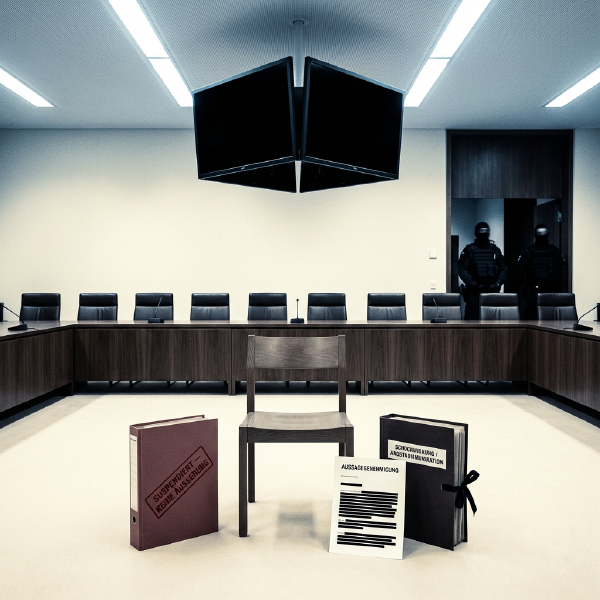
In spring 2020 the German Federal Ministry of the Interior produced two documents which together document the German application of the tabletop language-regulation architecture. Six years later the two papers meet again — as witness and as questioned, in the great hearing room of the German Bundestag, in the framework of the federal inquiry commission “Aufarbeitung der COVID-19-Pandemie.” What happens there is not accountability. It is a second application of the same mechanism.
The body odour changes. Not dramatically, not suddenly — but noticeably. Fermented, sweet, yeasty, sometimes like overripe fruit. Those who know this get a shrug from their doctor: hormone imbalance perhaps, or stress, or not drinking enough water. The biochemistry offers a more precise answer.
A pattern consists of repetitions. This one is documented.
The Timeline # November 2020 — ZDF heute journal # Uğur Şahin in an interview on the BioNTech vaccine: the mRNA candidate was safe, 50 million doses would be delivered before the end of 2020. The decisive trial data were imminent. 1