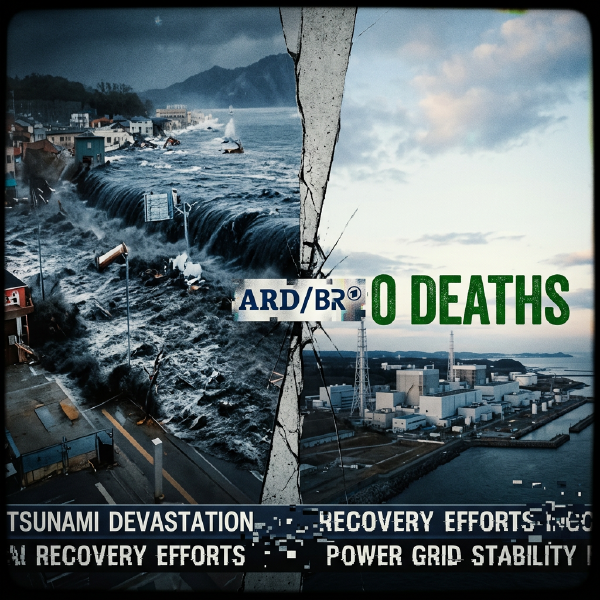
In an era where emotions can be easily manipulated, public broadcasters like ZDF have a special responsibility to deliver well-founded and balanced information. Yet often it seems as if these stations rely more on sensationalism and fear-mongering rather than empirical data and scientific facts.
The Julia Ruhs case represents an unprecedented incident that exposes the structural problems and ideological fault lines within German public broadcasting (ÖRR). As a conservative journalist at Bavarian Broadcasting (BR), she became the center of the biggest media-political controversy in German public broadcasting in 2025, after 250 NDR employees successfully ensured her removal from a joint ARD format. This incident raises fundamental questions about freedom of expression and ideological diversity in the German media system.
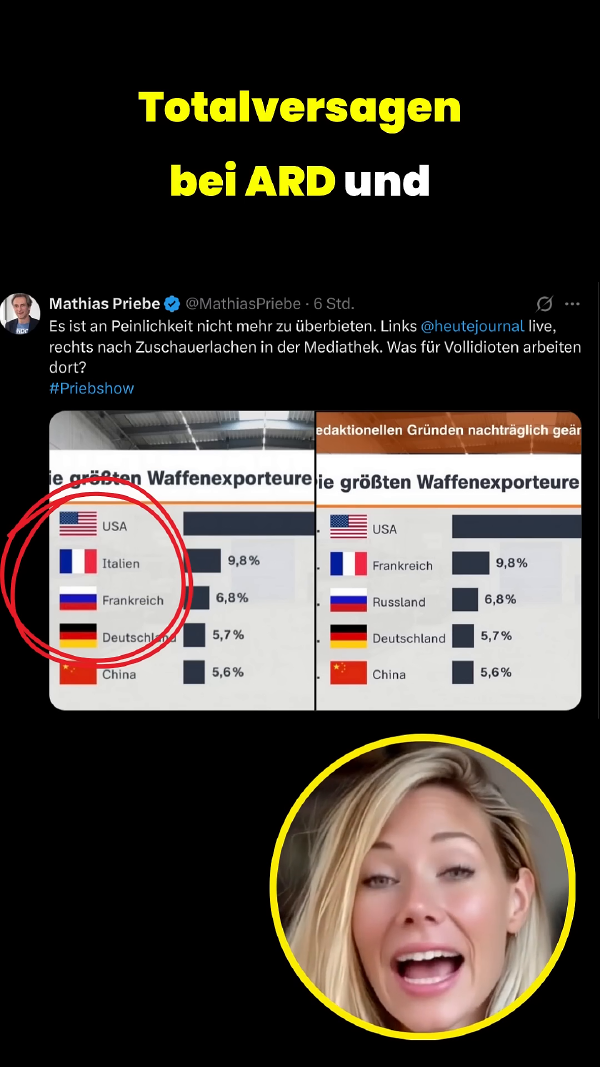
Two Weeks, Two Broadcasters, Two Scandals — German Public Broadcasting in Free Fall # The dust had barely settled on the ZDF debacle — an AI-generated fake video in the flagship news programme “heute journal”, complete with a whistleblower hunt — when the ARD followed suit. Not with a technical error, but with a misrepresentation recycled for 15 years.
When Elementary School Knowledge Becomes a Challenge # You would think that newsrooms funded with over 8.6 billion euros annually would at least know what European flags look like. You would think wrong.
Has anyone seen Georg Restle? Last spotted in Nairobi.
There is a German television legend you need to know to truly understand Georg Restle: Eduard Zimmermann. For thirty years, Zimmermann sat behind his desk at ZDF, furrowed his brow into the camera, and asked: “Have you seen this man?” He was judge, moral authority, and guardian of public order in one person — all on state television, all with a sense of mission, all without the slightest hint of self-doubt.
The Structure: Who Controls the Controller? # The broadcasting council is supposed to represent the public. That is the theory. The reality looks different.
The Allegations Are Real. The Campaign Too. And Homburg’s “Floozy” Comment Says More About Him Than About the Case. # On March 19, 2026, Der Spiegel published a cover story: “You Virtually Raped Me.” Collien Ulmen-Fernandes raises serious allegations against her ex-husband Christian Ulmen — deepfake pornography, identity abuse, psychological violence. On the same day, Ulmen’s lawyer Christian Schertz sends out a press-law information letter [1][2].
A Former Nazi Family, Two Federal Ministries, a Campaign NGO, and a PR Consultant. The Network Behind the Organization Demanding Mandatory Real-Name Identification Online. # What HateAid Is # HateAid is a Berlin-based non-profit GmbH, founded in 2018. Official purpose: counseling and supporting victims of digital violence. 54 employees. 143 cease-and-desist letters and 49 civil lawsuits in 2024.
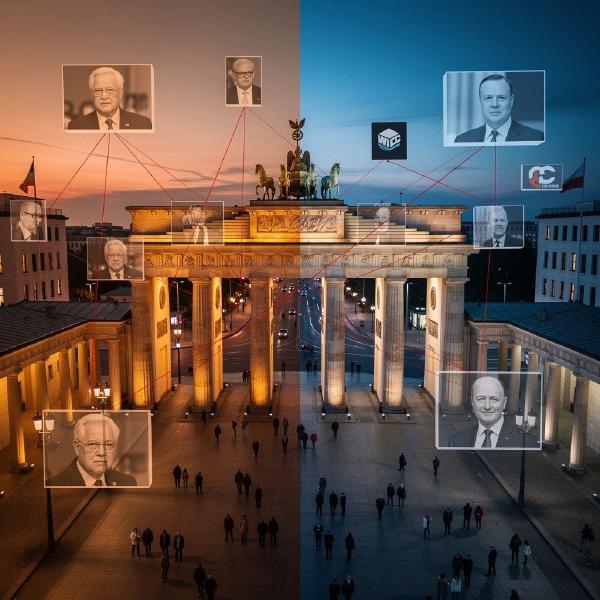
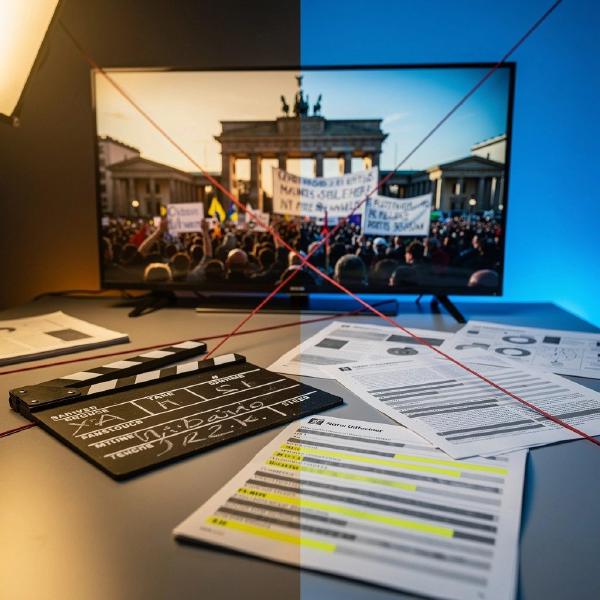
Spiegel on Wednesday. Rally on Sunday. In between: a machine. # The Timeline # Day Date Event Wednesday 19.03.2026 Spiegel publishes cover story: “You virtually raped me.” Ulmen’s lawyer Schertz sends a counter-statement — the same day. Thursday 20.03.2026 Campact has a finished 2,000-word article online. Greens and Left demand stricter laws. Friday 21.03.2026 Fernandes on tagesthemen. Hayali posts video statement (“Become allies!”) — from a private X account. Saturday 21.03.2026 A “newly founded coalition” called “Feminist Fight Club!” announces a rally at the Brandenburg Gate — for the next day. Sunday 22.03.2026 Rally at Brandenburg Gate. Organizers say: 13,000 participants. BILD estimates: 2,500. Police: no official figure. 72 hours. From the cover story to the rally. Including a coalition that didn’t exist before.
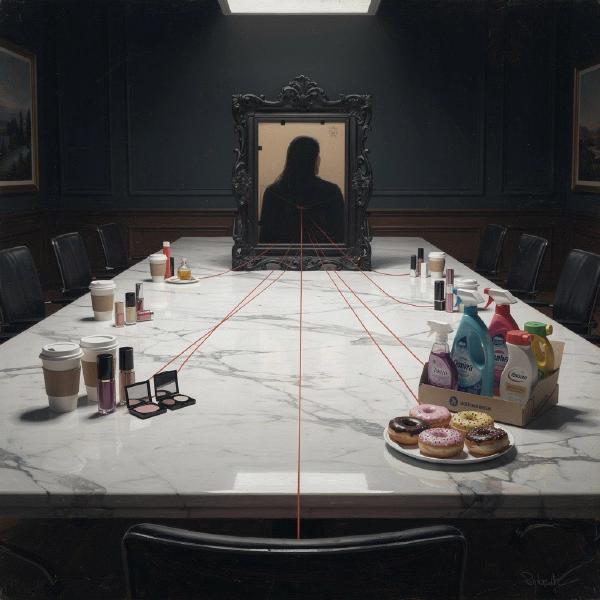
They Drink Their Coffee, Wash Their Laundry, Buy Their Cosmetics — and Don’t Know Who Profits. # The Empire # The Reimann family is among the wealthiest families in the world. Estimated fortune: €35 billion. Their vehicle: JAB Holding Company, registered in Luxembourg.
“Funded by private individuals.” That is what the website says. Bundestag printed paper 19/1426 tells a different story. # What ZPS says # The Centre for Political Beauty (Zentrum für Politische Schönheit, ZPS) describes itself as a “stormtroop for the establishment of moral beauty” [1]. Founder and director: Dr. Philipp Ruch, philosopher and action artist, born 1981 in Dresden [2].
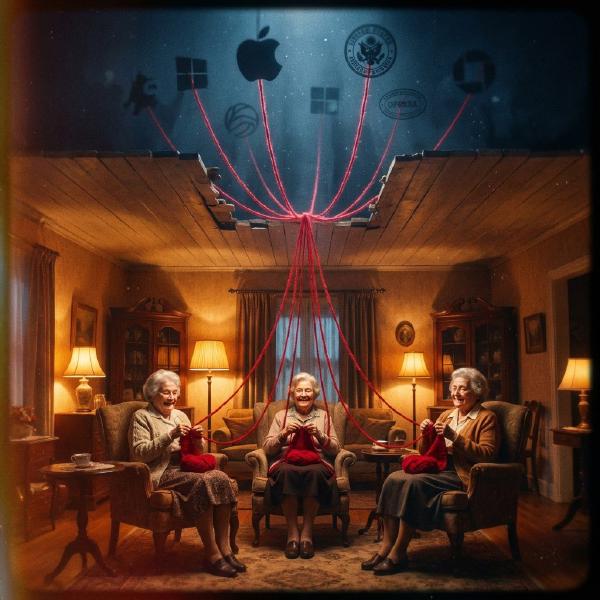
The Omas Are Not the Problem. The Omas Are the Friendly Face. # Who the Omas Are # “Omas gegen Rechts” (Grandmas Against the Right) is one of Germany’s most sympathetic political movements. Founded in 2017 in Vienna by Monika Salzer, and in Germany in 2018/2019 by Anna Ohnweiler from Nagold. Older women standing up against right-wing extremism. Knitted hats, placards, rallies in wind and rain.
September 2024: A film is shot. March 2026: A case becomes public. The film came first. # The film # On Monday, 23 March 2026, ZDF aired the film “Eine bessere Welt” (“A Better World”) at 8:15 p.m. Immediately afterwards, at 10:15 p.m., the documentary “Hate on the Net: A Better World” [1][2].
On March 19, 2026, Der Spiegel published a cover story about Collien Fernandes and digital violence. On the same day, Federal Justice Minister Stefanie Hubig (SPD) announced a new law. That evening, Fernandes and Hubig sat together on Caren Miosga’s ARD show.
Two months after the Berlin II Regional Court’s ruling against Correctiv, two versions of the same story are circulating. In one, a “painstakingly constructed edifice of lies” is collapsing, prizes must be returned, the democracy rallies were propaganda. In the other, Correctiv has won “a victory for press freedom” and the investigation stands.
Part 1 laid out the legal state of play: Three Sentences, Two Courts, No Final Judgment. What that piece could not do: describe the structure behind the investigation — the person, the awards, the money flows. These are not in the operative part of the Berlin ruling, but they explain why the investigation had such outsized impact.
Methodological note. This text describes a temporal correlation and places it within a pattern already documented multiple times on this blog: investigative publication + temporally aligned political or civil-society follow-up (see Fernandes-Ulmen campaign parallel to the deepfake law, Network behind the deepfake law, HateAid-Campact funding pipeline). Strict proof of deliberate orchestration in any single case is hard to obtain; the pattern that any single case fits into is not. Sources are fully linked at the end.
Methodological note. This text is based on primary Bundestag documents (Drucksachen), the foundations’ own websites, Correctiv’s governance page, and the program of the German Federal Office for the Protection of the Constitution (BfV) 2023 Science Conference. Where amounts or positions are only secondary-sourced, this is marked. The point is not to deny Correctiv its legitimacy — it is to show what Correctiv systematically does not show when presenting itself as an “independent” investigative platform.
Methodological note. This text is based on primary Bundestag documents (Drucksachen), the foundation register, the AAS website, and publicly available material on the founder’s Stasi-IM past. Where amounts are only secondary-sourced, this is marked. The foundation does work against right-wing extremism that addresses an unquestionable societal need. The point here is not to deny it its legitimacy — it is to show what the foundation systematically does not show when presenting itself as a “civil society” actor.
Methodological note. This text is based on primary Bundestag documents (20/6621, 20/6702, WD 4-3000-008/23), the Last Generation 2022 transparency report (cited in the Bundestag WD opinion), the IRS Form 990 data of the Climate Emergency Fund via ProPublica and Instrumentl, and the websites of the organisations named. The text separates two layers that are systematically conflated in public discourse: (1) the scientific-political question of the climate crisis, and (2) the structural question of who, with what money, organised what kind of activism. The first layer is not negotiated here. The second is the subject.
Der Spiegel is regarded as the gold standard. Its in-house “Dokumentation” department is held up as a fact-checking operation without peer. The red magazine as an institution that toppled chancellors, exposed scandals, protected democracy.
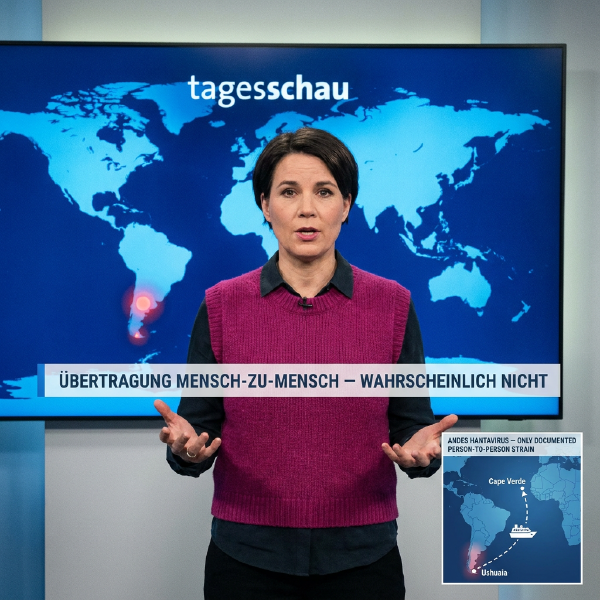
On 4 May 2026 — the same day the WHO officially confirms the hantavirus outbreak aboard the MV Hondius — Germany’s tagesschau airs a 99-second explanatory clip in its vertical social-media format. A young presenter stands before a glowing blue world-map backdrop with the tagesschau wordmark above her. Cut in: a statement by Stefan Schmiedel — “Infektiologe und Tropenmediziner” (infectious disease specialist and tropical medicine physician), identified in the lower third without further context. In substance, he is the leading Hamburg-UKE voice on imported tropical disease.
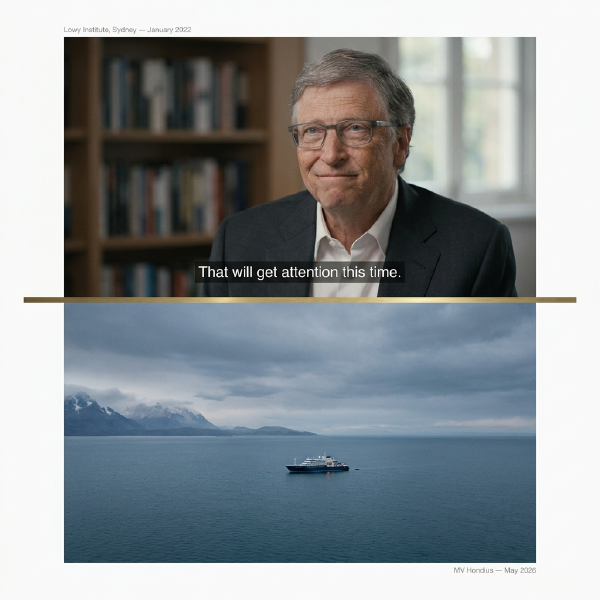
In 2022, Bill Gates sits in the ABC studio of The View — promoting his book “How to Prevent the Next Pandemic”, published 3 May 2022 by Knopf Doubleday — and delivers a line that comes out with an unmistakable smirk pulling at the corner of his mouth:
In April 2026, the Copernicus journal Geoscientific Model Development publishes a methodological overview paper that goes virtually unreported in mainstream climate coverage. Author: Detlef van Vuuren and the CMIP7 ScenarioMIP consortium — the official working group that defines the emissions scenarios on which the next IPCC assessment cycle, and global climate modelling more broadly, will be built.