The COVID-19 pandemic has shaped the world in various ways over the past few years, and one of the most controversial developments is the discussion surrounding the long-term effects of COVID-19 vaccines. In this blog post, we take a scientific look at the so-called “pandemic of the vaccinated” and examine what the latest scientific findings have to say about it.
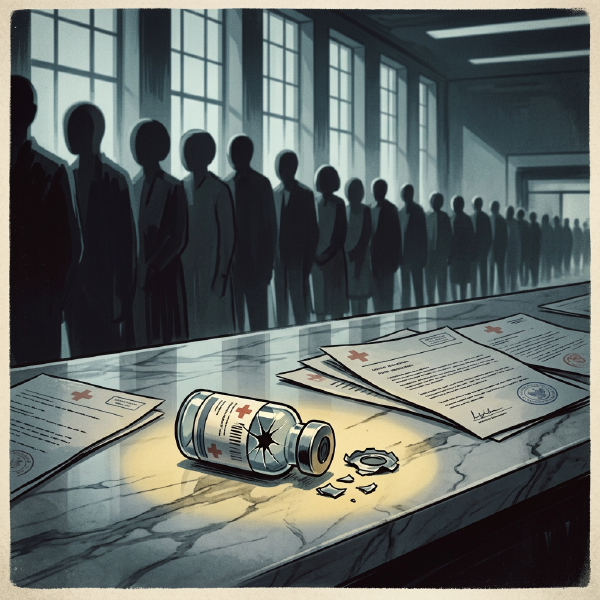
This is a documentary without easy answers. No conspiracy theories, no minimization — just faces, names, diagnoses. People who were harmed during the COVID years: physically, professionally, socially. And the question that remains at the end: who takes responsibility?
When a Health Minister with a Questionable Track Record Aims for the Top of Global Health Policy # Karl Lauterbach is being floated as a candidate for the position of WHO Director-General. You have to read that sentence twice to grasp what is happening. The man who promoted the COVID vaccine as “more or less side-effect-free” — on national television, in February 2022, to an audience of millions — is supposed to decide the health policy of the entire planet.
Everyone is staring at the wrong thing.
Since the Epstein files dropped, public attention has locked onto the obvious — prominent names, sexual misconduct, a convicted pedophile with impossible connections. That story is real and it matters. But Prof. Roland Wiesendanger, physicist and nanoscientist at the University of Hamburg, spent his time in the documents looking somewhere else. And what he found is arguably bigger.
No monitoring, no data, no consequences — but the vaccines were of course “safe and effective.”
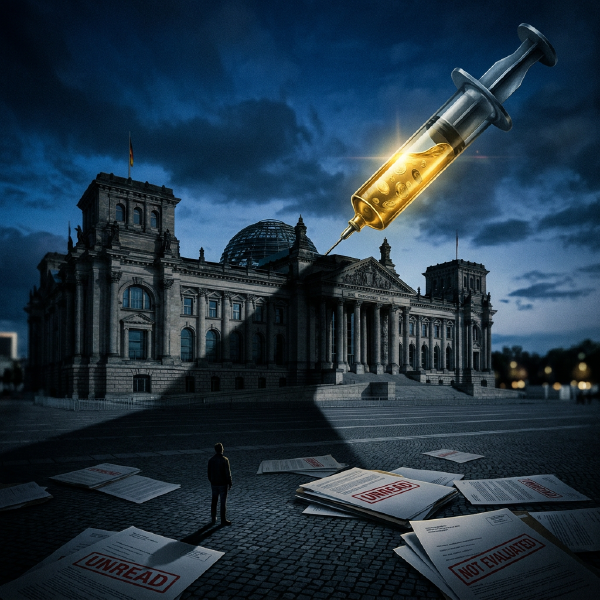
It is one of the biggest scandals in Germany’s postwar history — and hardly anyone is talking about it. BioNTech, the Mainz-based company celebrated as the hero of the pandemic, positioned itself legally so that it is formally not even a vaccine manufacturer. And the authority responsible for monitoring vaccine safety — the Paul Ehrlich Institute (PEI) — failed to evaluate the legally mandated data for years.
What If Everything Is Connected? A Source-Based Reconstruction of the Chain of Events 2018–2027 # Note: This article formulates a hypothesis. Every single source is verifiable. The connections drawn between the facts are interpretation. The reader should think for themselves — not be led.
124 States Said Yes. The US Said No. And Germany Is Paying the Bill. # In May 2025, 124 WHO member states adopted an international pandemic agreement in Geneva — the most far-reaching health accord since the International Health Regulations of 2005. Eleven states abstained, including Italy, Poland, Israel, Russia, and Iran. No state voted against it [1][2].
657,000 People Left the Church in 2025. NIUS Blames “Wokeness.” The Real Problem Remains Unspoken. # 657,000 people left Germany’s two major churches in 2025 — 350,000 Protestants, 307,000 Catholics [1]. Since 2019, the churches have lost over 4 million members. From 44 million down to under 37 million. An exodus of biblical proportions.
On March 19, 2026, something happened in the Bundestag that the media would rather downplay as a “heated exchange.” In truth, it was an indictment. # The Bundestag’s Corona Enquete Commission convened on Thursday under the title “Healthcare System Performance, Vaccination Strategy, and Research.” What was planned as a sober review turned into a tribunal over the federal government’s vaccination policy. So uncomfortable that audience members were expelled from the chamber — not because they were disruptive, but because they applauded [1][2].
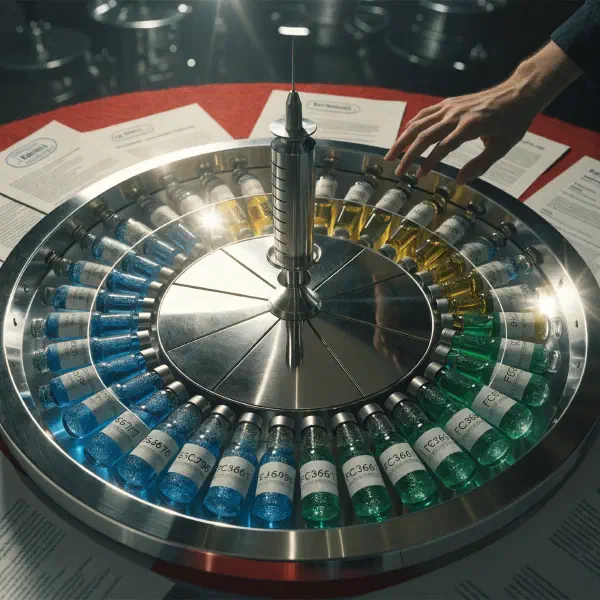
The Danish data shows what should never have happened: Identical product, completely different outcomes. Some batches cause illness. Some do — nothing at all. # In December 2025, Hamburg mathematics professor Hans-Juergen Bandelt published the first part of a three-part analysis on tkp.at. His starting point: the Danish study by Schmeling and Manniche, peer-reviewed and published in the European Journal of Clinical Investigation in 2023 [1]. His finding: More than 30% of BioNTech batches were practically ineffective — and the PEI knew it [2][3][4].
In 2009, Campino refused the swine flu vaccine. In 2021, he promoted the COVID vaccine. 200 musicians joined in. 53 actors dared to dissent — and paid the price. A reckoning. # Act I: #VaccinationProtects — August 25, 2021 # On a Wednesday in August 2021, over 200 German musicians, bands, and festivals simultaneously plastered their social media channels with a single hashtag: #impfenschuetzt [#VaccinationProtects] [1][2][3].
A journalist sues. A court decides. 2,500 pages confirm what three years of “conspiracy theory” suppressed: the RKI acted on political orders — not scientific evidence. # The Man Who Didn’t Give Up # Paul Schreyer is a journalist and co-editor of Multipolar Magazine. Not an activist, not a Telegram influencer — a journalist who used Germany’s Freedom of Information Act (IFG) for its intended purpose: making state action transparent.
“Children are only slightly affected.” That’s what the STIKO chair said about COVID. What he didn’t say: the measures hit them harder than the virus. # The Numbers Nobody Wanted to Hear # The COPSY Study from the University Medical Center Hamburg-Eppendorf (UKE) under Prof. Ulrike Ravens-Sieberer is the most comprehensive longitudinal study on the mental health of children and adolescents during the pandemic in Germany.
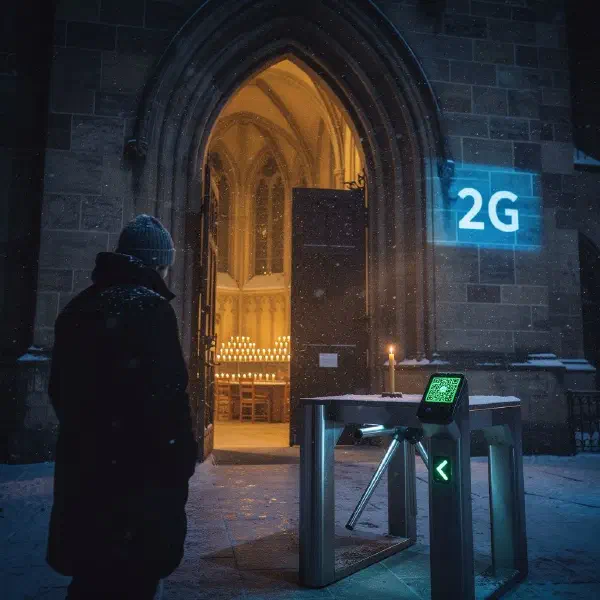
Vaccinated or out. For twelve months, a QR code decided about fundamental rights. The justification — protection of others — was false. The society that went along doesn’t want to remember. # The Foundation That Wasn’t One # The entire 2G regulation was based on a single assumption: whoever is vaccinated protects others. Protection of others. Solidarity. “My vaccination protects you.”
The vaccination rate among over-60s for the flu shot is, according to the RKI, at its lowest level in 17 years [1]. The COVID-19 vaccination rate in this age group has fallen by more than a third compared to the previous season [2]. At the same time, data from Denmark show that different BioNTech batches showed different adverse-event rates — a study that the PEI dismissed as “not meaningful” without presenting its own data [3].
On 8 December 2020 the German National Academy of Sciences Leopoldina published its 7th Ad-hoc Statement on the coronavirus pandemic, titled “Using the Holidays and the Turn of the Year for a Hard Lockdown.” It demanded, in concrete terms: suspension of compulsory schooling from 14 December 2020, closure of all shops not serving basic supply needs from 24 December, reduction of social contacts to “a very narrowly limited circle,” home office as the rule, suspension of group activities in sport and culture.
From 22 to 23 June 2001 — three months before 9/11, five months before the anthrax letters — thirteen former senior US officials sat at an oval table in a briefing room at Andrews Air Force Base near Washington and played thirteen days of a smallpox outbreak in thirteen hours. The exercise was called Dark Winter.
On 14 January 2005, in a conference room in Washington, ten former or sitting heads of government from North America and Europe — together with a former WHO Director-General and an array of foreign-policy advisers — gathered around a table and played out a coordinated smallpox attack on six major cities simultaneously: Istanbul, Rotterdam, Warsaw, Frankfurt, New York City, Los Angeles. Within four and a half hours of exercise time the reported case count climbed from 51 to 3,320. The exercise was called Atlantic Storm.
In October 2017 — two years and three months before the first documented COVID case in Wuhan — the Johns Hopkins Center for Health Security published an 89-page document: “The SPARS Pandemic, 2025–2028: A Futuristic Scenario for Public Health Risk Communicators.” It was not a tabletop, not an NSC script like Dark Winter, not a transatlantic political format like Atlantic Storm. It was training material for press offices, PR professionals, risk communicators and agency spokespersons — a pre-written scenario meant to be read, not played.
On 15 May 2018, in the conference hall of the Mandarin Oriental Hotel in Washington, ten former or sitting US senior politicians and senior public-health officials gathered. 150 invited guests watched. A live stream ran simultaneously on Facebook. The exercise was called Clade X, lasted a single day and ended with a fictional outcome of 900 million dead worldwide over eighteen months. Convener: Johns Hopkins Center for Health Security.
On 18 October 2019, in a conference hall at the Pierre Hotel on Fifth Avenue in New York, fifteen people gathered around an oval table. The seating chart, viewed from a distance, looks like a list of the world industries that would become central to a pandemic response. Four hours later, the fictional crisis cell had played out a coronavirus outbreak that, over eighteen months, produced 65 million dead and disrupted supply chains, the travel industry, vaccine procurement, and crisis communications across the entire globe.
In spring 2020 the German Federal Ministry of the Interior produced two documents which together document the German application of the tabletop language-regulation architecture. Six years later the two papers meet again — as witness and as questioned, in the great hearing room of the German Bundestag, in the framework of the federal inquiry commission “Aufarbeitung der COVID-19-Pandemie.” What happens there is not accountability. It is a second application of the same mechanism.
On 22–23 April 2026, the WHO conducted Exercise Polaris II: a two-day pandemic simulation involving 26 countries, 600 health experts, and more than 25 partner organisations. The scenario: a fictional new bacterial strain spreading across 27 countries. Ten days later, the WHO confirmed the first hantavirus cluster aboard the MV Hondius.
On 18 May 2026, the 79th World Health Assembly (WHA79) opens in Geneva. On the agenda: the PABS annex to the WHO Pandemic Agreement — the mechanism that is supposed to determine what countries receive in return for sharing pathogen data that enables vaccine and drug development.
On 5 May 2026, BioNTech announces: up to 1,860 jobs cut — 22 percent of its workforce. The plants in Idar-Oberstein and Marburg close by end of 2027. The CureVac sites too. COVID vaccine production transfers entirely to Pfizer.
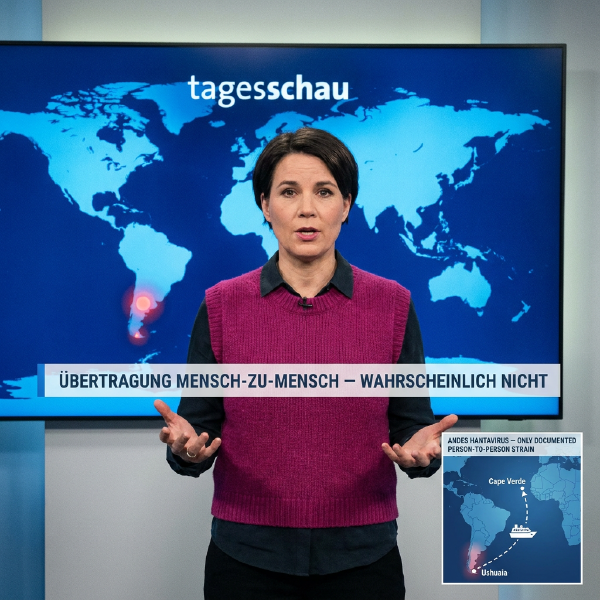
On 4 May 2026 — the same day the WHO officially confirms the hantavirus outbreak aboard the MV Hondius — Germany’s tagesschau airs a 99-second explanatory clip in its vertical social-media format. A young presenter stands before a glowing blue world-map backdrop with the tagesschau wordmark above her. Cut in: a statement by Stefan Schmiedel — “Infektiologe und Tropenmediziner” (infectious disease specialist and tropical medicine physician), identified in the lower third without further context. In substance, he is the leading Hamburg-UKE voice on imported tropical disease.
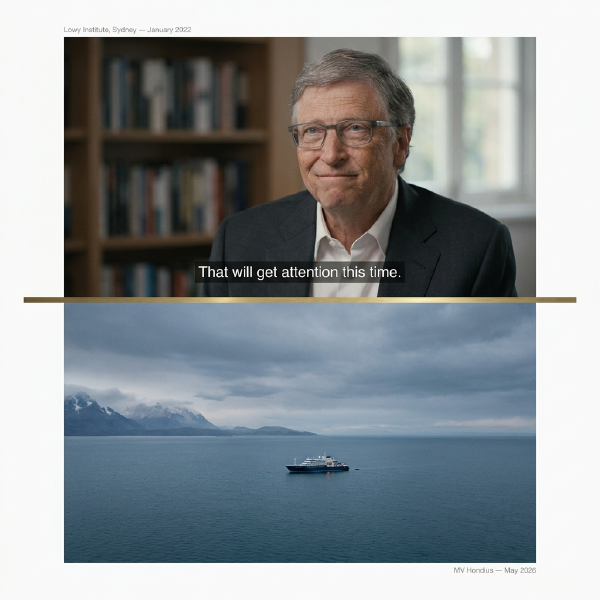
In 2022, Bill Gates sits in the ABC studio of The View — promoting his book “How to Prevent the Next Pandemic”, published 3 May 2022 by Knopf Doubleday — and delivers a line that comes out with an unmistakable smirk pulling at the corner of his mouth:
124 yes votes, zero no votes, historic. And not a single country has ratified since May 2025 — not because of resistance, but because the treaty text itself contains a prerequisite that remains unfulfilled. Why the ratification clock has never started.