In the meninges and skull bone of COVID survivors, spike protein remains detectable for up to four years after infection, independent of direct viral infection of the brain and likely sustained by viral reservoirs. Meta-analyses covering more than four million patients find memory problems in 27.8% of people with Long COVID, while PET scans still show elevated microglial activation two years after infection. All of this is unfolding without epidemiological surveillance, without a national monitoring program, and inside a public debate in which mainstream institutions avoid the persistence findings to protect the vaccination ledger while vaccine critics downplay the quantitative dominance of infection in order to keep the vaccine in the role of principal culprit.
The body odour changes. Not dramatically, not suddenly — but noticeably. Fermented, sweet, yeasty, sometimes like overripe fruit. Those who know this get a shrug from their doctor: hormone imbalance perhaps, or stress, or not drinking enough water. The biochemistry offers a more precise answer.
The spike protein destroys stem cells, subverts immune defense, and accumulates — new research reveals the full extent.
There is a phrase that doctors tell millions of post-COVID and post-vaccination patients: “It will get better on its own.” That phrase is wrong. Current data shows: The spike protein — whether from the virus or the vaccine — does not cause a disease that heals by itself. It causes a progressive, self-reinforcing systemic disorder.
You got vaccinated. Or you had COVID. Maybe both. Since then, something’s off — fatigue, brain fog, heart palpitations, pain that wasn’t there before. Your doctor finds nothing. Google doesn’t help. The media tells you it’s in your head.
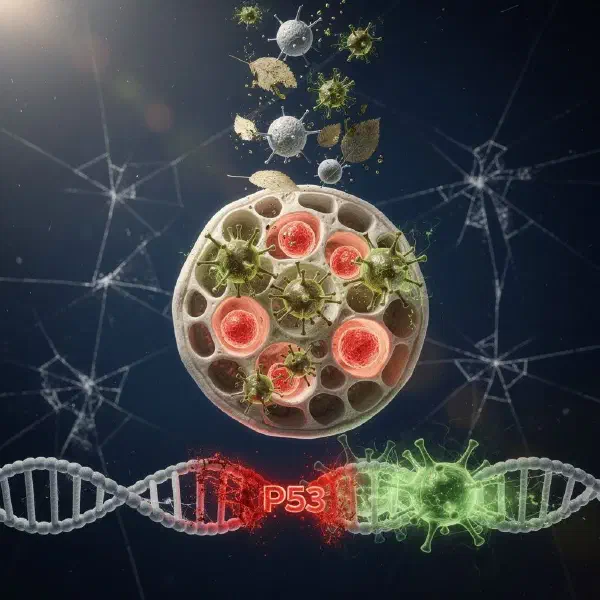
The provided summary is based on a recent conversation (likely a video interview) with Dr. Patrick Soon-Shiong, a renowned oncologist, biotech entrepreneur, and founder of ImmunityBio. Soon-Shiong has presented similar theses in several public appearances, including interviews with Tucker Carlson in March 2025 and posts on X. The claims are largely plausible and supported by scientific literature where verifiable. However, they represent a mix of established facts, preliminary observations, and speculative hypotheses. The specific study on COVID-19 and p53 inhibition, conducted with Dr. Carlos Cadona, has not been published by November 2025. Soon-Shiong describes it as “soon to be published,” indicating ongoing research but not yet providing peer-reviewed evidence.