In April 2026, the Copernicus journal Geoscientific Model Development publishes a methodological overview paper that goes virtually unreported in mainstream climate coverage. Author: Detlef van Vuuren and the CMIP7 ScenarioMIP consortium — the official working group that defines the emissions scenarios on which the next IPCC assessment cycle, and global climate modelling more broadly, will be built.
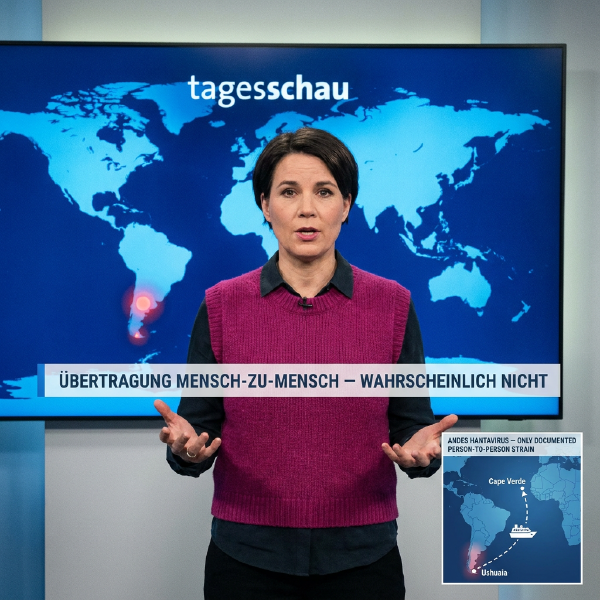
On 4 May 2026 — the same day the WHO officially confirms the hantavirus outbreak aboard the MV Hondius — Germany’s tagesschau airs a 99-second explanatory clip in its vertical social-media format. A young presenter stands before a glowing blue world-map backdrop with the tagesschau wordmark above her. Cut in: a statement by Stefan Schmiedel — “Infektiologe und Tropenmediziner” (infectious disease specialist and tropical medicine physician), identified in the lower third without further context. In substance, he is the leading Hamburg-UKE voice on imported tropical disease.
Der Spiegel is regarded as the gold standard. Its in-house “Dokumentation” department is held up as a fact-checking operation without peer. The red magazine as an institution that toppled chancellors, exposed scandals, protected democracy.
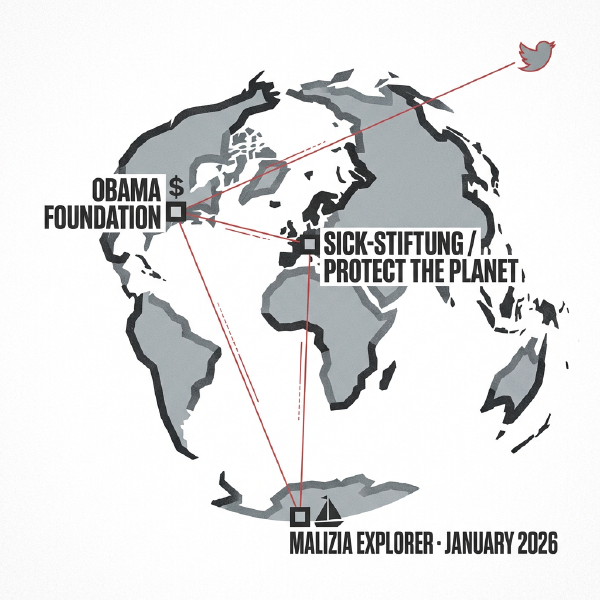
Four stations, one data point that remains unanchored between them.
26 August 2021 — UN Special Rapporteur on Torture Nils Melzer sends an official communication, file reference AL DEU 6/2021, to the German Federal Government. Trigger: numerous reports and video recordings of disproportionate police force against protesters at anti-Covid demonstrations in Berlin, particularly on August 1, 2021.1
Anyone entering this matter through the question “How can a rejected asylum seeker sit on the BR Broadcasting Council?” is already in the wrong frame. That frame has been delivered since September 2025 in dense frequency by a recognisable clickbait cluster — Apollo News, Tichys Einblick, Junge Freiheit, Politikversagen — and that frequency itself is the material on which the actual process is built. The actual process is a function inversion: a member of an oversight body, mandated by the Bavarian Broadcasting Act to safeguard plurality, has run a wave of criminal complaints since the late summer of 2025 against media plurality outside the public-broadcasting sector.
What Additionally Happened on April 22, 2026 # April 22, 2026 was a dense news day. We already documented it in a separate article: In the morning, the German cabinet adopted the third suspicionless IP-data retention bill with extended intelligence-service access. Defence Minister Pistorius unveiled the Federal Republic’s first formal military strategy (Russia as primary threat, Bundeswehr growth to 460,000 personnel). The EU Council waved through the 20th Russia sanctions package plus a €90 billion Ukraine loan. And Spiegel published its exclusive on the Klöckner Signal phishing story, which rhetorically delivered exactly the threat picture the first three decisions required.
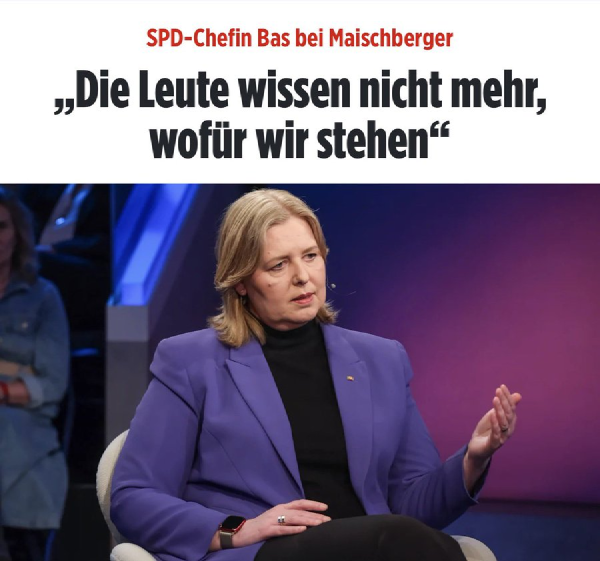
The leader of Germany’s Social Democratic Party, Bärbel Bas, on Sandra Maischberger’s talk show this week:
“People no longer know what we stand for.”
We’re happy to help, Ms. Bas. Here is the list.
What Actually Happened on April 22, 2026 # On Wednesday, April 22, 2026, an unusually dense sequence of security- and surveillance-policy events moved in parallel through Germany and Brussels:
Methodological note. This text is based on primary Bundestag documents (20/6621, 20/6702, WD 4-3000-008/23), the Last Generation 2022 transparency report (cited in the Bundestag WD opinion), the IRS Form 990 data of the Climate Emergency Fund via ProPublica and Instrumentl, and the websites of the organisations named. The text separates two layers that are systematically conflated in public discourse: (1) the scientific-political question of the climate crisis, and (2) the structural question of who, with what money, organised what kind of activism. The first layer is not negotiated here. The second is the subject.
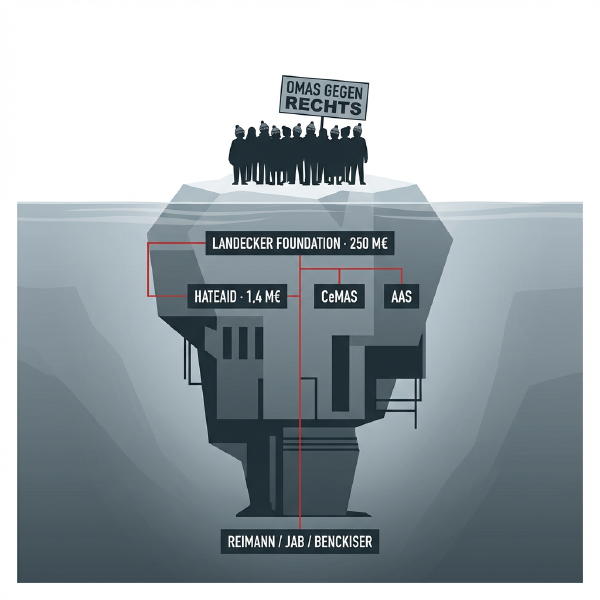
Methodological note. This text is based on primary Bundestag documents (Drucksachen), the foundation register, the AAS website, and publicly available material on the founder’s Stasi-IM past. Where amounts are only secondary-sourced, this is marked. The foundation does work against right-wing extremism that addresses an unquestionable societal need. The point here is not to deny it its legitimacy — it is to show what the foundation systematically does not show when presenting itself as a “civil society” actor.
Methodological note. This text is based on primary Bundestag documents (Drucksachen), the foundations’ own websites, Correctiv’s governance page, and the program of the German Federal Office for the Protection of the Constitution (BfV) 2023 Science Conference. Where amounts or positions are only secondary-sourced, this is marked. The point is not to deny Correctiv its legitimacy — it is to show what Correctiv systematically does not show when presenting itself as an “independent” investigative platform.