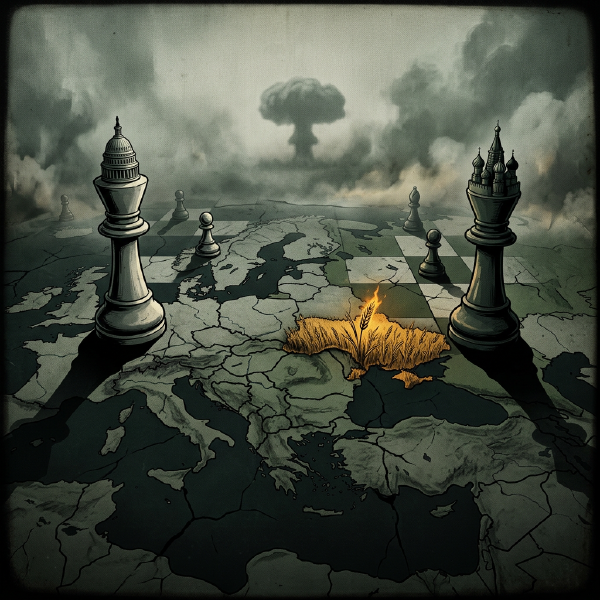
In a remark at the US Department of State, Donald Trump dismantled Germany’s sitting Federal Chancellor Friedrich Merz on four axes — immigration, energy, Ukraine, Iran. What is structurally interesting about this remark is not Trump. It is the asymmetry between what he is saying and what is being said about the same matters in the German public discourse.
On March 24, 2026, Donald Trump posted that he was pausing strikes on Iranian power plants. Minutes before: $580 million in oil futures, opposite bets on stock futures — simultaneously, with no public trigger.
The hope was real: Donald Trump back in the White House, known for statements in favour of a negotiated solution in Ukraine, and Vladimir Putin, who has signalled for years that an agreement is possible — if Russia’s security interests are respected. But where does that stand now?