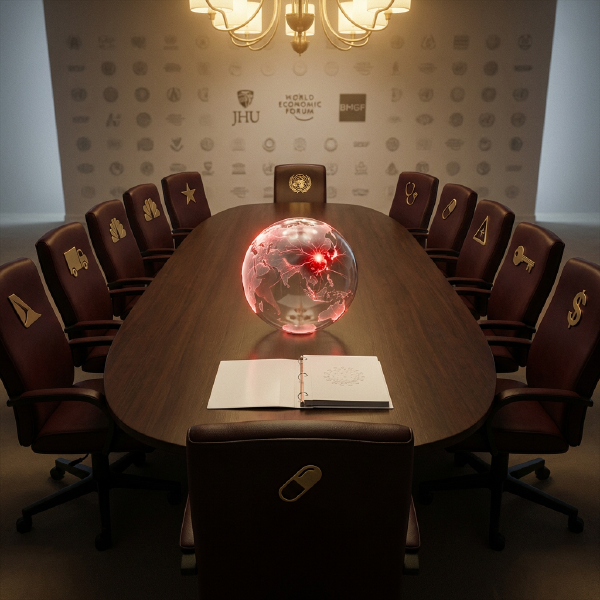
On 18 October 2019, in a conference hall at the Pierre Hotel on Fifth Avenue in New York, fifteen people gathered around an oval table. The seating chart, viewed from a distance, looks like a list of the world industries that would become central to a pandemic response. Four hours later, the fictional crisis cell had played out a coronavirus outbreak that, over eighteen months, produced 65 million dead and disrupted supply chains, the travel industry, vaccine procurement, and crisis communications across the entire globe.
As the 72nd Bilderberg Meeting convenes in Washington D.C. (April 9–12, 2026), it’s worth examining the structures behind it. Not as conspiracy theory, but as documented reality: four organizations — Bilderberg, the Council on Foreign Relations (CFR), the Trilateral Commission, and the World Economic Forum (WEF) — have formed an interlocking network for decades that shapes political careers before voters are even asked.
Cem Özdemir wears a UN SDG pin on his lapel. A small badge symbolizing the 17 Sustainable Development Goals of the United Nations. For most, a detail. For those who look closer: a signal.
The Statements: Fact-Checking # In April 2024, Robert F. Kennedy Jr. made waves in an interview with Glenn Beck. His words were clear: The World Economic Forum is a “Billionaires’ Boys Club” that systematically shifts wealth upward and installs totalitarian controls. The question is not whether he said this – that is indisputably documented. The question is: Does this representation correspond to the facts?
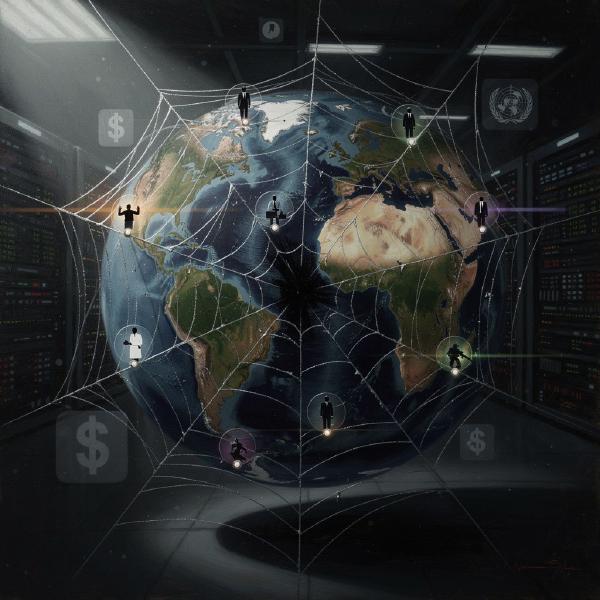
In the complex landscape of global politics and economics, a network of influential organizations and individuals is shaping the future of our world. This post delves into the interconnected web of power that includes the Club of Rome, the Bilderberg Group, the World Economic Forum (WEF), major philanthropists, and financial giants like BlackRock and Vanguard. Let’s explore how these entities are influencing global agendas and what it means for our society.
Introduction # This in-depth analysis provides insight into the current landscape of artificial intelligence, highlighting major players like Meta, OpenAI, and Microsoft and their ties to the World Economic Forum (WEF). It explores data verification practices, platform strategies, ideological and cultural biases in training data, decentralized alternatives, and the complex network of power and influence shaping AI governance globally.
← Part 13: The Files That Are Missing
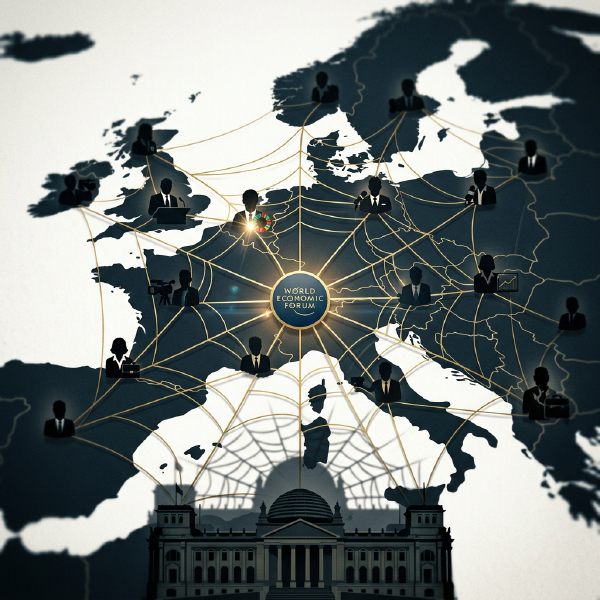
The Web does not end in New York. It runs all the way to Berlin.
WEF Young Global Leaders: Merkel, Scholz, Baerbock, Habeck, Spahn, Laschet, Söder, Steinmeier, Maischberger, Kleber, Cardinal Marx — Germany’s entire ruling class of the past 20 years selected by the same private network of Klaus Schwab. No electoral mandate.