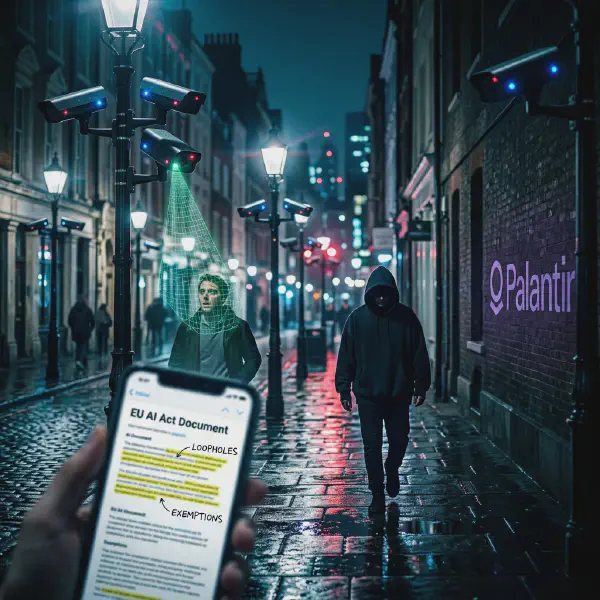
The Stasi, the Ministry for State Security of the GDR, was a symbol of total surveillance and oppression. With a vast network of official and unofficial collaborators, it infiltrated the most intimate areas of citizens’ lives. But what was once considered the epitome of a surveillance state now seems almost primitive compared to what Big Tech and artificial intelligence (AI) have made possible.
The Stasi: An Analog Nightmare #
The Stasi meticulously collected data on millions of people. Letters were opened, conversations were tapped, and homes were searched. Every suspicious thought, every dissenting opinion was recorded in files. The goal was total control over the population, the dissolution of any opposition, and the maintenance of the SED’s power. The methods were brutal and inhumane, but they were also labor-intensive and technologically limited.
Big Tech: The Digital Perfection of Surveillance #
Today, we voluntarily hand over our data to companies like Google, Meta (Facebook), Amazon, and others. We share our thoughts, our preferences, our movements, and our most intimate secrets. We use their services because they are convenient, and we pay for them with our privacy. These companies collect and analyze unimaginable amounts of data—not just what we consciously share, but also metadata, behavioral patterns, and biometric information.
AI as an Accelerant #
Artificial intelligence takes this surveillance to a new level. Algorithms can create profiles of us from the collected data that are more accurate than we know ourselves. They can predict our political views, our sexual orientation, our health problems, and our future intentions. This power is not just interesting for personalized advertising, but also for state actors seeking total control.
The Perfect Symbiosis of Power and Technology #
The Stasi could only have dreamed of today’s capabilities. An AI that monitors all digital communications in real-time, tracks the movements of every citizen, and automatically reports suspicious behavior would be the perfect tool for a totalitarian state. The combination of Big Tech’s data power and AI’s analytical capabilities creates a surveillance infrastructure that goes far beyond what the Stasi could ever achieve.
Conclusion: Our Freedom Is at Stake #
We must become aware of the parallels. The creeping erosion of our privacy by Big Tech is not a harmless development. It creates the foundation for a control society that George Orwell described in “1984.” It is time for us to reclaim control over our data and set clear limits on the power of technology companies and governments. Otherwise, one day we will wake up in a world where Stasi 2.0 has become reality—a world from which there is no escape.