Has anyone seen Georg Restle? Last spotted in Nairobi.
There is a German television legend you need to know to truly understand Georg Restle: Eduard Zimmermann. For thirty years, Zimmermann sat behind his desk at ZDF, furrowed his brow into the camera, and asked: “Have you seen this man?” He was judge, moral authority, and guardian of public order in one person — all on state television, all with a sense of mission, all without the slightest hint of self-doubt.
Georg Restle translated the principle into the 21st century. Instead of criminals, he hunted conspiracy theorists. Instead of composite sketches, there were graphics showing “disinformation networks.” Instead of “Have you seen this man?” it was: “Have you heard this dangerous theory?”
The difference: Zimmermann at least had real criminals.
14 Years of Monitor. 14 Years of Truth. #
Restle was no minor editor. He was the face of the ARD political magazine Monitor — Germany’s self-appointed fact-protection authority. And he used this stage with conviction.
April 2020, the pandemic is eight weeks old: Monitor airs a segment about the “network of downplayers and conspiracists.” Anyone who questions the measures, who reads data differently, who asks uncomfortable questions — ends up in this network. No differentiation. No dialogue. Just the message: these people are dangerous.
In 2021, Monitor goes further. In one segment, critics of pandemic measures are linked to right-wing extremist terrorists — an argumentative leap that makes even sympathetic media critics take notice. Reitschuster documents it; the editorial team remains silent.
Restle was not the only one who worked this way. But he was the loudest. And he had the reach.
2024: The U-Turn Without an Apology #
Then come the RKI protocols. Documented in black and white: how political pressure overrode scientific assessments. How decisions affecting millions of people were made not on the basis of evidence, but on the basis of political steering.
Restle responds — and demands that media report self-critically on the RKI protocols.
Self-critically. Georg Restle. About media.
Read that sentence twice.
Not a word about the fact that he himself had spent years discrediting the very people who had been asking these questions since 2020. No admission. No apology. Just an elegant pirouette from discreditor to admonisher — as if nothing had happened.
March 2026: Off to Nairobi #
On March 26, 2026, Georg Restle hosts his final Monitor broadcast. On June 1, he takes over as head of the ARD bureau in Nairobi.
One could read this as a bold new chapter. A 60-year-old who dares to try something new. Africa, new perspectives, out of the comfort zone.
One can also read it differently: an orderly retreat. Promoted sideways. Out of the line of fire before the reckoning truly begins.
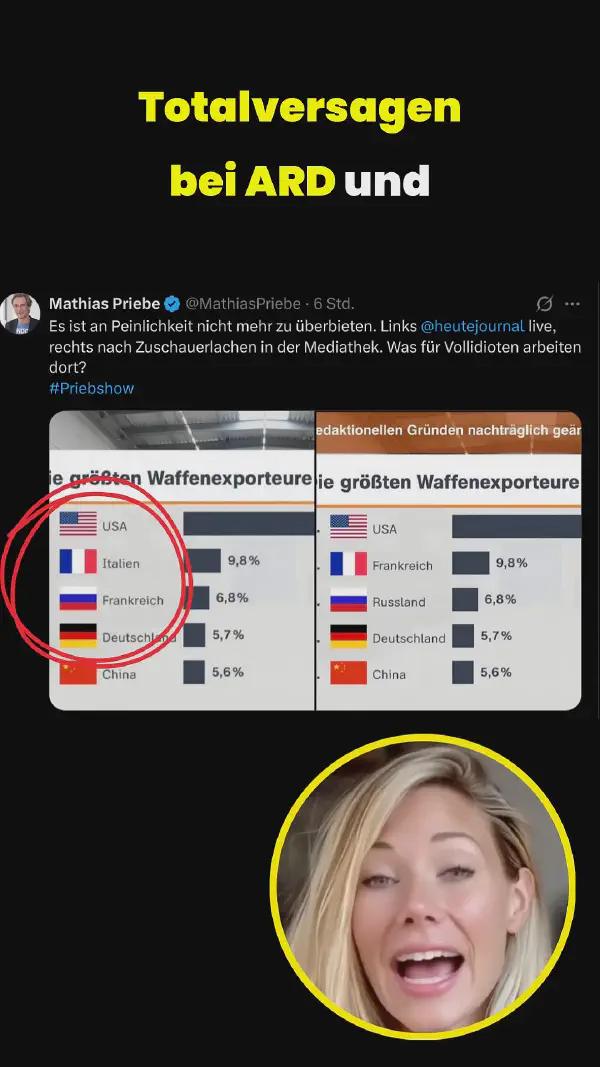
Because it is beginning. Slowly, hesitantly, but it is beginning. Trust in Germany’s public broadcasters is at a historic low. And the system keeps delivering new material: just last month, on February 15, 2026, ZDF’s Heute Journal aired AI-generated fake images — unmarked, presented as real news footage. The correspondent responsible was recalled. Director Norbert Himmler was re-elected regardless. The system works.
The Restle System #
Zimmermann stopped in 1997 and stayed in Germany. He had done his job as he understood it, and stepped down.
Restle is going to Nairobi. This is not retirement — it is continuity. The same broadcaster, the same apparatus, just a different continent. The ARD bureau in Nairobi is funded by the same license fees as Monitor. The power to define the narrative stays within the system.
What remains is the uncomfortable question Restle never asked: What does one owe the people one has publicly discredited — who, as it turns out, were not so wrong with their questions after all?
Eduard Zimmermann asked at the end of every broadcast: “Have you seen this man?”
We are asking it now. About Restle. And about everyone who helped shape the discourse of the pandemic years alongside him.
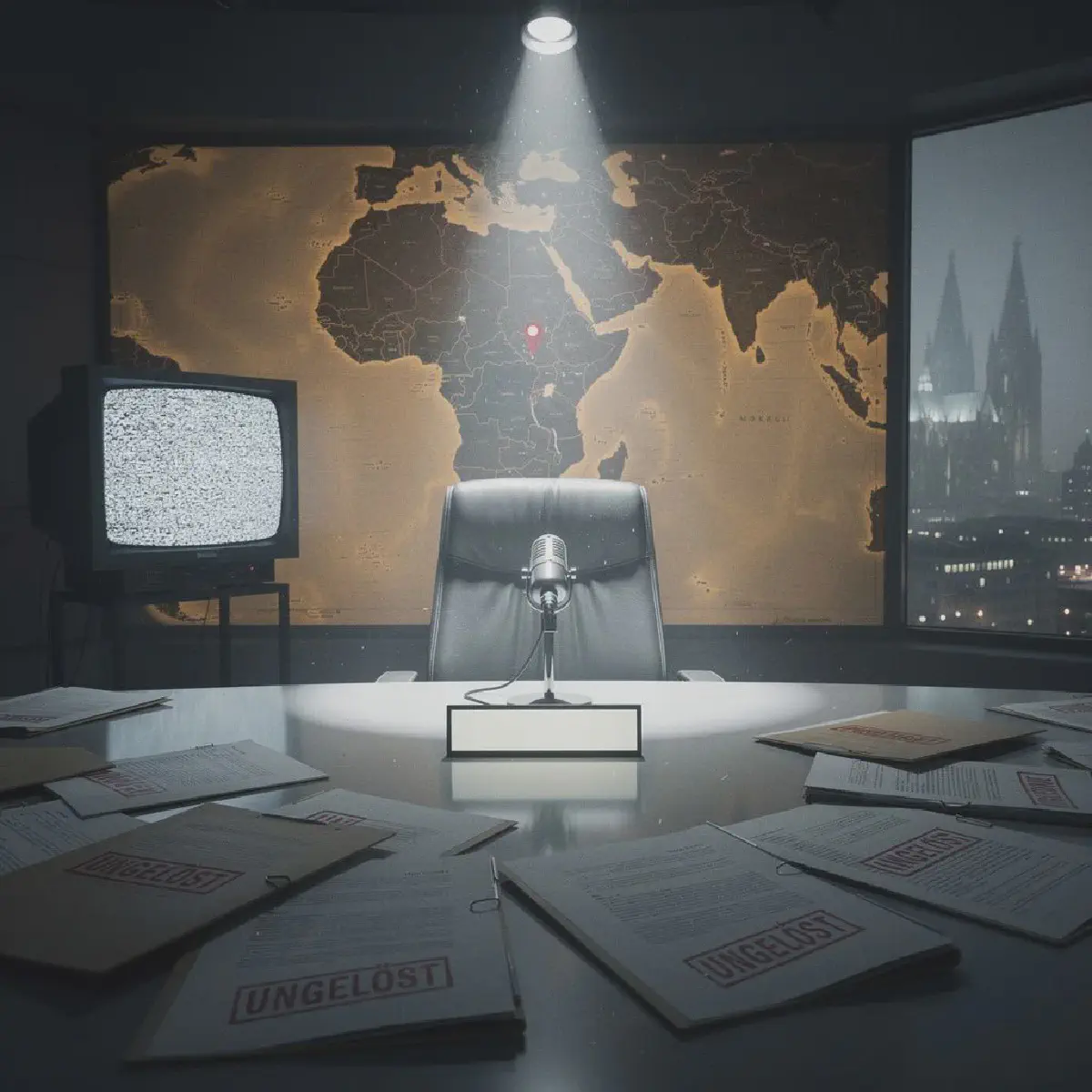
Case file: unsolved. Perpetrator: at large. Last known location: Nairobi.
Sources #
- WDR/Monitor Archive: “Network of Downplayers and Conspiracists” (02.04.2020) and follow-up segments 2021
- Berliner Zeitung (24.03.2024): Restle calls for self-criticism after RKI protocols
- Welt / Bild / Spiegel (18.03.2026): Restle leaves Monitor, takes over ARD bureau Nairobi
- FAZ / Tagesschau (February 2026): ZDF Heute Journal AI fake image scandal, correspondent recalled