Markus Söder has registered a döner kebab trademark. Yes, really. Welcome to 2024, where Bavarian Minister-Presidents register their own fast-food brands.
Legal and Formal Aspects #
- Trademark Owner: Markus Söder personally, not the CSU party
- Filing Date: August 2, 2024 at the German Patent and Trademark Office (DPMA)
- Protection Scope: Class 29 (meat, meat products, döner), Class 16 (printed matter), Class 35 (advertising, marketing)
- Opposition Period: Ended in November 2024 without objections – trademark has been fully protected since then
- Design: The logo features a cartoon-style Söder illustration in traditional döner-man pose against a red-and-white background
Political Strategy and Background #
Söder has cultivated his “döner fan” persona for years with regular posts under #söderisst on Instagram and X (formerly Twitter).
Goal: Citizen proximity and modernization of the CSU image among younger voters.
The brand serves as a gag and conversation starter, not a serious business model. Comparable to other Söder trademarks like “So einfach geht SÖDER” (for beer, soft drinks).
The CSU Party Convention in Augsburg (October 12, 2024) #
The brand was implemented live for the first time at the party convention:
- Stand: A real döner shop from Augsburg was recruited as “Söder Kebab” partner
- Price: €3 per döner (subsidized, regular price would be higher)
- Recipe: Turkey meat, salad, tomatoes, feta cheese, garlic sauce, chili powder – no onions, which sparked discussions
- Söder himself: Cut the first döner, wearing an apron and cap with the logo
- Sales: Several hundred döners were sold to convention attendees
Reactions and Controversies #
Industry Voices #
- Döner Industry: The German Döner Producers Association welcomed the action as “recognition for the German döner”
- Gastronomy Criticism: Michelin-starred chef Christian Bau called the staging “embarrassing” and “tasteless”
Political Criticism #
- Opposition accused Söder of commercializing his office – using political reach for private brands
Internet Reactions #
- Satire exploded with memes and parodies:
- “Söder Kebab – now with extra sauce and less substance”
- “Make Döner great again”
Merchandise Details (CSU Fan Shop) #
| Product | Price |
|---|---|
| T-Shirt (100% cotton) | €19.99 |
| Hoodie (Unisex, with hood) | €35.99 |
| Sticker Set (5 pieces) | €2.99 |
| Button | €1.99 |
All products are sold through the official CSU shop. According to the CSU, proceeds go to party coffers.
The Legal Gray Zone #
There are significant points of criticism:
- No Separation: Söder as Minister-President and private individual are not clearly separated
- Trademark Law: Söder could theoretically force third parties to license – politically explosive
- Transparency: No public information on revenues or costs of trademark registration
Conclusion #
The “chain” remains a political marketing instrument without branches or expansion. The protected trademark enables Söder to conduct controlled PR actions and merchandise sales.
Actual commercial use is not planned but would be legally possible.
Whether the office of Minister-President and private trademark registration are compatible is for everyone to decide for themselves.
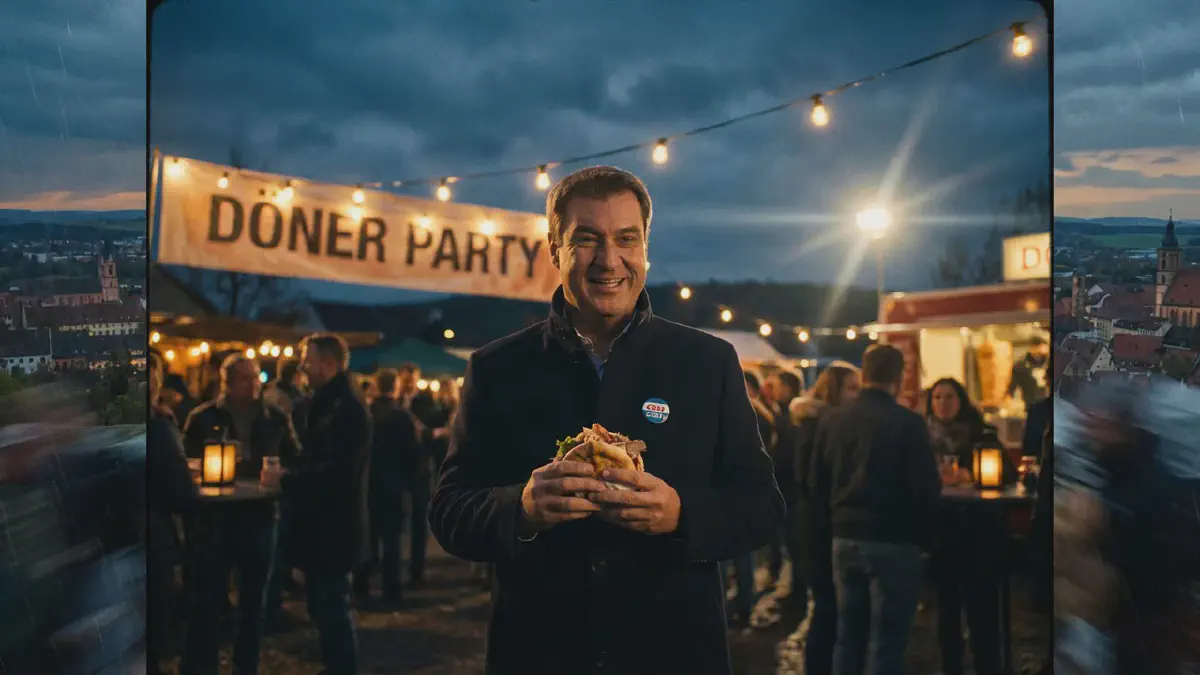
Image credit: Söder cutting döner at the CSU party convention 2024