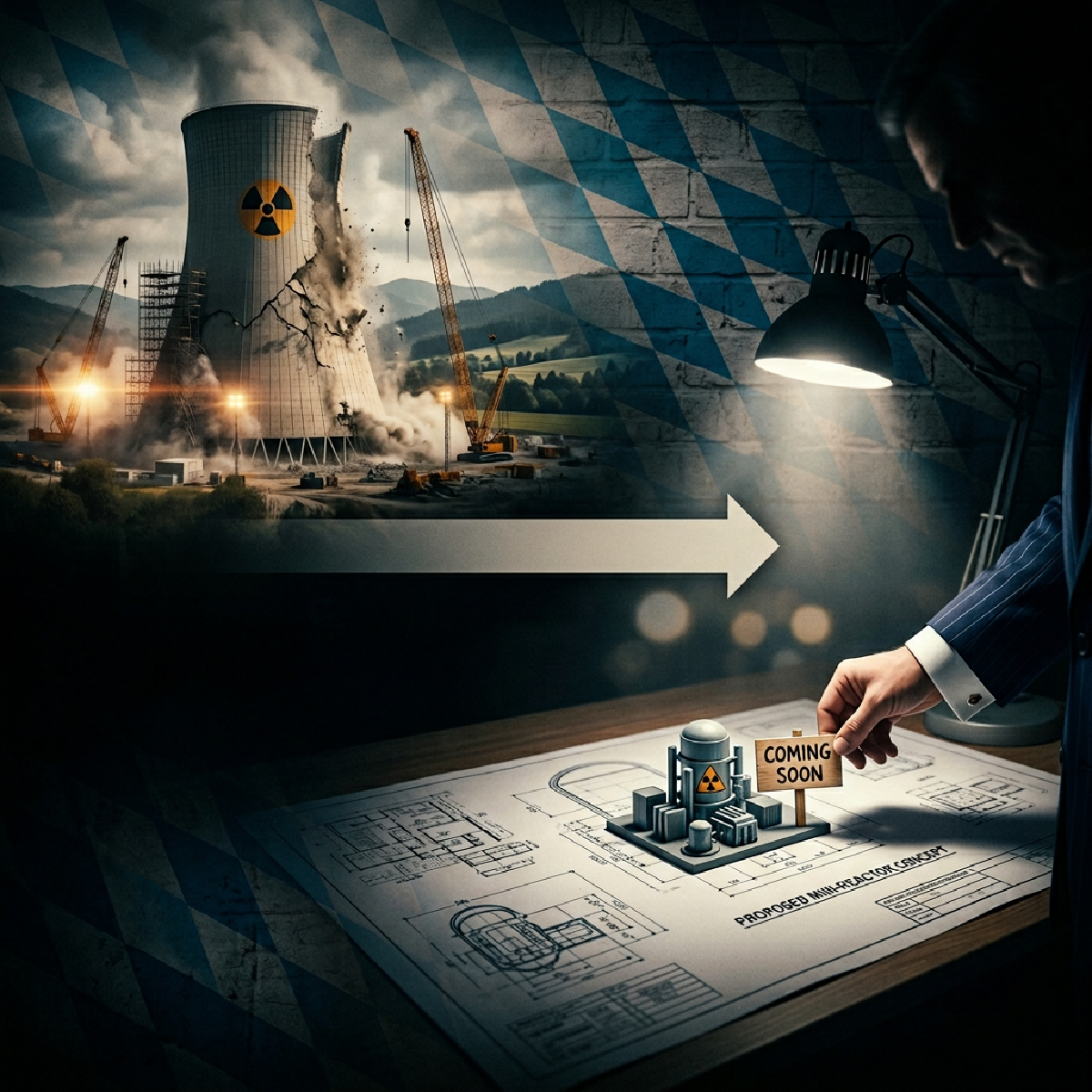
On April 15, 2023, Isar 2 went offline. The nuclear power plant in Essenbach, one of the most modern and efficient in Europe, reliably produced electricity — without CO₂, without shortages, without significant incidents. It could have run for decades more.
Now Markus Söder is planning mini-reactors for Bavaria.
What Was Shut Down #
Isar 2 had a capacity of 1,485 megawatts. It supplied around 3.5 million households with electricity. Continued operation would have been technically feasible without major effort — confirmed by expert reports, operators, and parts of the scientific community.
The shutdown was not a technical verdict. It was a political one.
And Markus Söder? He was part of that politics. Bavaria under CSU leadership did not prevent the shutdown. They went along with it — protesting loudly in public, quietly consenting in the decision rooms.
What Is Being Planned Now #
Small Modular Reactors — SMRs, mini-reactors — are supposed to fix things. The technology is real, the research promising. But: not a single SMR operates commercially in Europe today. Licensing procedures in Germany take at least ten years in the best case. Realistically fifteen to twenty.
Isar 2 could be running today. Tomorrow. Next year. Without new permits, without new billions, without another decade of waiting.
What the Decision-Makers Themselves Say #
Ursula von der Leyen, President of the EU Commission, called the shutdown of German nuclear plants a “strategic mistake.”
Friedrich Merz declared the decision “irreversible” — as if shutting down a turbine were a law of nature rather than a political decision that could be reversed.
And Söder plans mini-reactors.
Let that sink in for a moment: the same political class that shuts down functional power plants declares the shutdown irreversible and simultaneously plans the expensive, decades-long reconstruction of a capacity it just deliberately destroyed.
The Real Question #
This is not an energy debate. It is a governance debate.
When decisions of this magnitude — shutting down an entire technology that substantially provides a country with baseload power — are made and classified as a “strategic mistake” by the same actors just a few years later, without anyone being held accountable: what does that say about the system?
It says: consequences are for others.
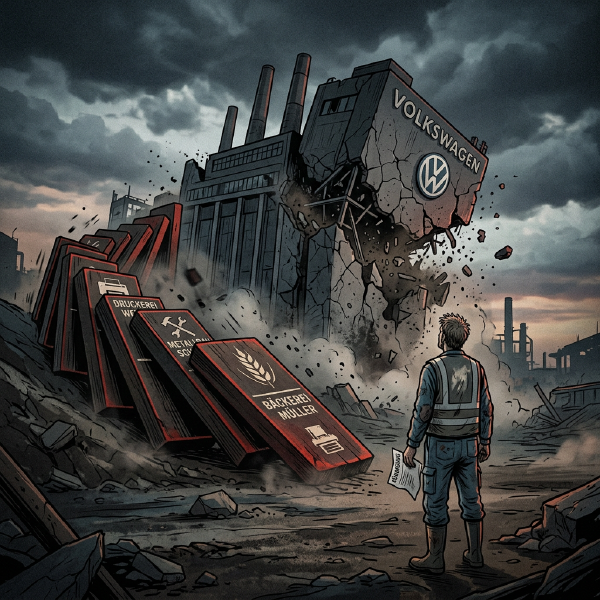
The bill is paid by industrial companies relocating because electricity is too expensive. Small and medium businesses that can no longer bear their energy costs. Households paying more for less supply security. Porsche, reporting a 98 percent profit decline. SAP, whose stock price buckles under AI pressure while location conditions deteriorate.
The decision-makers plan mini-reactors.
What Would Have Been Rational #
Keep Isar 2 running. Period.
No new permits, no new billions, no new technology with an unclear rollout date. A decision that could still have been made in 2023 — and that was instead replaced by the ritual of public self-flagellation, without drawing the slightest practical consequence from it.
Whoever recognizes a mistake and still declares it irreversible has no conviction. They have fear of the political cost of correction.
Conclusion #
Mini-reactors are not energy policy. They are a promise for the day after tomorrow — from people who made a mistake yesterday and don’t want to admit it today.
Bavaria has Isar 2. It no longer runs.
Bavaria plans mini-reactors. They don’t run yet.
Between the two lies a gap of at least fifteen years — and a political actor who is responsible for both, without being held accountable for either.
This is not energy incompetence. This is German governance.
Part four of a series on truth, institutions, and the price of political irrationality.
Part 1: “Is Netanyahu Dead?” — Disinformation in Wartime
Part 2: When the Messenger Gets Shot