“Children are only slightly affected.” That’s what the STIKO chair said about COVID. What he didn’t say: the measures hit them harder than the virus. #
The Numbers Nobody Wanted to Hear #
The COPSY Study from the University Medical Center Hamburg-Eppendorf (UKE) under Prof. Ulrike Ravens-Sieberer is the most comprehensive longitudinal study on the mental health of children and adolescents during the pandemic in Germany.
The findings:
| Period | Children with mental health problems |
|---|---|
| Pre-pandemic | approx. 18% |
| 1st wave (May-June 2020) | approx. 30% |
| 2nd wave (Dec 2020-Jan 2021) | approx. 30% |
| 3rd wave (Sep-Oct 2021) | slight recovery |
Almost one in three children in Germany developed psychological problems. Anxiety disorders. Depressive symptoms. Psychosomatic complaints. Loneliness. An increase of two-thirds compared to the pre-pandemic period.
These aren’t abstract percentages. These are children who couldn’t sleep anymore. Who stopped wanting to eat — or couldn’t stop eating. Who got stomachaches when school was mentioned. Who stopped talking.
What the Children Had to Go Through #
School Closures: 28 Weeks #
Germany kept its schools fully or partially closed for approximately 28 weeks — one of the longest closure periods in Europe. The ifo Institute and RWI documented significant learning losses and increasing educational inequality: children from less-educated households lost the most.
28 weeks. No classes. No schoolyard. No contact with peers. For primary school pupils — children of six, seven, eight years old — that was half a lifetime.
Mask Mandates from Age 6 #
In most German states, children aged six and above had to wear masks in class. Sometimes medical masks, sometimes FFP2. For hours. Daily.
The evidence for masks in children had been internally assessed as thin by the RKI. The recommendation came anyway. And the children wore them — because they had learned that otherwise they could endanger others. That they — a six-year-old — could be a danger to grandma.
Playground Closures #
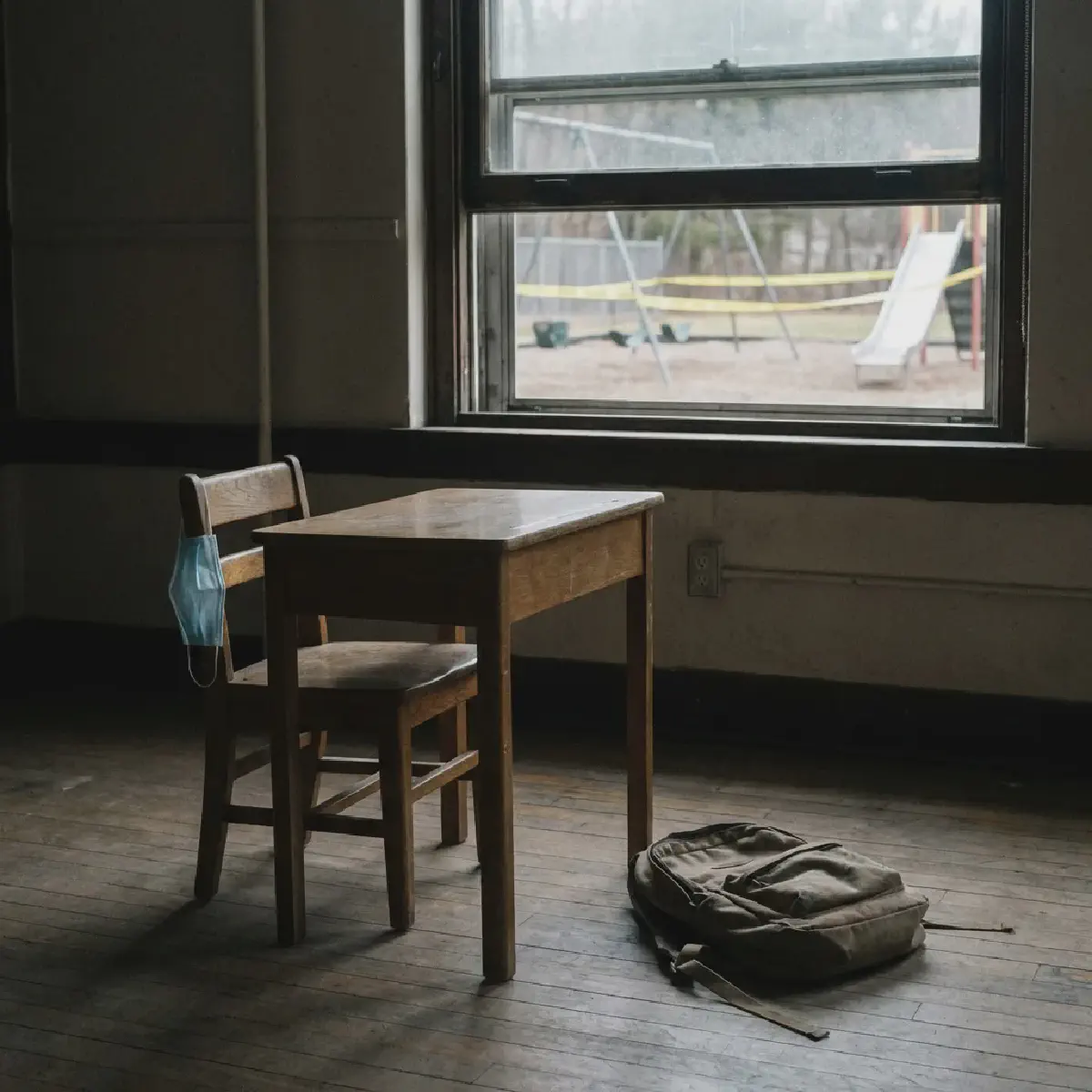
In spring 2020, playgrounds in most German states were sealed off with barrier tape. Children were not allowed to climb, swing, or slide. Police enforced it.
The epidemiological basis: nonexistent. Transmission outdoors had already been known as extremely rare in March 2020. But the image — sealed playgrounds — signaled seriousness. It was about symbolism, not evidence.
Contact Bans #
Children were not allowed to meet their friends. Not at home, not outside. One child per household — or none at all. Children’s birthday parties were banned. Sleepovers were banned.
For adults, this was a restriction. For children, it was an intervention in the fundamental prerequisite of social development.
What the Experts Say Today #
STIKO Chair Berner #
The STIKO chair stated what pediatricians had been saying from the start: children were only slightly affected by the virus itself. Severe cases were concentrated among older and pre-existing-condition adults. Children were not the drivers of the pandemic.
But Berner went further. He spoke of “lasting psychological damage” from the measures — not from the virus. Children didn’t get sick from Corona. They got sick from adults’ response to Corona.
Lauterbach: “Too Drastic” #
Karl Lauterbach, who co-responsible for the measures as Health Minister and was among the loudest advocates of strict restrictions as an MP, admitted:
“We reacted too drastically with the children.”
A sentence for which any parent who said the same in 2020 was called a “Covidiot.” Any teacher who criticized school closures was labeled irresponsible. Any pediatrician who warned of psychological damage was dismissed as a trivializer.
In 2026, Lauterbach says what he would have combated as dangerous disinformation in 2020.
The Diagnoses #
The DAK Children and Youth Report and other health insurance data show dramatic increases since 2020:
Eating Disorders #
Diagnoses of anorexia in girls aged 10 to 17 increased by 30-50% compared to previous years. Children who had lost control over their lives — school gone, friends gone, routine gone — sought control over the only thing that remained: their bodies.
Anxiety Disorders #
A massive increase in anxiety diagnoses, particularly among primary school children. Children who had been told for two years that they were a lethal threat to their grandparents developed — unsurprisingly — anxieties.
Depression #
Depressive episodes in adolescents doubled in some age groups. The combination of isolation, loss of control, and fear of the future hit a generation that had not yet learned to cope with such pressure.
Suicide Attempts #
Data on suicide attempts in children and adolescents increased significantly at several clinics. The University Hospital Essen reported a tripling among young girls.
Who Decided — and Who Stayed Silent? #
School closures were decided by state premiers. Mask mandates were ordered by state governments. Playgrounds were sealed by municipalities.
But responsibility is distributed more broadly:
- The RKI did not publicly communicate its internal doubts about mask mandates for children
- ARD and ZDF framed parents who criticized school closures as irresponsible
- The German Ethics Council under Alena Buyx classified the measures as proportionate
- Teachers’ unions sometimes demanded stricter measures — instead of protecting their pupils
- Pediatricians who warned were marginalized
The Bundestag’s Enquete Commission has put the topic of children on the agenda. But the question that no commission can answer remains:
How do you explain to a child that it was locked up for two years to protect it from a virus that was statistically less dangerous to it than the ride to school?
The Enquete Commission and the Children #
In the Enquete Commission “Lessons from the Corona Pandemic,” children finally came to the fore — three years too late. Expert witnesses confirmed what the COPSY study had shown in numbers: the measures caused lasting harm to an entire generation.
The STIKO chair made clear: the virus was manageable for children. The policy was not.
Lauterbach admitted before the commission that the reaction toward children was excessive. The same Lauterbach who tweeted in 2021 that every day of in-person schooling was a risk.
The question isn’t whether mistakes were made. The question is whether the same people who made them are the right ones to process them.
What We Owe Them #
The children who were six in 2020 are twelve today. They spent half their primary school years behind masks. They learned that hugs are dangerous. That birthdays can be banned. That the state decides whether you can see your friends.
Some of them will process this. Some won’t.
What we owe them isn’t an apology. Apologies are cheap. What we owe them is the truth: we knew better. We had the data. And we locked them up anyway.
Sources #
- Ravens-Sieberer, U. et al.: COPSY Study, University Medical Center Hamburg-Eppendorf (UKE). Multiple waves 2020-2022. Published in European Child & Adolescent Psychiatry.
- UKE Hamburg (2021): Mental health of children has deteriorated during the Corona pandemic. Press release.
- ifo Institute / RWI (2021-2022): Studies on learning losses from school closures in Germany. Approx. 28 weeks of full or partial closures — among the longest in Europe.
- State ordinances (2020-2022): Mask mandates in class from age 6.
- Federal-state resolutions (March-May 2020): Playground closures, contact bans, assembly bans.
- STIKO Chair Berner: Statements on children’s limited exposure to COVID-19 and lasting psychological damage from measures. Enquete Commission / specialist interviews.
- Lauterbach, K.: “We reacted too drastically with the children.” Various media.
- DAK Children and Youth Report (2022/2023): Significant increases in diagnoses of depression, anxiety disorders, and eating disorders (particularly anorexia) in children and adolescents.
- University Hospital Essen: Data on suicide attempts in children and adolescents. Significant increase, particularly among girls.
- Bundestag: Enquete Commission “Lessons from the Corona Pandemic.” Hearings on children and adolescents.
30% of children with psychological problems. 28 weeks without school. Sealed playgrounds. And a Health Minister who today says: “Too drastic.” The children couldn’t defend themselves. The adults didn’t want to.