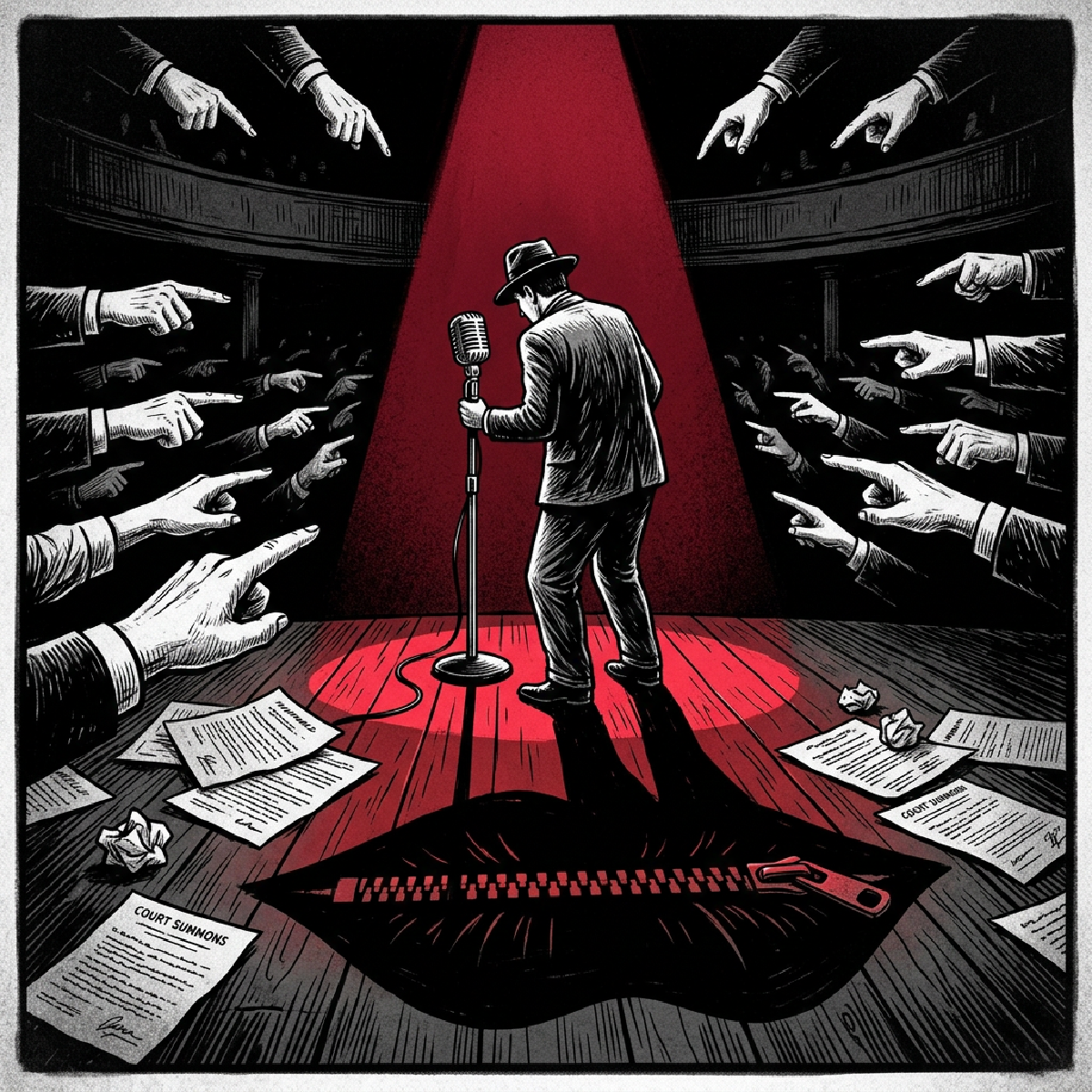
Paul Brandenburg is a doctor, living in exile, facing around 90 ongoing criminal investigations, fighting for years against the Medical Association’s attempts to revoke his license — and saying things many people don’t want to hear.
The question is not whether you agree with everything he says. The question is: how did he end up where he is now?
The Man and His Path #
Brandenburg voiced loud and early criticism of Germany’s COVID policy. He questioned vaccine approvals, lockdown proportionality, and the independence of institutions. That made him a target.
The Administrative Court of Berlin-Brandenburg later ruled in the Medical Association vs. Brandenburg case that the chamber had “in the grossest manner misjudged its own responsibilities and the nature of the law.” A devastating verdict — not against Brandenburg, but against his persecutors.
The RKI Files came out. The Apsidem Files. The DOJ records. Not everything Brandenburg said was right. But some of it was. And the mechanism designed to silence him was not.
That is the point.
The Logic of Silencing #
Whoever silences an uncomfortable voice believes they have solved the problem. This is a fallacy.
When a doctor says institutions are lying, and the response is 90 criminal investigations instead of arguments — what does that prove? Not that he’s wrong. It proves there are no arguments.
When the Medical Association — a politically appointed body, as Brandenburg correctly describes — spends years trying to revoke his license and fails in court three times: what is the result? A man in exile. And tens of thousands of people who feel confirmed in their belief that the system destroys its critics.
The attempt to silence a voice often makes it louder.
The AfD Parallel Phenomenon #
Same pattern, different stage.
The AfD receives over 20 percent in federal elections. In several states, it is the strongest party. In Saxony-Anhalt, it will likely provide the Minister-President. The political establishment’s response: change laws before the election winner can govern. Angela Merkel declares that anyone voting AfD wants to abolish democracy.
Nobody asks: what do these 20 percent actually want? What drives them? What experiences, fears, and specific grievances lie behind it?
Instead: exclusion. Firewall. Moral delegitimization.
This is not a political strategy. It is a refusal to engage — and it has never worked to weaken a movement. It has strengthened them.
What Rationality Would Mean #
The rational approach: sit down. Listen. Examine arguments. Acknowledge what’s correct. Refute what’s wrong.
This applies to Brandenburg: which of his claims were false — and why? Which have been confirmed? If a critic was partially right, what does that mean for the institutions that persecuted him?
This applies to the AfD: what do these voters specifically want? Migration, energy policy, fear of social decline, distrust in media — these are real issues. You can evaluate them differently than the AfD does. But you must evaluate them. Not shout down the voters.
The difference between democracy and pseudo-democracy is not whether you hold the right views. It is whether you are willing to fight wrong views with arguments — rather than with criminal orders, professional bans, and last-minute legislative changes before elections.
The Real Danger #
The irony: whoever persecutes Brandenburg instead of refuting him, whoever excludes AfD voters instead of persuading them, produces exactly what they claim to want to prevent.
People who feel unheard radicalize. People who see a doctor buried under court proceedings instead of being substantively refuted believe the doctor more — not less.
The system that considers itself the rational one acts, in these cases, profoundly irrationally.
What Remains #
Whether you find Paul Brandenburg likable or not is irrelevant. Whether you understand AfD voters or not — they are there. 20 percent. Their votes count equally.
The question a society that calls itself democratic must ask: am I willing to talk to people whose views make me uncomfortable?
If the answer is no, it is no longer a democracy. It is a comfort zone with elections.
Opinion piece. Not an endorsement of Brandenburg or the AfD — but of the fundamental rule of every rational discourse: arguments defeat arguments. Not criminal orders.
Part 2 of a series on truth, institutions, and the price of political irrationality.
Part 1: “Is Netanyahu Dead?” — Disinformation in Wartime