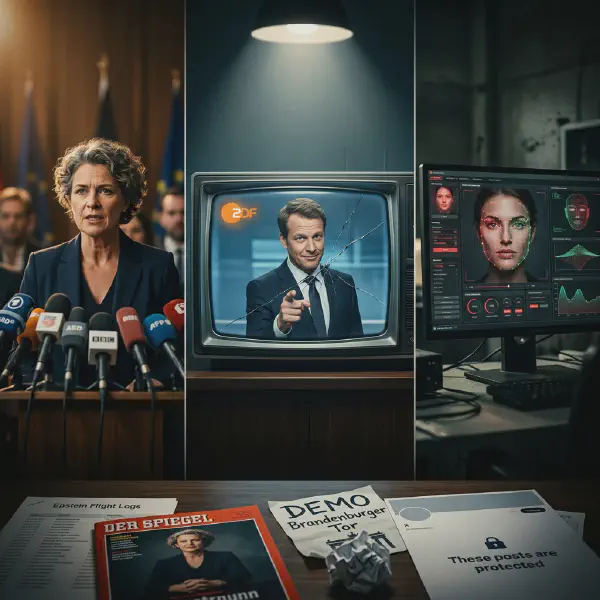
The Structure: Who Controls the Controller? # The broadcasting council is supposed to represent the public. That is the theory. The reality looks different.
Has anyone seen Georg Restle? Last spotted in Nairobi.
There is a German television legend you need to know to truly understand Georg Restle: Eduard Zimmermann. For thirty years, Zimmermann sat behind his desk at ZDF, furrowed his brow into the camera, and asked: “Have you seen this man?” He was judge, moral authority, and guardian of public order in one person — all on state television, all with a sense of mission, all without the slightest hint of self-doubt.
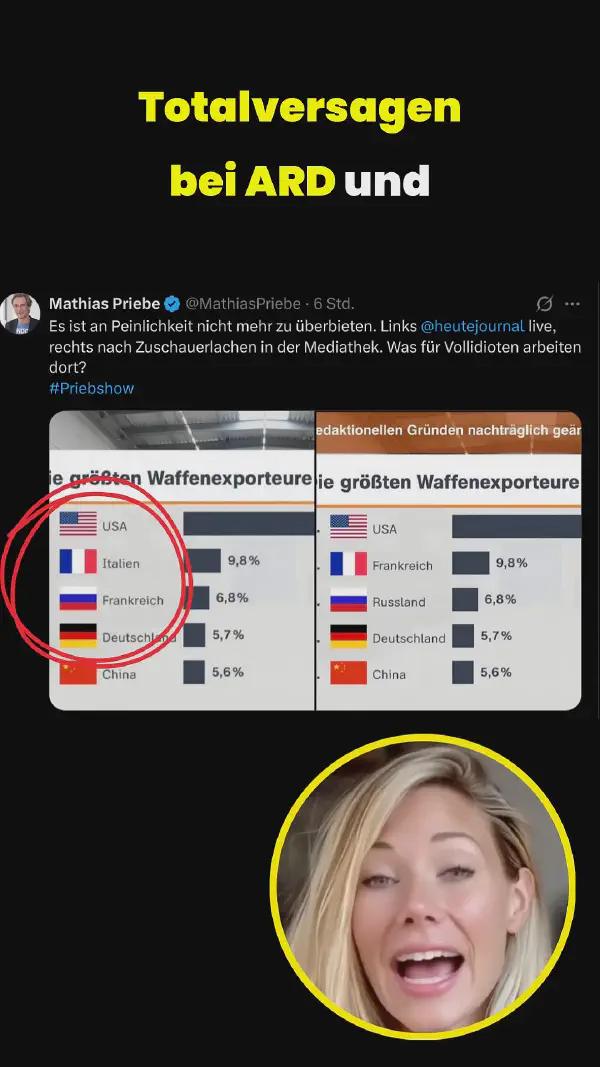
When Elementary School Knowledge Becomes a Challenge # You would think that newsrooms funded with over 8.6 billion euros annually would at least know what European flags look like. You would think wrong.
Two Weeks, Two Broadcasters, Two Scandals — German Public Broadcasting in Free Fall # The dust had barely settled on the ZDF debacle — an AI-generated fake video in the flagship news programme “heute journal”, complete with a whistleblower hunt — when the ARD followed suit. Not with a technical error, but with a misrepresentation recycled for 15 years.
The Julia Ruhs case represents an unprecedented incident that exposes the structural problems and ideological fault lines within German public broadcasting (ÖRR). As a conservative journalist at Bavarian Broadcasting (BR), she became the center of the biggest media-political controversy in German public broadcasting in 2025, after 250 NDR employees successfully ensured her removal from a joint ARD format. This incident raises fundamental questions about freedom of expression and ideological diversity in the German media system.
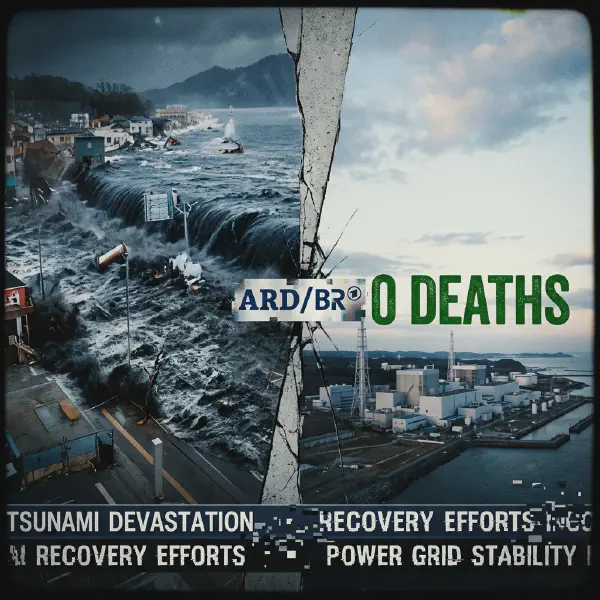
In an era where emotions can be easily manipulated, public broadcasters like ZDF have a special responsibility to deliver well-founded and balanced information. Yet often it seems as if these stations rely more on sensationalism and fear-mongering rather than empirical data and scientific facts.