March 14, 2020 — the day a government agency lied to its citizens and was never held accountable.
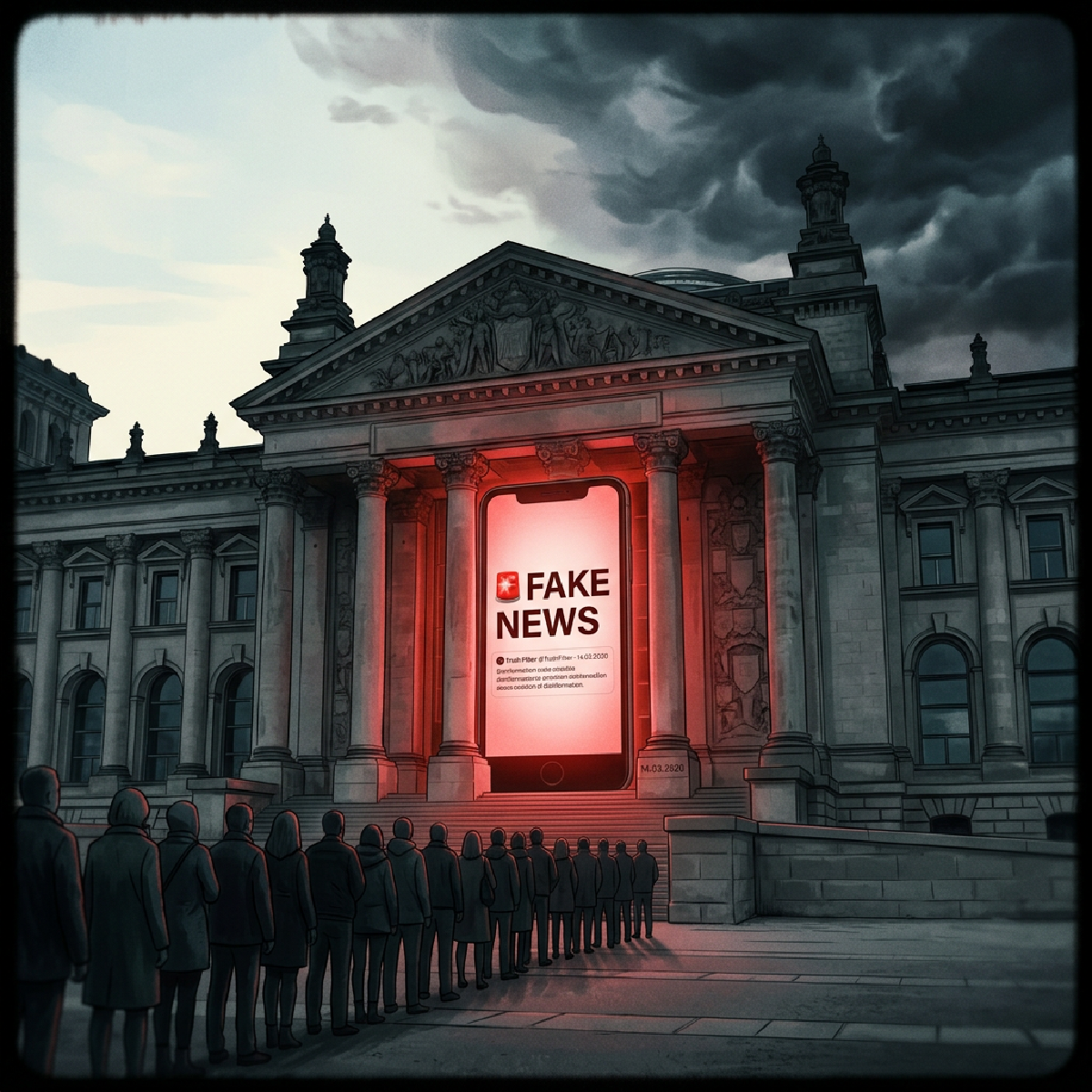
Exactly six years ago today, Germany’s Federal Ministry of Health (BMG) published a tweet that would go down in history — though not in the way the ministry had intended.
The Tweet #
“Attention Fake News! It is being claimed and rapidly spread that the Federal Ministry of Health / the Federal Government will soon announce massive further restrictions on public life. This is NOT true! Please help stop the spread of this misinformation.”
— @BMG_Bund, March 14, 2020
The tweet reached over 899,000 views. Media outlets like Stern and the Aerzteblatt uncritically amplified the ministry’s warning. Anyone who shared the alleged “fake news” was labeled a fearmonger.
What Happened Next #
The timeline is merciless:
- March 14, 2020: BMG declares lockdown rumors “fake news”
- March 16, 2020: Federal and state governments announce the first lockdown — two days later
- March 22, 2020: Massive contact restrictions take effect
Daycare centers, schools, shops, theaters, clubs — all closed. Saturday’s “fake news” became Monday’s government policy.
The Anatomy of a Lie #
Let’s dissect the ministry’s statement:
BMG’s claim: “The Federal Government will soon announce massive further restrictions on public life. This is NOT true!”
There are only two possibilities:
1. The BMG knew the lockdown was coming — then the tweet was a deliberate lie, designed to prevent a panic wave before the weekend. They lied to the public to announce the measures in an “orderly fashion.” Citizens were treated like children who couldn’t handle the truth.
2. The BMG genuinely didn’t know — then Germany’s Health Ministry was uninformed two days before the most consequential domestic policy decision since World War II. A ministry that doesn’t know what its own government is planning. What would be worse?
Both scenarios are devastating. Lie or incompetence — in either case, a federal ministry publicly spread false information and defamed citizens who were telling the truth as spreaders of “fake news.”
The Double Perversion #
The insidiousness of this incident goes beyond the mere false statement:
First: The government used the term “fake news” — a combat term normally deployed against disinformation — to suppress the truth. Anyone who warned on March 14, 2020 that a lockdown was coming was right. And was declared a liar by their own state.
Second: The tweet was a call for assistance: “Please help stop the spread.” The ministry instrumentalized the population to actively combat the dissemination of correct information.
Third: This communication was funded by taxpayer money. Citizens paid to be lied to.
What Followed #
The March 2020 lockdown was just the beginning. What came after:
- Months of curfews and stay-at-home orders
- School closures — children stuck at home for months
- 2G/3G rules — societal division
- Vaccine mandate debates
- Bans on demonstrations
- Livelihoods destroyed
- And a Health Minister who promoted the vaccine as “more or less free of side effects”
All of this was initiated by a ministry that had claimed 48 hours earlier that exactly this would NOT happen.
Where Are the Consequences? #
Jens Spahn was Federal Health Minister on March 14, 2020. His ministry demonstrably spread misinformation. Consequences: none.
The tweet was never deleted. No apology. No investigation. No inquiry into whether the public was deliberately deceived.
Instead, in the months and years that followed, anyone who questioned the government’s line was branded a “Querdenker” (lateral thinker), “Covidiot,” or “conspiracy theorist.” The same government that had demonstrably lied presumed to define what truth is and what it isn’t.
Conclusion #
The BMG tweet from March 14, 2020 is not a footnote in pandemic history. It is a document of the breach of trust between the state and its citizens. Proof that official institutions were willing to actively deceive the public — and to defame the truth as “fake news.”
Six years later, the tweet still stands. As a memorial. As evidence. And as a reminder that “fake news” doesn’t always come from where the government claims.
Sources:
- BMG Tweet (Original) — March 14, 2020
- Stern: Health Ministry warns on Twitter about fake reports — March 14, 2020
- Aerzteblatt: Federal Health Ministry warns of fake news — March 16, 2020
- BMI: Resolution of March 22, 2020
- Deutschlandfunk: Corona — Why the first lockdown of 2020 remains controversial — Jan 18, 2025
- WirtschaftsWoche: How long did the first Corona lockdown last in 2020? — Feb 21, 2022
- Deutsche Wirtschafts Nachrichten: Lockdown Horror — Aug 24, 2021