Switzerland is getting serious about transparency — at least on paper. Following a ruling by the Federal Administrative Court, the Federal Office of Public Health (BAG) on 17 April 2026 published the procurement contracts for Covid-19 vaccines [1]. Among them: Moderna, Novavax, Pfizer, Janssen, AstraZeneca, CureVac. Unredacted, as the court demanded.
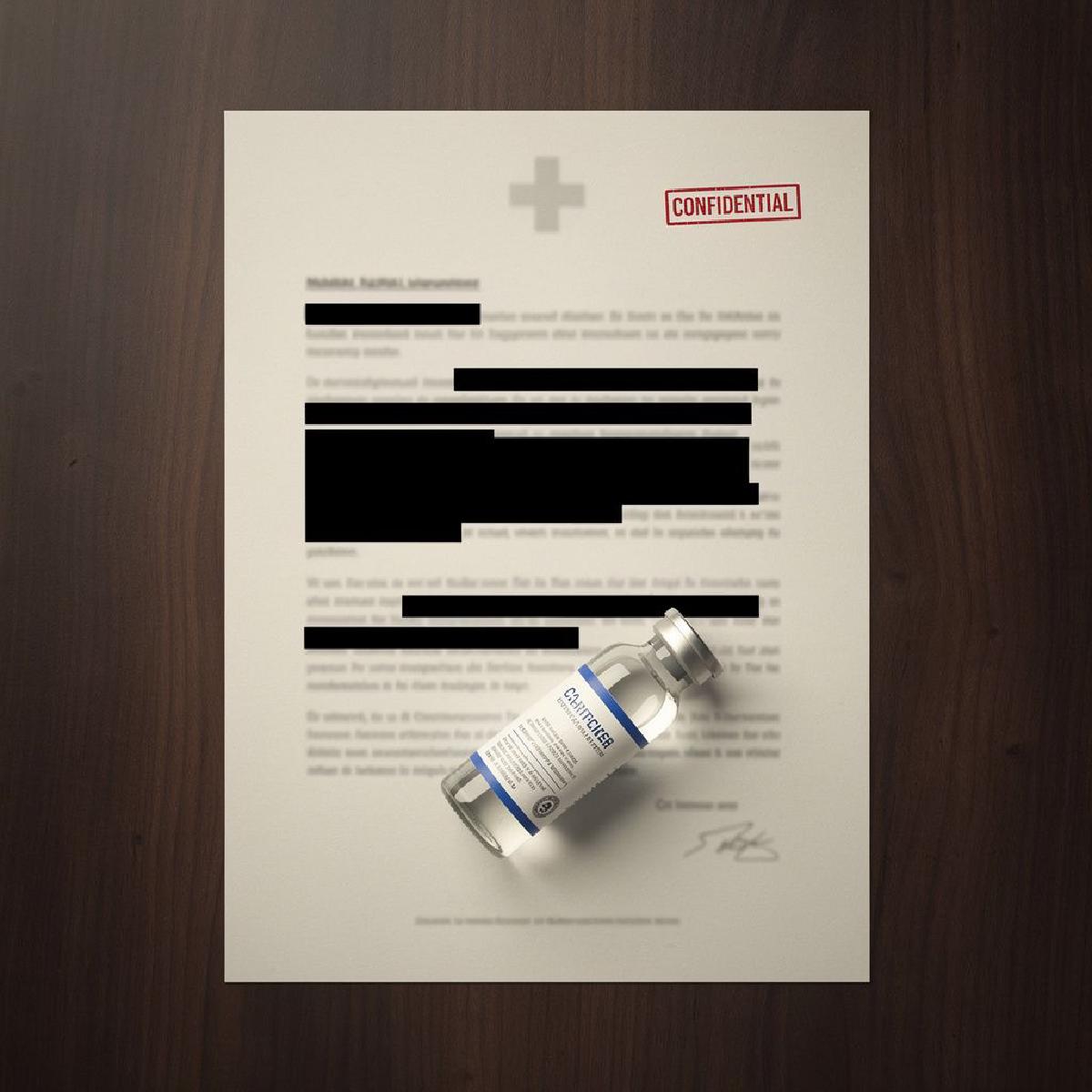
But anyone who opens the documents runs into a familiar pattern: key passages are still blacked out. Liability disclaimers, price details, secrecy clauses — all still under lock. Switzerland is more transparent than the EU, but that is a low bar.
Federal Administrative Court forces BAG to disclose#
The road to publication was long. Rémy Wyssmann, SVP National Council member, der Beobachter, and several private individuals had filed suit at the Federal Administrative Court in St. Gallen [2]. Their argument: the contracts concern public health and were financed with taxpayer money — they must be disclosed.
The court agreed. On 7 November 2025, the first ruling came down (Novavax); in February 2026, the second followed (Moderna + Novavax) [3]. The BAG accepted the rulings and forwent appeal. On 17 April 2026, the contracts went online [4].
But the joy was short-lived. Anyone who opens the PDFs sees: redactions everywhere. Especially around liability and prices.
What’s in there — and what isn’t#
Secrecy clauses: “proactive opacity”#
Watson uncovered it back in 2021: Switzerland entered into a deal with Moderna in which the BAG committed itself to “proactive opacity” [5]. The BAG initially denied this. But Watson had seen the contract.
What does “proactive opacity” mean? That the BAG does not merely stay silent on request, but actively prevents information from reaching the public. A clause that has no business existing in a democratic state under the rule of law.
Whether this clause appears in the now-published contracts is unclear. The relevant passages may be redacted.
Liability disclaimers: who pays for vaccine injuries?#
The central question with emergency authorisations: who is liable when something goes wrong? The manufacturer? The state? Nobody?
In the Moderna contracts of 5 August 2020, pages 25 and 26 — exactly where liability details would have to appear — are redacted [6]. Transition News published a screenshot. What is written there remains secret.
Standard practice in emergency authorisations is: the manufacturer is not liable. The state takes on the risk. That was also the case in the EU. But why is this redacted in Switzerland if it is publicly known anyway?
A possible answer: because the details are even more explosive. For example, that the state is liable even in cases of gross negligence by the manufacturer. Or that vaccine-injured persons are not allowed to file claims against Moderna.
Prices: USD 22.50 per dose — or more?#
The EU paid USD 22.50 per dose for Moderna. That became known through leaks [7]. Switzerland presumably paid a similar amount — between 100 and 150 million francs for 4.5 million doses (Tages-Anzeiger estimate) [8].
But the exact prices in the Swiss contracts are redacted. Why? If the EU prices are known anyway, what is there to hide?
Possible answer: Switzerland paid more. Or it paid for something else — for example, for production capacity in Basel, where Moderna Switzerland is headquartered. Six billion francs flowed, according to the Somo NGO, into Moderna accounts at the Bank of America Zurich [9]. Moderna pays tax in Switzerland at low rates.
Batch variability: were batches allowed to differ?#
A central piece of evidence in the vaccine reckoning is batch variability. Investigations show: the European Medicines Agency (EMA) in November 2020 set a very wide range for the ingredients of Comirnaty (Pfizer/BioNTech) [10].
The thesis: this range served the purpose of allowing BioNTech to compose batches differently — an experiment. If that holds, some batches would have been more harmless, others more dangerous. That would explain why some countries (such as Sweden) had hardly any excess mortality, while others (such as Germany) had a great deal.
Does this also apply to Moderna? Do the Swiss contracts say anything about batch variability? Were batches allowed to be composed differently?
The contracts would have to be searched for this. If it says there that Moderna had a range for the ingredients, that would be a further indicator for this thesis.
Quality control: who inspects the batches?#
Who checks whether the vaccines meet the specifications? Swissmedic? The manufacturer itself? An independent body?
The contracts would have to specify who performs batch release. If the manufacturer inspects itself, that is a conflict of interest. If Swissmedic only spot-checks, that is insufficient.
Here too: the contracts would have to be searched.
EU comparison: Von der Leyen and the SMS affair#
Switzerland is more transparent than the EU — but that is not a high bar. The EU Commission under Ursula von der Leyen redacted the vaccine contracts unlawfully, as the European General Court (EuG) ruled in July 2024 [11].
Particularly explosive: Von der Leyen’s SMS exchange with Pfizer CEO Albert Bourla. The Commission President had negotiated the contracts via SMS — an unprecedented procedure. The SMS were never released. Von der Leyen claimed they no longer existed [12].
In January 2026, the EuG confirmed: the SMS need not be released [13]. Reasoning: they are “ephemeral documents” and do not fall under the EU transparency rules.
Switzerland shows more than the EU. But here too, the most important questions remain open.
Circumstantial process: secrecy itself is evidence#
Legal analyses on the vaccine reckoning argue with the logic of the circumstantial process (§ 286 ZPO) [14]. Individual indicators may be weak, but in their totality they form a picture. For judicial conviction, a “degree of certainty usable for practical life” is sufficient, as the German Federal Labour Court ruled in 2018 [15].
The Swiss contracts are an indicator. Not because they prove anything specific, but because they hide something. If liability disclaimers are standard, why are they redacted? If prices are publicly known anyway, why do they remain secret? If batch variability was permitted, why is that not disclosed?
Secrecy itself is evidence. It shows: there is something to hide here.
Conclusion: transparency on paper, opacity in practice#
Switzerland has published the contracts. That is more than the EU has done. But the most important sections are redacted. Liability disclaimers, batch variability, secrecy clauses — all still under lock.
Anyone taking the vaccine reckoning seriously must search through these contracts. Not only in Switzerland, but also in the EU. Not only at Moderna, but also at Pfizer, AstraZeneca, Janssen.
The questions are simple:
- Who is liable for vaccine injuries?
- Were batches allowed to be composed differently?
- Who controls quality?
- Why did the BAG commit itself to “proactive opacity”?
The answers are in the contracts. Somewhere between the redactions.
Sources#
[1] Federal Office of Public Health (BAG): Procurement contracts Covid-19 vaccines, 17.04.2026, https://www.bag.admin.ch/de/beschaffungsvertraege-covid-19-impfstoffe
[2] SRF: “After court decision: BAG discloses contracts for procurement of Covid vaccines”, 17.04.2026, https://www.srf.ch/news/schweiz/nach-gerichtsentscheid-bag-legt-vertraege-zur-beschaffung-von-covid-impfstoffen-offen
[3] Federal Administrative Court: “Covid-19 vaccine contracts must be disclosed”, press release, February 2026, https://www.bvger.ch/de/newsroom/medienmitteilungen/covid-19-impfstoffvertraege-sind-offenzulegen-2903
[4] BAG, see [1]
[5] Watson: “Redacted vaccine contracts: BAG commits itself to opacity”, 2021, https://www.watson.ch/schweiz/coronavirus/712843272-geschwaerzte-impfstoff-vertraege-bag-verpflichtet-sich-zur-intransparenz
[6] Transition News: “Switzerland: BAG publishes redacted contracts with pharma companies”, https://transition-news.org/schweiz-bag-veroffentlicht-geschwarzte-vertrage-mit-pharmafirmen
[7] EU contract Moderna (leaked), USD 22.50 / dose
[8] Tages-Anzeiger: “Moderna vaccine: 6 billion francs flow into Switzerland”, https://www.tagesanzeiger.ch/moderna-impfstoff-6-milliarden-franken-fliessen-in-die-schweiz-628608042227
[9] Somo NGO report, cited in [8]
[10] Investigations into the vaccine reckoning, April 2026: CHMP document of 30.11.2020, Quality rolling review CHMP overview and list of questions
[11] DW: “EU Commission redacted vaccine contracts unlawfully”, July 2024, https://www.dw.com/de/eu-kommission-hat-impfstoffvertr%C3%A4ge-unzul%C3%A4ssig-geschw%C3%A4rzt/a-69691585
[12] Tagesschau: “Von der Leyen SMS Corona vaccinations”, https://www.tagesschau.de/ausland/europa/von-der-leyen-sms-corona-imfpungen-100.html
[13] LTO: “EU Commission: Von der Leyen vaccine deals secrecy unlawful”, https://www.lto.de/recht/nachrichten/n/eu-kommission-von-der-leyen-impfstoff-deals-geheimhaltung-rechtswidrig-eug-t68921-t76121
[14] § 286 German Code of Civil Procedure (ZPO), logic of the circumstantial process
[15] German Federal Labour Court, judgment of 25.04.2018, 2 AZR 611/17